

More and more States have started to cross the N1 trillion mark in their proposed and actual budgets passed into law. It is a sign that they are indeed raking in more cash from the federation accounts due to the removal of fuel subsidy as President Bola Tinubu has asserted.
The president has also tried to divert the attention of the public from the finances of the federal government urging Nigerians to instead focus on the states and ask where all the money is going.
He has even accused them of building pointless flyovers in the name of urban renewal. Most state governors, it seems, are treading the same path as the federal government regarding governing within their means. There are exceptions though.
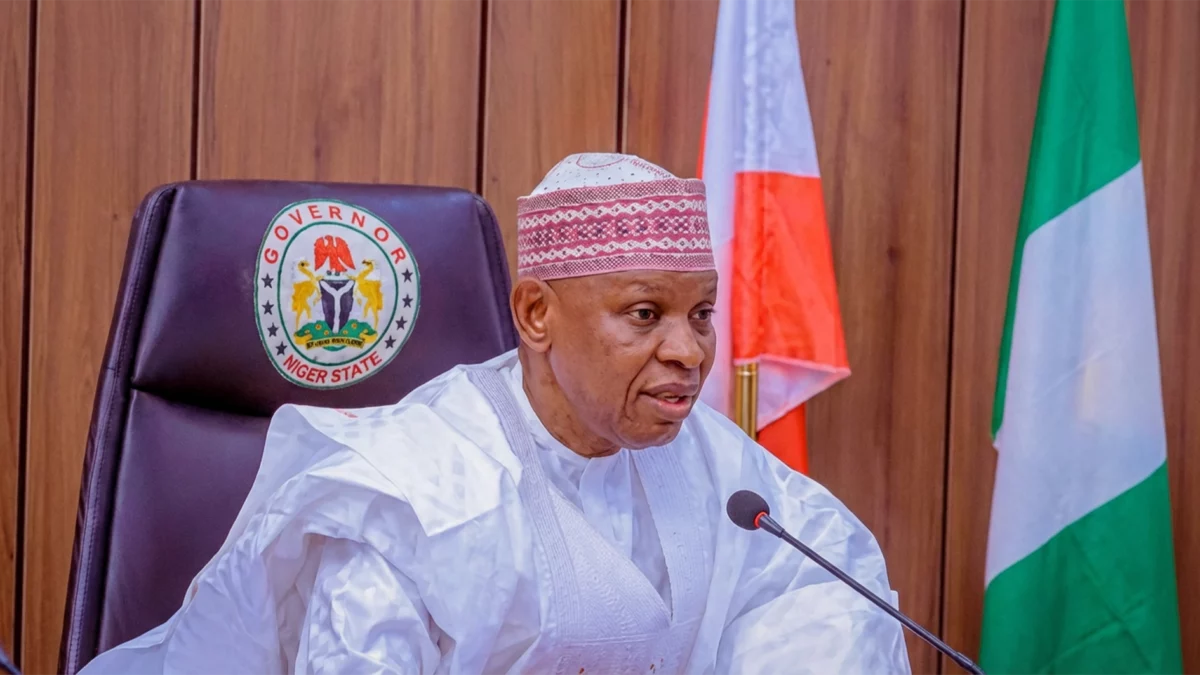
At a time when state governors, like President Tinubu, are increasingly turning to borrowing to finance ambitious infrastructure programmes and expanding government expenditure, Governor Abba Kabir Yusuf’s fiscal approach in Kano State presents an interesting alternative.
It is a greater emphasis on available resources, revenue mobilisation, and spending within the limits of the state’s finances.
His proposed N1.107 trillion 2027 budget, presented to the Kano State House of Assembly on November 11, reinforces this impression.
With 63 per cent allocated to capital expenditure and 37 per cent to recurrent spending, the proposal demonstrates an ambition to sustain infrastructure development and social investment without making conspicuous reliance on new borrowing its defining feature.
He has done it before. Kano recorded a positive fiscal balance in 2024, with receipts of approximately N565 billion against expenditure of N454 billion.
This is according to the state’s financial statements. In 2025, however, the approved N719 billion budget projected a deficit of N73 billion, to be financed through grants and borrowing.
More significantly, in February 2026, the commissioner for Budget and Planning publicly stated that the government had not taken domestic or international loans to finance its projects since assuming office.
That declaration offers an important contrast with the borrowing strategies pursued by some other state governments.
Kano is second only to Lagos in terms of mouths to feed. So, its infrastructure and development needs are as great as any other. Even though the state is not debt-free. The previous APC government piled up tens of millions of dollars in external loans.
So the question now is how Governor Yusuf is delivering on this agenda without looking for external loans.
Yes, it identifies N354 billion in grants and loans and N60 billion in opening balances as additional financing sources. And in Nigeria today where the appetite to borrow has grown exponentially, that is a big deal.
Nevertheless, Yusuf’s approach arguably makes Kano’s budgets more closely connected to the state’s actual fiscal circumstances.
The real test will be whether this approach translates into completed projects, sustainable public services, and stronger internally generated revenue without accumulating an unsustainable debt burden.
We’ve got the edge. Get real-time reports, breaking scoops, and exclusive angles delivered straight to your phone. Don’t settle for stale news. Join LEADERSHIP NEWS on WhatsApp for 24/7 updates →
Join Our WhatsApp Channel


