

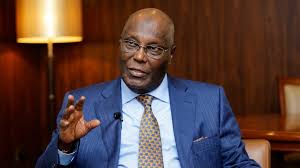
The possibility of former Vice President Atiku Abubakar not appearing on the 2027 presidential ballot has opened a fresh contest over who stands to inherit his political support and electoral base. With several opposition candidates positioning themselves for the presidency, the big question is who gains the most from Atiku’s possible absence and whether his exit would strengthen the opposition’s chances against the APC or deepen its divisions. ADEMU IDAKWO writes.
As political activities gradually gather momentum ahead of the 2027 general election, the opposition faces questions about its leadership, electoral strategy and ability to mount a united challenge against the ruling party.
The evolving political alignments and ambitions of key opposition figures have also brought renewed attention to the strength of individual candidates and the voting blocs they command.
Against this backdrop, the 2027 presidential election could take a different political shape if former Vice President Atiku Abubakar eventually fails to secure a place on the ballot.
Beyond the legal and political implications for the African Democratic Congress (ADC), the development raises questions about the future of the opposition, the redistribution of votes and which presidential hopefuls could benefit from his absence.
Atiku’s political influence and established electoral base make the uncertainty surrounding his candidacy particularly significant.
Atiku remains one of the most influential figures in opposition politics. In the 2023 presidential election, he polled 6,984,520 votes, finishing behind President Bola Tinubu of the All Progressives Congress (APC), who secured 8,794,726 votes. Peter Obi, then of the Labour Party, came third with 6,101,533 votes, while Rabiu Kwankwaso of the New Nigeria Peoples Party (NNPP) secured 1,496,687 votes.
Atiku’s electoral strength was particularly evident in the North. He polled 554,360 votes in Kaduna, 489,045 in Katsina, 426,607 in Bauchi, 417,611 in Adamawa and 386,587 in Jigawa. He won 12 states in the election.
These figures underline the significance of his political support base and explain why his possible absence could trigger a major realignment within the opposition. His nearly seven million votes represent a substantial electoral constituency, although it would be misleading to assume that all those votes would automatically transfer to another candidate.
Atiku’s supporters comprise different political interests, including loyalists drawn to his personality, voters aligned with his northern political network and those who supported him as the preferred opposition alternative to the APC. There are also voters whose allegiance may be tied to the party structure through which he contests. These distinctions could determine where his supporters eventually turn if he does not appear on the ballot.
If he eventually fails to contest, the question will be whether his supporters remain with the African Democratic Congress (ADC), move to another opposition party or distribute their votes among several candidates. The extent to which any candidate can attract them will depend on political negotiations, regional alliances, existing party structures and the ability to present a convincing alternative.
The controversy followed the November 5 judgment of the Federal High Court in Abuja, which nullified the leadership structure associated with David Mark and Rauf Aregbesola. The ruling raised questions about its implications for Atiku’s presidential ambition.
The ADC rejected the judgment and filed an appeal and an application for a stay of execution. The party’s lawyer, Kalu Kalu, subsequently maintained that the judgment did not expressly void Atiku’s candidacy, arguing that its operative orders concerned actions taken by the Mark and Aregbesola-led leadership from July 29, 2025.
Atiku has also insisted that he remains in the race, declaring, “We are on the ballot, and the people must be allowed to decide.”
The legal dispute remains unresolved, and Atiku’s exclusion cannot be treated as an established fact. Nevertheless, the uncertainty has made the question of opposition realignment a major issue ahead of 2027.
ADC Chieftain Expresses Confidence In Atiku
A Kogi State governorship aspirant for the 2027 off-cycle election, Aminu Nda Onuh,
has expressed confidence that Atiku will contest and win the presidential election.
In an interview with LEADERSHIP Sunday, Onuh said the ADC was pursuing its appeal and believed the law was on its side.
“I am confident Atiku will contest, and I am confident he will win. The ADC is pursuing the appeal, and we believe the law is on our side. An earlier Federal High Court ruling dismissed a challenge to the Mark-led leadership, INEC has already published Atiku’s name, and the party has insisted its primaries were validly conducted,” he said.
Onuh said the party was not waiting anxiously for a court verdict, adding that members were mobilising and strengthening structures from the ward level.
He said Nigerians were tired of hunger, insecurity and poor governance and saw the ADC as a vehicle for change.
“Our supporters should stay united, stay calm, and keep working, because we expect this fight to end at the ballot box, and we expect to win it,” he added.
His position reflects the confidence of some ADC members that Atiku’s candidacy will survive the legal challenge. However, if the former vice president eventually does not contest, the ADC could face a different challenge: retaining its political structures and supporters without the presidential candidate around whom much of its current political mobilisation revolves.
This distinction is important because the loss of Atiku’s candidacy would not necessarily mean the loss of the ADC’s entire support base. Some of his loyalists could remain with the party, while others might consider alternative platforms. Opposition candidates seeking to benefit from his absence would therefore have to compete for both his personal supporters and the wider political constituency he represents.
Obi-Kwankwaso Ticket And The NDC
Peter Obi and Rabiu Kwankwaso are contesting together on the Nigeria Democratic Congress (NDC) presidential ticket, with Obi as the presidential candidate and Kwankwaso as his running mate.
The combination brings together Obi’s substantial support base, demonstrated by his 6.1 million votes in 2023, and Kwankwaso’s established political following, particularly in Kano and parts of the North.
Kwankwaso polled 1,496,687 votes nationally in 2023, including 997,279 in Kano, where he defeated both Tinubu and Atiku.
Their joint ticket could appeal to voters seeking a cross-regional opposition platform. Obi’s support among young people and urban voters, alongside Kwankwaso’s northern political network, gives the NDC a basis for reaching different constituencies.
The Obi-Kwankwaso ticket presents one of the possibilities for attracting sections of Atiku’s support base, particularly because Kwankwaso has an established northern political following, while Obi brings a different electoral constituency and national appeal.
However, Kwankwaso’s political influence in Kano and parts of the North does not necessarily translate into wider acceptance among Atiku’s supporters across the northern states where the former vice president performed strongly in 2023.
Atiku’s support in states such as Adamawa, Bauchi, Katsina, Kaduna and Jigawa was not built on the same political relationships or considerations as Kwankwaso’s dominance in Kano. Consequently, the NDC cannot assume that Kwankwaso’s presence on the ticket will automatically attract Atiku’s northern voters.
There is also the question of whether Atiku’s supporters, particularly those who see him as a preferred presidential candidate in his own right, would readily transfer their loyalty to another opposition figure.
Attracting them would require deliberate political engagement and negotiations with influential northern political actors, alongside a convincing national campaign.
Makinde, Adebayo, Sowore And Duke In The Contest
Seyi Makinde, the presidential candidate of the Allied Peoples Movement (APM), is another figure whose political fortunes could be affected by Atiku’s possible absence.
As a sitting governor, Makinde’s supporters point to his administrative record and appeal among younger voters. However, rival voices within the APM argue that his support remains concentrated in Oyo and Osun states, leaving his wider national appeal untested.
Makinde could potentially benefit from voters looking for an alternative opposition candidate with executive experience outside the traditional presidential contenders. His position as a sitting governor gives him an opportunity to present an administrative record as part of his campaign.
However, attracting Atiku’s supporters would require more than an appeal to governance and performance. He would need to demonstrate the capacity to build political relationships beyond his established southwestern base, particularly in the North, where Atiku commands considerable political influence.
The Social Democratic Party’s (SDP) Prince Adewole Adebayo,
is also in the presidential contest. His party could seek to attract voters looking for an alternative outside the larger political platforms.
For Adebayo, Atiku’s possible absence could create an opportunity to appeal to voters dissatisfied with the established political parties. However, the extent to which he can benefit would depend on the SDP’s organisational strength, its ability to mobilise across the country and whether it can convince voters that it offers a viable alternative to the major opposition platforms.
The African Action Congress (AAC),Omoyele Sowore ,
who polled 14,608 votes in 2023, represents another strand of opposition politics, particularly among activists and voters critical of the established political order. His challenge is to translate that appeal into a broader nationwide electoral structure.
Sowore could attract a segment of younger voters and political activists who are dissatisfied with the traditional political establishment. However, his 2023 electoral performance illustrates the gap between activist appeal and the ability to mobilise a substantial nationwide voting constituency.
Atiku’s absence might create an opportunity for him to expand his reach, but there is little basis to assume that Atiku’s largely established political support base would automatically move towards the AAC.
Former Cross River State Governor Donald Duke is contesting under the Peoples Redemption Party (PRP). His political experience and previous national profile could attract attention, although the party’s ability to mobilise a nationwide support base remains an important consideration.
Duke’s challenge, like that of some of the other candidates, would be converting his political experience and national recognition into a formidable electoral organisation capable of attracting voters beyond his traditional political constituency.
These candidates are competing in an opposition field where Atiku’s possible absence could intensify the struggle for support. His votes would not automatically move to any one of them.
In assessing their respective prospects, the difference between having an opportunity and possessing the capacity to benefit from it is important. Obi and Kwankwaso have an existing combined electoral base and a cross-regional political appeal. Makinde has the advantage of executive experience, while Adebayo, Sowore and Duke offer alternative political platforms.
However, the real test for each candidate will be the ability to attract voters outside their established strongholds. Without substantial political structures and deliberate efforts to court Atiku’s supporters, the opportunity created by his possible absence may remain largely theoretical.
The Opposition Unity Question
Political analyst Dr. Chidubem Okonkwo Destiny said Atiku’s possible absence could create an opportunity for opposition consolidation but warned that the redistribution of his supporters would not be straightforward.
According to him, Atiku’s exit could remove one source of rivalry and make it easier for opposition parties to agree on a common candidate.
He noted that the April 2026 Ibadan opposition summit had committed participating parties to the idea of fielding a single presidential candidate.
However, he said several political camps would seek to attract Atiku’s supporters if he did not contest, with none under any obligation to step aside for another candidate.
Dr. Destiny said the NDC ticket of Obi and Kwankwaso, Makinde’s record as a sitting governor, the ADC’s existing organisation and the ambitions of other opposition candidates would all shape the negotiations.
He cautioned that the extent of each candidate’s support beyond established political strongholds remained an important consideration.
His observation raises a fundamental question about the opposition’s ability to turn Atiku’s possible absence into an electoral advantage. Even if several parties agree that a united opposition offers a better chance of defeating the APC, agreeing on a candidate could prove difficult, particularly where individual presidential ambitions and competing political interests are involved.
The NDC could argue that its Obi-Kwankwaso combination offers broad national appeal, while the ADC could insist that its existing organisation and political structures deserve consideration. Makinde and other presidential hopefuls could equally argue that they have the credentials and political support to lead an opposition coalition.
The challenge, therefore, is not simply identifying the candidate with the greatest potential to inherit Atiku’s votes, but persuading the other political camps that such a candidate offers the strongest chance of winning the election.
According to him, if opposition parties successfully negotiate and consolidate around one candidate, the presidential contest could become more competitive. But if they pursue separate ambitions, a divided opposition would face an APC with the advantages of incumbency and an established political structure.
Although opposition consultations have involved parties including the ADC, APM, NDC, SDP, PDP and PRP, discussions about a common strategy do not automatically mean that the presidential candidates have agreed to withdraw or support one another.
If Atiku’s supporters become part of a negotiated opposition arrangement, his absence could help create a broader electoral coalition. But if different candidates attempt to attract his supporters independently, the resulting competition could fragment rather than consolidate the opposition vote.
Ultimately, the opposition’s ability to agree on a common candidate may prove more consequential than the identity of the individual who initially attracts the largest share of Atiku’s supporters.
Could The APC Benefit?
For President Tinubu and the APC, Atiku’s possible absence could change the opposition landscape, particularly if his supporters are divided among several candidates.
A fragmented opposition would have to contend with the ruling party’s nationwide structure and the advantages of incumbency.
Indeed, the APC could emerge as a beneficiary, even without directly attracting Atiku’s supporters. If his absence triggers competition among opposition candidates, the ruling party could benefit from the division of votes that might otherwise have been consolidated behind a single challenger.
For instance, if sections of Atiku’s northern support base move towards the NDC, others remain with the ADC, while some gravitate towards Makinde or other candidates, the opposition could enter the election with several competing centres of political influence.
Such a development could work in the APC’s favour by reducing the possibility of a single opposition candidate building a sufficiently broad coalition to challenge Tinubu.
However, this advantage is not guaranteed. If Atiku’s absence encourages opposition parties to resolve their differences and rally behind a candidate with significant cross-regional appeal, the APC could face a more consolidated challenge.
There is also the possibility that the legal controversy surrounding the ADC could generate sympathy for Atiku and his supporters if voters interpret the dispute as an attempt to weaken opposition politics.
In that situation, the political consequences could extend beyond Atiku’s personal ambition, potentially strengthening the determination of opposition supporters to rally behind another candidate or platform.
Ultimately, Atiku’s possible absence would not automatically make any single opposition politician the beneficiary. The outcome would depend on political negotiations, regional alliances, party structures and the ability of candidates to persuade voters beyond their established strongholds.
If Atiku contests, he remains a major figure in the opposition race. If he does not, Obi and Kwankwaso, Makinde, Adebayo, Sowore, Duke and other candidates will face the challenge of attracting different segments of his support base.
The Obi-Kwankwaso ticket could attract sections of Atiku’s northern support base because of Kwankwaso’s established northern political network and Obi’s existing national electoral constituency. However, that possibility should not be mistaken for an automatic transfer of Atiku’s votes. Makinde and the other candidates could also attract sections of the electorate, depending on their political reach and ability to build alliances.
The ADC, meanwhile, could retain some of Atiku’s political constituency through its existing party structures, even if his presidential ambition is eventually frustrated.
The bigger question, therefore, is whether the opposition can turn the political vacuum created by Atiku’s possible absence into an opportunity for consolidation or allow competing ambitions to fragment its support base further.
If the latter happens, the APC could benefit from a development that initially appears to present an opportunity for the opposition. But if the parties successfully negotiate a common platform and candidate, Atiku’s absence could instead reshape the 2027 contest into a more competitive race.
We’ve got the edge. Get real-time reports, breaking scoops, and exclusive angles delivered straight to your phone. Don’t settle for stale news. Join LEADERSHIP NEWS on WhatsApp for 24/7 updates →
Join Our WhatsApp Channel


