

…Government interventions cannot fix gas payment crisis – NDPHC
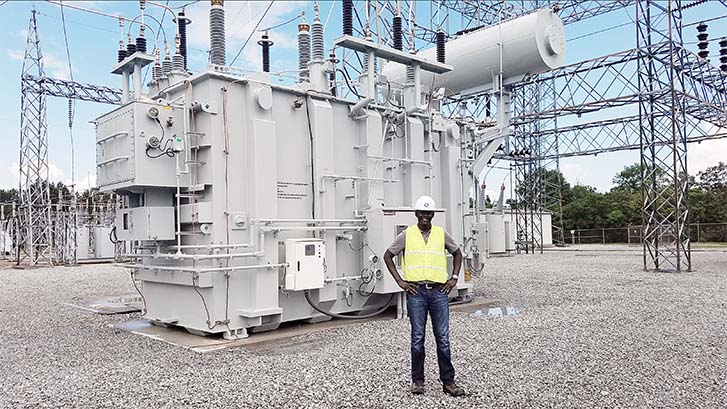
Consumers have financed 78 per cent of distribution transformers installed by electricity distribution companies across Nigeria, the Power and Energy Consumers Advocates of Nigeria (PECAN) has alleged, in a fresh indictment of the country’s struggling power sector.
The executive secretary of PECAN, Uket Obonga, made the claim in Abuja during a panel session at the 6th Power Correspondents Association of Nigeria (PCAN) Conference, themed, “$1trn Economy: Nigeria’s Roadmap to Reliable and Affordable Power Supply”.
Obonga said the figure emerged from a national survey conducted by the advocacy group between 2018 and 2021, covering electricity supply quality across the country.
“We conducted a national survey on the quality of electricity supply to Nigeria in 2018, 2019, 2020 and 2021,” he said. “The data available to us, we went around the country. We discovered that 78 per cent of the transformers installed by the DisCos across the country were procured and paid for by consumers.”
He said the development showed that consumers were not only paying high tariffs for unreliable electricity but were also indirectly financing critical distribution infrastructure that ought to be provided by the distribution companies.
“Who has captured that? Do we have data on that?” Obonga asked.
The PECAN executive secretary argued that the burden on consumers reflected a deeper failure in the governance and commercial structure of the Nigerian Electricity Supply Industry (NESI).
“From the name, Nigerian Electricity Supply Industry, have you noticed that something is missing in that name?” he said. “In simple economics, there is demand and what? Demand and what? We only have supply. We don’t have demand. And who are the ones demanding? The consumers.”
According to him, the absence of a strong consumer voice in policy formulation and sector oversight has allowed operators to prioritise revenue collection over service delivery.
“Something is fundamentally wrong with this country,” Obonga said. “We have sat on panels, made presentations, spoken all the grammar, written everything.”
He accused electricity operators of profiting from poor supply, saying that reduced generation, transmission and distribution had not necessarily translated into reduced earnings from consumers.
“Going by the second quarter report of NERC, the record, you discover that the less electricity is generated, distributed, and transmitted and distributed, the more money they make,” he said. “From consumers. Selling darkness. Exploiting Nigerians.”
Consumers Central to Power Business
Obonga said the Electricity Act 2023 and the Customer Protection Regulations recognised consumers as central stakeholders in the industry, but argued that implementation had remained weak.
“You draw my attention to the Electricity Act 2023, the customer protection regulation. And under that, you have customer service standards of performance,” he said. “In other words, the customers are supposed to be taken care of.”
He insisted that no electricity business could survive without paying customers receiving dependable service.
“Without the customers, there is no electricity industry,” he said. “Without the customers, there is no electricity business.”
Obonga said Nigeria’s failure to treat electricity as a development priority had undermined industrial growth, job creation and the country’s ambition to build a $1 trillion economy.
“We are talking of one trillion economy. I am an incurable optimist. But when it comes to Nigeria, I am old enough,” he said.
He criticised what he described as the ad hoc manner in which governments had managed the power sector, including the creation of new intervention agencies without clear accountability or measurable outcomes.
“Somebody talked of, and I am hearing this for the first time, Energy and Power Company Limited,” Obonga said. “I have been in the sector for so long, I have not heard that one. Today I am hearing that one for the first time.”
Obonga also questioned the allocation of large public funds to the sector without corresponding improvements in supply.
“Somebody talked of 10 trillion investment by the federal government in the power sector,” he said. “Consumers are at the receiving end.”
Also speaking on the panel, the general manager, Gas Commercial, Niger Delta Power Holding Company (NDPHC), Bashir Bello Adoke, said Nigeria’s power crisis was being driven largely by the inability of the electricity market to pay promptly for gas supplied to generation companies.
Adoke said gas availability alone could not guarantee stable electricity supply because power plants also required firm commercial arrangements, fuel transportation, maintenance and operational readiness.
“The mere fact that gas availability alone does not guarantee reliable power supply,” he said. “There are other things you can use to have consumption and power plant the same, in between, operationally ready to even be able to generate.”
He identified two major challenges confronting gas-to-power in Nigeria: weak payment mechanisms and inadequate investment in non-associated gas.
“The first one is that today, like I tell you, without honesty, there is no robust mechanism to obtain a forecast,” Adoke said. “No robust mechanism exists. Because the proceeds from the market is not even enough to pay for gas supply.”
According to him, generation companies receive only about 40 per cent of the value of the electricity they produce, while gas accounts for between 60 and 75 per cent of generation costs.
“If you invest only for energy generated, what you are paying by end-debt is about 40 per cent,” he said. “And the cost of generation takes between 60–75 per cent is gas. So the money is not even enough for you.”
Adoke said the shortfall had created a recurring cycle of unpaid gas invoices, constrained generation and unreliable supply.
“That’s why you see, in any policy today, the market is almost at 60–70 per cent of power that has been generated and consumed by Nigeria,” he said. “So, only we try and establish a robust mechanism of payment for gas supply, we are going to continue to have problems.”
He warned that periodic government interventions could not provide a lasting solution.
“Government intervention every three to four years will not solve the problem,” Adoke said. “The intervention by the government, if you notice, is from 2015 to 2025. Because by 2025, gas has started accumulating again, and it’s not being addressed.”
Investment Gap in Gas Supply
Adoke said Nigeria could not depend solely on associated gas, which is produced alongside crude oil, because disruptions in oil production, pipeline vandalism and well shut-ins could immediately affect gas delivery to power plants.
“In power supply, you cannot rely solely on associated gas to commit yourself to reliable gas supply,” he said. “There might be, you might shut your oil well, your oil well might be shut in, there might be pipeline vandalism. And once that happens, you can’t produce gas.”
He said the country needed greater investment in non-associated gas, which is developed independently of crude oil production and can provide more dependable feedstock for thermal power plants.
“So, you must simply have a non-associated gas,” Adoke said. “That’s where your investment has not been taking place.”
He acknowledged that the Federal Government had introduced fiscal incentives to encourage investment in gas development, but said the measures might not be enough.
“The executive order in the oil and gas sector has sweetened the development of associated gas with the oil companies who consider not to be incentive enough for them to go into that,” he said. “Because we need a lot of money to do exploration for non-associated gas.”
“Is that enough? Might not be enough,” he added. “The government itself needs to commit resources to development of gas.”
Adoke said industrial clusters across the country continued to rely on self-generation because they could not trust the national grid to provide uninterrupted electricity.
“All the industrial clusters in the country, they rely on the same generation,” he said. “They don’t even have confidence that this year can guarantee and despite the weather, without disruption.”
He said solving the crisis required simultaneous investment in gas development, transmission and distribution infrastructure.
“You need to be working on your transmission. You need to be working on your distribution,” he said. “So, that’s entirely what you need to do.”
Tariffs Push Consumers Off Grid
Obonga warned that rising tariffs and persistent poor service were driving consumers towards solar power and captive generation, with potentially damaging consequences for the financial viability of the national grid.
“The tariff already made today, it is prohibiting,” he said. “And we keep hearing, no cost-effective tariff. I don’t know when this tariff will be cost-effective.”
He said many households and businesses were already turning to solar energy as an alternative to grid supply.
“The implication of that is that a lot of people are going to solar today,” Obonga said. “They are going to solar. So, I am scared for this grid.”
He said the exodus of high-value consumers could leave the grid with fewer paying customers, higher fixed costs and greater financial pressure.
“By the time everybody abandons it and uses solar, the industries are self-generational, we don’t know what the grid will be doing,” he said. “So, there is a need for us to look at it.”
Obonga, however, said solutions existed if government and operators were willing to confront the sector’s structural problems honestly.
“If you see a solution, there should be a solution,” he said. “So, there is no one problem without a solution. But the truth of the matter is that, whether the government is taking the right step, I believe the government is taking the right steps. They are moving in the right direction.”
Gas Export Not the Problem
Responding to concerns that gas exports were depriving domestic power plants of fuel, Adoke said Nigeria’s gas was divided between export and domestic obligations.
“It is correct that all the gas goes to export,” he said, before clarifying that domestic supply obligations existed under the Petroleum Industry Act.
“There is gas, a mark of domestic utilisation, and under the PIA, it’s a must,” he said. “We must comply with it. We must bring that gas.”
Adoke said the real issue was not the availability of gas for the domestic market but the failure of the power sector to pay for it.
“The problem is not the gas, like I told you,” he said. “The same problem is the payment for the gas. Because the gas supplies are not for Christmas. They don’t want to give gas that people cannot pay for.”
He said gas suppliers would continue to prioritise buyers with credible payment arrangements.
“If you have gas, if you have your money and you pay regularly, you will get gas,” Adoke said.
The panel discussion came as stakeholders at the PCAN conference examined how Nigeria could deliver reliable and affordable electricity to support its ambition of building a $1 trillion economy by 2030. The conference brought together policymakers, regulators, operators, investors, industry experts and journalists.
We’ve got the edge. Get real-time reports, breaking scoops, and exclusive angles delivered straight to your phone. Don’t settle for stale news. Join LEADERSHIP NEWS on WhatsApp for 24/7 updates →
Join Our WhatsApp Channel


