Nigeria and other African countries are moving to strengthen cross-border cooperation in the tracing, freezing, confiscation and repatriation of stolen assets, with a proposal for a harmonised continental framework to tackle illicit financial flows and ensure recovered funds are transparently managed.
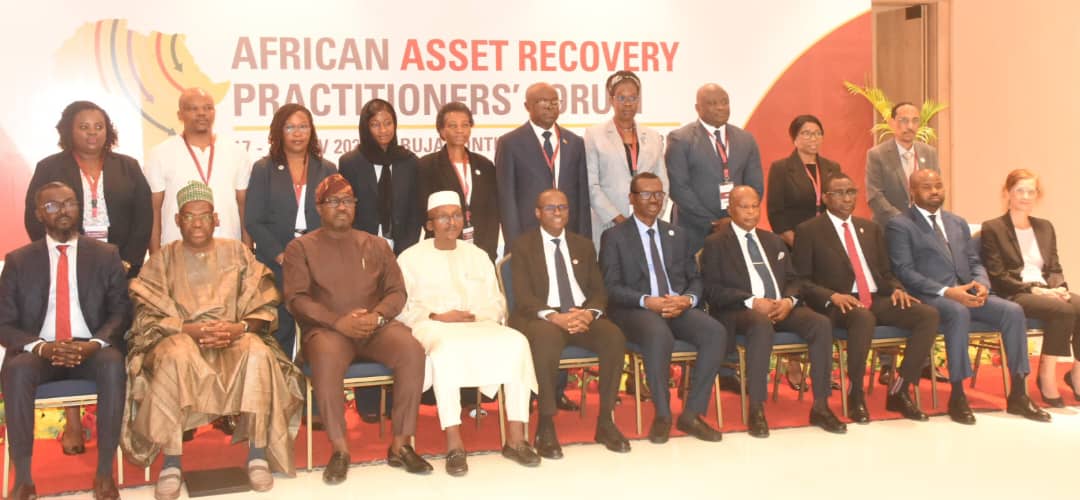
The initiative formed part of resolutions and proposals presented at the maiden General Assembly of the African Asset Recovery Practitioners’ Forum (AARP-F), which opened in Abuja on Tuesday.
The four-day assembly, holding from November 17 to 20, is expected to move the Forum from an interim arrangement into a fully established continental institution, with an elected Steering Council, operational work plan and specialised working groups.
At the gathering, the Attorney-General of the Federation and Minister of Justice, Lateef Fagbemi proposed the development of a harmonised continental Standard Operating Procedure (SOP) to guide African countries in tracing, freezing, seizing, confiscating, repatriating, managing and disposing of assets recovered from criminal activities.
He said the framework would establish common minimum standards for cooperation among African countries while respecting their domestic laws and national sovereignty.
Fagbemi explained that the proposed framework should also provide clear channels for timely mutual legal assistance, secure information-sharing protocols and safeguards for due process and the rights of third parties.
He further called for stronger beneficial ownership transparency, improved digital asset-tracing capabilities, specialised professional training and independent reporting on the utilisation of recovered assets.
According to him, the success of asset recovery should not be measured only by the monetary value of assets recovered but also by the transparency of the process and the developmental benefits delivered to citizens.
“Recovered assets must be rigorously protected against dissipation, mismanagement and re-entry into illicit financial channels,” he said.
Speaking at the event, Chairman of the Independent Corrupt Practices and Other Related Offences Commission (ICPC) and Chair of the Interim Steering Council of AARP-F, Dr Musa Adamu Aliyu said the Forum was established to provide a practical platform for African asset recovery practitioners to strengthen professional relationships, exchange expertise and improve cooperation across jurisdictions.
He identified the increasing complexity of cross-border financial transactions, difficulties in identifying beneficial owners, differences in national legal systems, delays in international cooperation and limited technical capacity as major obstacles to effective asset recovery.
Aliyu said the Forum had identified six strategic priorities to guide its operations.
They include institutional development and governance, capacity building and professional development, operational cooperation and information sharing, strategic partnerships and international engagement, policy and legal development, as well as sustainability and resource mobilisation.
He explained that the priorities would form the basis of a practical programme of work supported by clear responsibilities, realistic timelines and measurable indicators.
According to him, the four-day assembly will focus on three major institutional milestones: validation of the proposed work plan and strategic priorities, election of the substantive Steering Council and formal handover from the Interim Steering Council to the newly elected leadership.
Also speaking, chairperson of the African Union Advisory Board Against Corruption (AUABC), Hon. Kwami Edem Senanu, disclosed that the African Union had already commenced capacity-building interventions in some member countries to strengthen the implementation of CAPAR.
He listed Liberia, Eswatini, Chad and Mauritius among countries that had benefited from the training initiatives.
Senanu said the interventions were designed to translate Africa’s commitments on asset recovery into practical institutional capacity and operational results.
He also disclosed that Mauritius, Kenya and South Africa would share their experiences during the assembly, particularly on tracing illicit assets across borders, recovering stolen wealth and managing confiscated assets.
He described the initiative as an opportunity for African practitioners to learn from one another’s experiences rather than depend exclusively on external expertise.
Senanu traced the origin of the Forum to September 2022, when the AUABC and the African Union Commission’s Department of Political Affairs, Peace and Security brought together asset recovery experts and prosecutors in Dakar, Senegal.
He said participants at the meeting recommended the establishment of a practitioners’ platform that would help translate the Common African Position on Asset Recovery into practical activities within national anti-corruption institutions.
Further consultations were held in Dar es Salaam, Tanzania, in January 2024, before the Forum’s Charter was agreed upon and adopted in Addis Ababa, Ethiopia, in May 2024.
The Forum was subsequently launched in Nairobi, Kenya, in April 2025, with the adoption of the Nairobi Declaration and signing of its Charter.
We’ve got the edge. Get real-time reports, breaking scoops, and exclusive angles delivered straight to your phone. Don’t settle for stale news. Join LEADERSHIP NEWS on WhatsApp for 24/7 updates →
Join Our WhatsApp Channel