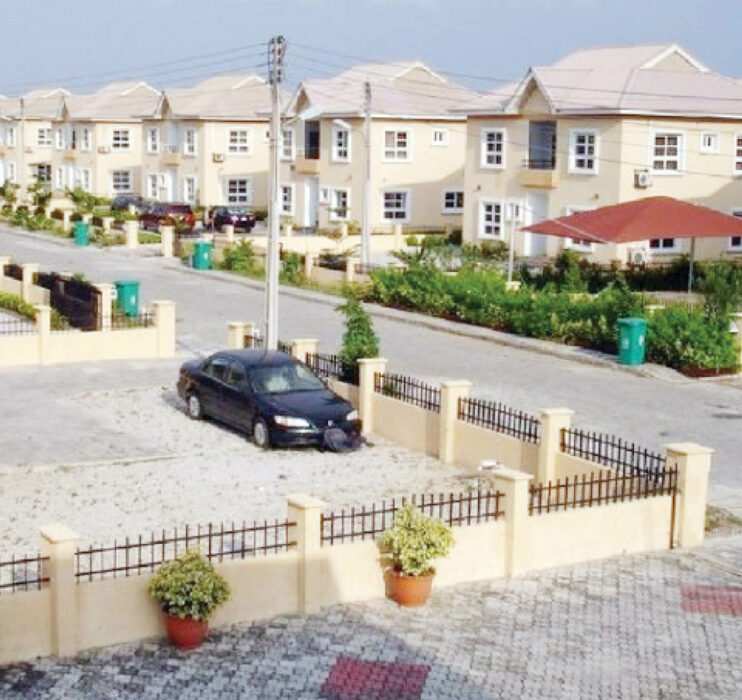
As year 2025 inches to an end, Nigeria’s real estate sector has reached a moment of uncomfortable clarity. The numbers are no longer abstract. The pressure points are no longer speculative. What began years earlier as mild distortions caused by inflation, currency pressure and policy uncertainty have hardened into a full-blown market reset.
Across Nigeria’s major urban centres, like Lagos, Abuja, Port Harcourt, Ibadan, Benin and Asaba, the same story played out with aggressive rent hikes, growing tenant defaults, forex-driven construction shocks, unregulated agency practices and a clear strategic pivot by developers away from build-to-rent models toward build-to-sell.
The sector did not collapse, but it stopped pretending that business as usual was sustainable. 2025 has become the year the market was forced to confront realities it had long postponed.
Rent Hikes: When The Numbers Stopped Making Sense
Rent increases dominated the real estate narrative throughout 2025. In many locations, annual rent reviews that once averaged 10–15 per cent jumped to between 30 and 60 per cent. For tenants, the shock was immediate and destabilising.
Market data compiled by private property advisory firms indicates that average residential rents across key urban corridors rose by 25 to 55 per cent year-on-year. In Lagos, two-bedroom apartments in neighborhoods such as Lekki Phase 1, Gbagada, Yaba and Ogba that rented for between N1.8 million and N2.2 million in 2024 crossed N3 million by mid-2025. Similar spikes were recorded in Abuja’s Gwarinpa, Jabi, Wuse II and parts of Lokogoma.
The drivers were not mysterious. Construction materials, cement, steel, aluminium and fittings, rose sharply in price. Diesel costs remained volatile. Estate service charges climbed. Landlords, facing higher replacement and maintenance costs, passed the burden to tenants.
But there was a structural problem: incomes did not follow the same trajectory. Data from the National Bureau of Statistics shows that while headline inflation stayed above 30 per cent for much of the year, real wage growth remained weak, particularly in the private sector. The result was a widening affordability gap that left many tenants priced out of their homes almost overnight.
A Lagos-based housing economist, Tunde Adebayo, captured the dilemma bluntly: “We are pricing houses as if salaries are rising at the same pace as cement and diesel. They are not. That disconnect is the real crisis in Nigerian housing today.”
Rent Default: The Quiet Shockwave
As rents climbed, rent default followed quietly but persistently. While eviction stories made headlines, the more common reality was less dramatic: delayed payments, renegotiated terms, informal installments and tenants abandoning properties before lease expiry.
Property managers across major cities reported a 15–30 per cent increase in rent-related disputes in 2025. In estates dominated by middle-income earners, landlords were forced to choose between enforcing strict annual upfront payments or allowing staggered arrangements to avoid prolonged vacancies.
Vacancy itself became a growing problem. In some oversupplied mid-market locations, average vacancy periods stretched from three months to as long as six or nine months. For landlords, the arithmetic was brutal: a 40 per cent rent hike meant little if the property sat empty for half a year.
A property manager in Lagos, Gab Egeruo summed it up: “A vacant house is the most expensive house you can own. Many landlords pushed rents aggressively and then watched tenants walk away.”
This pattern exposed a dangerous contradiction in the market. While headline rents rose, effective rental income, the money actually collected, became less predictable. The illusion of higher returns masked growing instability beneath the surface.
Percentage-based Agency Commission Triggers Prohibitive Cost
One of the most persistent distortions in Nigeria’s rental market in 2025 was the role of agency commission. In the absence of strict national regulation, tenants in many states continued to pay 10 to 20 per cent agency fees, alongside legal fees, caution deposits and service charges.
In practical terms, this meant that securing a N3 million apartment often required between N3.8 million and N4.2 million upfront. For many households, that entry cost alone was prohibitive.
While landlords often distance themselves from agency charges, industry insiders acknowledge that these costs are indirectly capitalised into asking rents. Agents, in turn, are incentivized to push higher rental values because their commissions are percentage-based.
An estate surveyor in Ibafo, Mowe, Ibrahim Lawal, warned that the system is unsustainable: “Agency fees have become a structural inflation driver in rentals. Until professional standards are enforced nationwide, affordability will keep deteriorating and trust in the system will keep eroding.”
The consequence has been the growth of informal rental arrangements, reduced transparency and an increase in disputes, outcomes that ultimately hurt both landlords and tenants.
Lagos Tenancy Reform: Law Steps Into a Broken Market
Against this backdrop of rising rents, defaults and escalating disputes, Lagos State moved in 2025 to confront one of the market’s most volatile fault lines: landlord-tenant relations.
The Lagos State government forwarded an Executive Bill titled The Lagos State Tenancy and Recovery of Premises Bill 2025 to the Lagos State House of Assembly, signaling a decisive attempt to curb illegal evictions, landlord harassment and arbitrary rent hikes.
The proposed law is a direct response to widespread complaints across the state, where tenants increasingly reported being locked out of their homes, having doors broken, roofs removed or utilities cut off during rent disputes. These practices, long normalized in Lagos’ overheated rental market, have now been explicitly criminalised.
Under the Bill, landlords will be legally required to obtain a court order before evicting any tenant, a major shift in the balance of power within the rental ecosystem. All forms of forceful eviction, intimidation and self-help actions, including the use of threats or thugs, are outlawed. Section 10 of the draft legislation is unambiguous: landlords must not interfere with a tenant’s “quiet and peaceable enjoyment” of rented premises.
The penalties are deliberately stiff. Section 43 provides that any landlord, who attempts to eject a tenant without a court order, alters a building to force eviction, threatens or molests a tenant, or damages property commits a criminal offence. Conviction attracts a minimum fine of N1 million, up to six months’ imprisonment, or both.
Beyond evictions, the Bill also tackles the issue of arbitrary rent increases that defined much of 2025. Section 33 empowers courts to determine whether a rent hike is reasonable by comparing similar properties in the same location, reviewing evidence from both parties and considering the specific features of the property. This introduces, for the first time, a legal benchmark for fairness in rent reviews in Lagos.
To address the slow pace of justice that often renders tenant protections meaningless, the Bill introduces accelerated dispute-resolution mechanisms. Tenancy cases can be initiated through originating summons, with hearings fixed within 14 days. Courts may sit on weekends or public holidays, conduct virtual hearings and limit mediation to a maximum of 30 days.
The legislation also tightens regulation around service charges and security deposits, two recurring sources of conflict. Landlords will be required to provide tenants with a detailed account of service-charge usage every six months, while security deposits must be refunded unless there is clear evidence of damage to the property.
In practical terms, the proposed law represents an attempt to inject rule of law into a rental market that has largely operated on raw power dynamics. It does not solve affordability. It does not reverse rent inflation. But it draws a clear line: disputes must move from force to courts.
How Forex Turbulence, Rising Costs Threatened Construction Sector
Nigeria’s construction and real estate sectors continue to battle storms of challenges, from crippling foreign-exchange volatility to relentless hikes in the cost of building materials.
Speaking to LEADERSHIP, a real estate player and managing director of Legendary Foreshore, Victor Ameh, laid out the hard realities confronting developers and contractors nationwide.
According to him, the sector is dealing with “serious supply-side shocks,” particularly the surge in prices of reinforcement materials and other key inputs.
He noted that many developers can no longer access forex through official channels due to instability in the market and policy unpredictability from the Central Bank of Nigeria. This bottleneck, he stressed, directly affects the cost of raw materials, most of which depend on imported components.
“There’s a lot of hiking going on now,” Ameh explained.
“Coupled with FX constraints, a lot of developers cannot access the forex market. The instability and exchange-rate issues are all affecting the price of raw materials.”
Despite the turbulence, he said his company has remained resilient, but not without deliberate effort. While he declined to disclose specific operational strategies.
He confirmed that the firm has adopted internal measures to steady operations and maintain project delivery timelines.
When asked how his organisation has been able to “close the gap” in a sector under pressure, he acknowledged that the broader question is how any operator survives such volatility.
“What you are asking is how we’ve been able to stay strong despite the volatility,” he said. “I’ll send a detailed breakdown, but yes, we’ve held our ground, and the plan is to do more in the coming years for the real-estate market.”
Ameh assured that his company will continue engagements with construction companies across Nigeria, exploring deeper insights into industry challenges and potential pathways forward.
As raw material costs spike and forex scarcity persists, operators know the sector’s stability will depend on how quickly stakeholders adapt, and how decisively policymakers act.
If rent hikes defined the demand side of the market, foreign-exchange volatility defined the supply side. Throughout 2025, developers struggled with unpredictable construction costs driven by currency weakness.
The naira lost more than 40 per cent of its value against the US dollar between 2023 and 2025. For an industry heavily dependent on imported inputs, tiles, sanitary ware, elevators, lighting systems, roofing materials and machinery, this volatility was devastating.
Projects that were viable at conception became strained mid-construction. Some developers slowed delivery timelines to manage cash flow. Others downsized unit specifications. In extreme cases, projects were suspended indefinitely.
A developer operating in the South-East, Chinedu Okorie described the challenge: *“You cannot run long-term rental models when your input costs change every month. The risk profile became unbearable.”
The Strategic Pivot: From Build-To-Rent To Build-To-Sell
Perhaps the most consequential shift in 2025 was the growing abandonment of build-to-rent strategies in favor of build-to-sell models. Faced with rising tenant defaults, uncertain rental cash flows and escalating maintenance costs, developers prioritized quicker capital recovery.
Industry estimates suggest that over 60 per cent of new private residential developments launched in 2025 were sales-focused, compared to less than 45 per cent three years earlier. Smaller unit sizes and flexible payment plans became dominant strategies.
Funke Adewale, a real estate investment consultant, explained the logic: “Selling units is now safer than managing tenants. Investors want certainty. But the long-term consequence is fewer professionally managed rental homes.”
A Market Stripped Of Illusions
Nigeria’s real estate sector did not fail in 2025, but it was exposed. Rents rose faster than incomes. Defaults increased. Construction costs spiraled. Investors retreated from long-term rental risk.
Lagos’ proposed Tenancy Bill stands out as one of the few concrete policy responses to this reality. It does not cure the housing deficit or tame inflation, but it confronts the culture of impunity that has worsened tenant vulnerability in a tightening market.
The sector is still standing because demand remains structurally strong. But demand without affordability is fragile. Without sustained reforms in rental regulation, agency practice, housing finance and currency stability, the gap between housing supply and effective demand will widen further.
2025 will be remembered as the year Nigeria’s real estate market was forced to confront uncomfortable truths, and the year denial became far more expensive than realism.
We’ve got the edge. Get real-time reports, breaking scoops, and exclusive angles delivered straight to your phone. Don’t settle for stale news. Join LEADERSHIP NEWS on WhatsApp for 24/7 updates →
Join Our WhatsApp Channel