

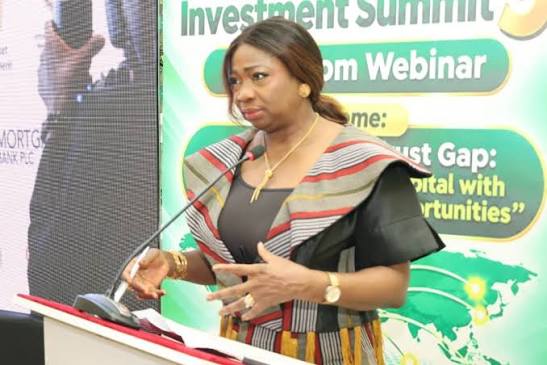
As the Nigerians in the Diaspora Investment Summit (NDIS) 2026 ended in Abuja on Wednesday, Nigerians living abroad were assured that their investments would be safe, as opportunities for diaspora investment in the country continued to expand.
The summit, with the theme, “Bridging the Trust Gap: Connecting Diaspora Capital with Credible Home-Based Opportunities”, provided a platform for Nigerians in the diaspora to join government institutions, financial regulators, investors, business owners and project developers in exploring investment opportunities across critical sectors of the economy.
Ahead of the summit, the NiDCOM boss, Dr Abike Dabiri-Erewa, described Nigerians in the diaspora as a major economic resource whose contributions must extend beyond remittances to direct investments in productive sectors of the economy.
“The Nigerian Diaspora Investment alone, if harnessed to its full potential, can measure up to $100 billion every year as inflow into the Nigerian economy,” she said.
She, however, acknowledged that lack of transparency, inadequate investor protection, unreliable information and weak institutional confidence had posed serious challenges and discouraged many Nigerians abroad from investing in their home country.
She identified trust and knowledge gaps, fraudulent investment schemes, unverified channels and inadequate investor protection as major barriers to diaspora investment, even as she stressed the need for transparency, effective regulatory safeguards and credible investment platforms to unlock diaspora capital.
In his keynote address, Shehu Usman Osidi, Managing Director/Chief Executive of the Federal Mortgage Bank of Nigeria (FMBN), called for stronger institutional collaboration, transparent investment processes and improved investor protection mechanisms to bridge the trust gap limiting diaspora investments in Nigeria.
He emphasised that Nigeria must rethink its approach to diaspora engagement by moving beyond the attraction of foreign capital to creating an investment environment where Nigerians abroad can confidently identify, verify, access and monitor credible investment opportunities at home.
Osidi also highlighted weak investment governance, fraudulent property transactions, disputed land titles, abandoned projects, unfulfilled contractual obligations and the mismanagement of invested funds as factors contributing to investor apprehension.
He acknowledged the Federal Government’s efforts to strengthen diaspora engagement through the establishment of NiDCOM and the National Diaspora Policy, which provides an institutional framework for mobilising diaspora resources through trade, investment, entrepreneurship, public-private partnerships and knowledge transfer.
He also highlighted the investment climate reforms being pursued under the administration of President Bola Ahmed Tinubu, particularly through the Presidential Enabling Business Environment Council (PEBEC), chaired by Vice President Kashim Shettima.
Using the FMBN as an example of institutional intervention, Osidi highlighted the bank’s National Housing Fund (NHF) Diaspora Mortgage Product, officially launched in London on 7 August 2026.
He explained that the initiative was developed in response to the challenges confronting Nigerians abroad who desire to own homes in Nigeria but face difficulties relating to mortgage accessibility, distance, property transactions and confidence in the safety of their investments.
He also disclosed that FMBN established a dedicated Global Business Strategic Unit as an independent specialised business unit to provide focused oversight, customer engagement and service delivery for its diaspora business.
Under the product, eligible Nigerians aged between 18 and 70 years living abroad can participate through monthly contributions of US$100, US$200 or US$300 under the Basic, Classic and Premium categories, respectively.
The FMBN boss cautioned that access to mortgage finance alone would not resolve the trust challenge, stressing the need to strengthen collaboration with regulators, state governments, developers and mortgage institutions to ensure credible housing supply, authentic property titles, quality construction and timely project delivery.
Earlier, the Chairman of the Summit Organising Committee and Coordinator of NDIS, Mobolaji Lewis, said the 2026 virtual engagement was designed to sustain diaspora investment conversations despite the decision to scale down the physical summit in view of the national election campaign season.
He noted that the summit would provide practical guidance on identifying, verifying and accessing credible investment opportunities while strengthening institutional collaboration.
He also highlighted the importance of engagement as a foundation for the 10th-anniversary edition of the NDIS in 2027.
We’ve got the edge. Get real-time reports, breaking scoops, and exclusive angles delivered straight to your phone. Don’t settle for stale news. Join LEADERSHIP NEWS on WhatsApp for 24/7 updates →
Join Our WhatsApp Channel


