Women’s group questions electoral body’s campaign spending oversight | SERAP goes to court over political finance disclosure
The ability of the Independent National Electoral Commission (INEC) to effectively monitor campaign expenditure and enforce political finance regulations is coming under scrutiny ahead of the 2027 general elections, with presidential candidates permitted to spend up to N10 billion on their campaigns under the Electoral Act, 2026.
The spending ceiling, coupled with concerns over the transparency of political donations and the monitoring of campaign expenses, has renewed questions about the safeguards in place to prevent excessive financial influence in Nigeria’s electoral process.
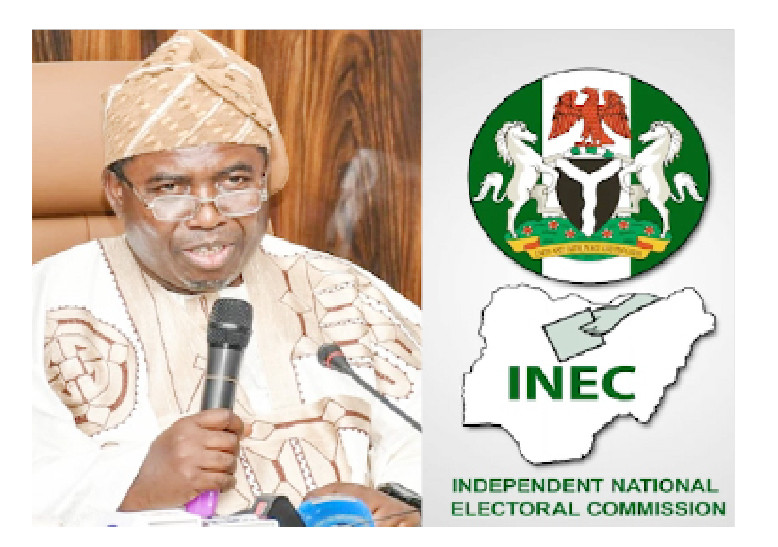
INEC, however, says it has mechanisms for tracking candidates who exceed the expenditure limits prescribed by law, including monitoring the cost of advertisements, billboard displays and other campaign-related activities.
The commission’s deputy director, Voter Education and Publicity, Wilfred Ifugah, told LEADERSHIP Weekend that INEC was monitoring campaign spending but would not disclose all the methods it employed.
“We can track their spending through the cost of advertisements, the display of billboards and so many others.
“We are actually monitoring everything and I can’t tell you all how we do that,” he said.
However, an advocacy group, Women For Good Governance, has questioned INEC’s preparedness to effectively enforce campaign finance regulations, arguing that the spending limits would mean little if the commission could not demonstrate that violations would be identified and sanctioned.
The organisation said INEC must go beyond assuring Nigerians that it has mechanisms for tracking campaign expenditure, insisting that the credibility of the electoral process depends on transparent monitoring, verifiable financial disclosures and firm enforcement of the law.
“INEC cannot expect Nigerians to have confidence in campaign finance regulation simply because it says it has monitoring mechanisms. The commission must demonstrate that those mechanisms work, that expenditure is properly verified and that the law will be enforced without fear or favour,” it said.
The group warned that an electoral environment in which wealthy candidates could exceed legal spending limits without consequences would undermine political competition, disadvantage candidates with fewer resources and weaken equal opportunities for democratic participation.
It noted that campaign expenditure extended beyond advertisements and billboards to include rallies, logistics, media campaigns, political support groups and other activities, making it difficult to establish the actual cost of electioneering.
Women For Good Governance therefore challenged INEC to explain how it intended to monitor such spending, verify campaign finance returns and determine whether expenses incurred by political support groups and other third parties should be attributed to candidates.
It also called on the commission to make relevant political finance information accessible to the public, including financial disclosures, campaign expenditure returns, audit findings and details of enforcement actions, subject to applicable legal requirements.
According to the organisation, transparency should not be treated as a favour to Nigerians but as a fundamental requirement for building public confidence in the electoral process.
It further urged INEC to clarify the procedures for investigating suspected violations, the sanctions applicable to offenders and the measures being taken to ensure that campaign finance regulations were enforced before, during and after the 2027 elections.
“INEC must understand that its responsibility is not merely to announce rules but to ensure compliance. Nigerians need evidence of enforcement, not just assurances.
“If the commission cannot explain how it will identify violations, investigate them and apply sanctions, legitimate questions will remain about the effectiveness of the campaign finance framework,” the organisation said.
The national coordinator of Women For Good Governance, Madam Peace Obiageli Dubem, said transparent campaign financing was essential to protecting electoral integrity and ensuring that candidates competed under fair conditions.
She urged INEC to provide clear and measurable assurances that no candidate or political party would be allowed to operate above the law because of financial strength or political connections.
Legal Perspective
Providing a legal perspective, a legal practitioner, Barrister Yomi Ogunsanya, identified Sections 89 and 91 to 94 of the Electoral Act, 2026, alongside Part V, paragraphs 39 to 41 of INEC’s Regulations and Guidelines for Political Parties, as the principal legal provisions governing campaign finance.
According to Ogunsanya, these provisions and guidelines regulate the expenditure of candidates and political parties, donations to candidates and parties, the filing of financial accounts and offences arising from violations of the rules.
He explained that the legal framework covered more than the maximum amount candidates could spend on campaigns, as it also addressed political contributions, financial reporting obligations and the consequences of breaching the applicable requirements.
However, the effectiveness of these provisions depends on their implementation, particularly INEC’s ability to verify financial disclosures, establish whether spending limits have been exceeded and take appropriate action where violations are proven.
The distinction between campaign expenditure and political contributions is also important. While expenditure limits regulate how much candidates may spend on their campaigns, contribution rules govern donations to political parties and candidates.
SERAP Sues, Seeks Disclosure
Meanwhile, the Socio-Economic Rights and Accountability Project (SERAP) has approached the Federal High Court in Abuja, seeking disclosure of INEC’s political contribution limits, financial monitoring procedures and records relating to political party finances.
The suit, marked FHC/ABJ/CS/2114/2026, seeks to compel the commission to disclose whether it has prescribed contribution limits under Section 91 of the Electoral Act, 2026, and provide details of the applicable limits and measures taken to communicate them to political parties, candidates, donors and the public.
SERAP is also seeking disclosure of the systems and procedures established by the commission to monitor, investigate and enforce compliance with political contribution and campaign expenditure regulations.
Furthermore, the organisation wants INEC to publish political parties’ financial statements, audited accounts, sources of funds, assets, liabilities and election expenditure returns covering 2023 to 2025.
It is also seeking access to the commission’s examination and audit reports, including those submitted to the National Assembly, as well as details of enforcement actions taken over political finance violations.
The filing of the suit does not, in itself, establish that INEC has failed to monitor campaign expenditure or that any candidate has violated the law. However, it raises questions about public access to political finance information and the transparency of regulatory enforcement ahead of the next general elections.
Although INEC says it tracks advertising costs and billboard displays, campaign expenditure may also cover rallies, logistics, campaign materials, media engagements and other activities associated with electioneering.
Assessing compliance with statutory spending ceilings may therefore require the commission to examine financial records, verify reported expenditure and determine whether particular expenses are attributable to a candidate’s campaign.
Another challenge is determining how expenditure incurred by political support groups and other third parties, as well as donations and non-cash contributions, should be accounted for under the existing regulations.
INEC’s decision not to disclose all its monitoring methods also raises questions about the balance between protecting operational techniques and providing sufficient public information to demonstrate compliance.
While the commission may have reasons to withhold sensitive details of its monitoring operations, publishing relevant financial disclosures, audit findings and enforcement outcomes would enable voters, journalists and civil society organisations to assess the transparency of political financing.
Women For Good Governance has therefore urged INEC not to wait until after the elections to address concerns about campaign spending, stressing the need for early preparation, adequate resources, credible evidence gathering and timely action against proven violations.
We’ve got the edge. Get real-time reports, breaking scoops, and exclusive angles delivered straight to your phone. Don’t settle for stale news. Join LEADERSHIP NEWS on WhatsApp for 24/7 updates →
Join Our WhatsApp Channel