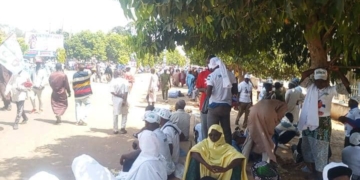
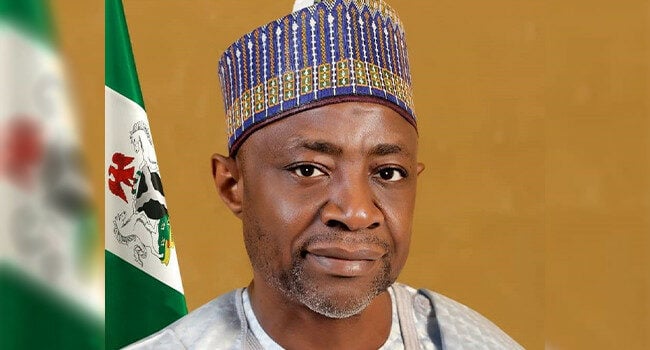
A former Chief Executive of the National Agency for Science and Engineering Infrastructure (NASENI), Professor Mohammad Sani Haruna, has formally unveiled his development agenda for Nasarawa State ahead of the 2027 governorship race, outlining a roadmap anchored on peace, industrialisation and continuity.
Haruna, who spoke at a symposium organised in his honour by political associates and supporters in Keffi, said his ambition is driven by a commitment to deploy his experience in technology, public service and development planning to reposition the state’s economy.
The former NASENI boss stressed that his aspiration is rooted in service rather than personal ambition.
“It is important to ask why I even ventured into politics and aspire to lead Nasarawa State, if God makes it possible by His grace,” he said.
“It is not about seeking a name. If I want a name, I will aim for a Nobel Prize. This is about service.”
Unveiling the thrust of his agenda, Haruna identified peace and unity as the bedrock for sustainable development, noting that the state’s diversity must be harnessed for collective progress.
“Peace and harmonious coexistence are fundamental. Without peace, nothing meaningful can be achieved,” he said.
“God created us in different tribes and languages so we can understand and benefit from one another.
The best among us is the one who cares for humanity.”
He also emphasised the urgent need for economic transformation through industrialisation, warning against continued dependence on raw material exports.
“What Nasarawa needs is a manufacturing and industrial economy that can sustain development,” he said.
“We must harness our resources and turn them into useful products. You cannot develop by exporting raw materials and importing finished goods.”
Haruna pledged to sustain ongoing infrastructure projects by Governor Abdullahi Sule while expanding industrial capacity to create jobs, empower youths and stimulate economic growth.
“My agenda is to ensure sustainability of the current developmental trajectory, expand infrastructure, and promote industries for employment generation, youth empowerment and skills development using science, technology and innovation,” he said.
The governorship hopeful disclosed that he has already developed a comprehensive blueprint for the state based on detailed, sector-by-sector assessments.
“We have taken stock of education, health, agriculture, infrastructure – everything,” he said.
“If there are 30 schools in a local government, we know the condition of each – those that need classrooms, those without water, those without facilities.”
According to him, governance under his watch would be driven by data and needs assessment rather than assumptions.
“Development must not be based on assumptions. It must be based on needs assessment. You cannot claim to improve education by building classrooms where they are not needed,” he added.
Haruna highlighted his career trajectory from a technician to a top public sector leader, noting that his exposure across Nigeria and beyond has equipped him with the knowledge required for effective governance.
“I started as a technician, a craftsman, an engineer, and rose through the ranks to leadership,” he said.
“I have worked across Nigeria, across Africa and globally. I have seen what works and what does not.”
He cited his success in securing buy-in from state governors for NASENI’s funding framework as evidence of his consensus-building ability.
“I went round the states and presented what they stand to gain, and they agreed. Development requires engagement and understanding,” he said.
The aspirant also stressed the need to consolidate on Engr Sule’s achievements in the state, particularly in infrastructure.
“The ongoing infrastructural development in Nasarawa State is something we must sustain,” he said.
“Even if it is not me, whoever becomes governor must continue on that path.”
In a lecture at the symposium, guest speaker Dr. Abubakar Salisu Maikasuwa underscored the importance of credible elections, accountability and visionary leadership in deepening democracy and development.
“Democracy is government of the people, by the people and for the people, but it goes beyond that,” he said.
“It includes rule of law, protection of human rights, and effective management of public resources.”
He warned against poor leadership, noting that the quality of governance determines societal progress.
“Leadership is a decisive factor. Societies need competent, honest, visionary and empathetic leaders,” he said, cautioning against “selfish, nepotistic and arrogant leadership.”
Maikasuwa added that development must translate into tangible improvements in citizens’ welfare.
“Sustainable development must translate into real benefits – food, shelter, healthcare, education, employment and basic services,” he said.
Earlier, an organiser of the event, Hon. Kasim T. Kasim, said the symposium – organised by Nasarawa State Concerned Democrats – was designed to foster interaction between the aspirant and stakeholders.
“This is an opportunity for party leaders, members and supporters to engage directly, ask questions and understand the vision,” he said.
He noted that participants were drawn from five local government areas in Nasarawa West Senatorial Zone, reflecting growing interest in the state’s political future.
The event ended with calls for unity among party members and sustained engagement as political activities gradually build up ahead of the 2027 elections.
We’ve got the edge. Get real-time reports, breaking scoops, and exclusive angles delivered straight to your phone. Don’t settle for stale news. Join LEADERSHIP NEWS on WhatsApp for 24/7 updates →
Join Our WhatsApp Channel