Govs desperate to install successors, cover up wrongdoings – Ex-minister
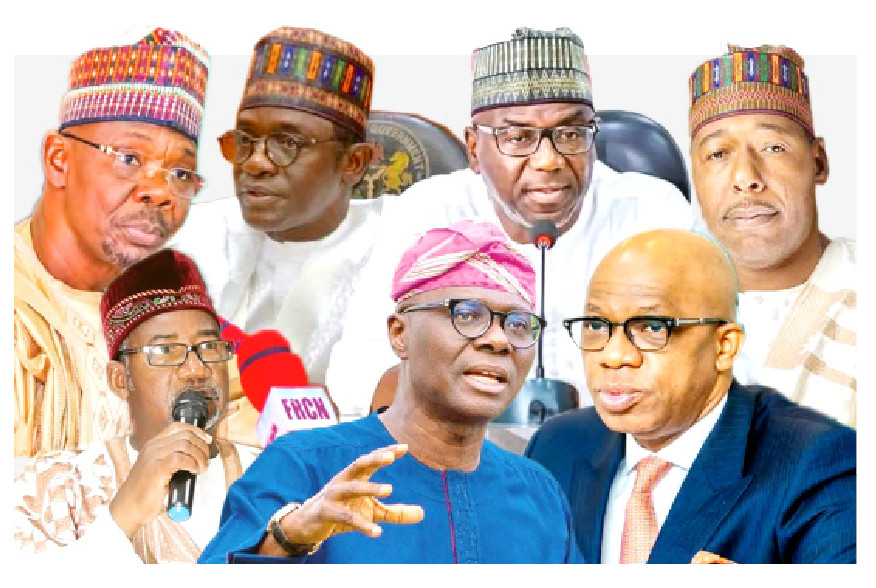
With barely one year until the 2027 general election, real political battles in ten Nigerian states have already begun, not at the polling units, but deep within party structures, where power, loyalty and legacy are being negotiated behind closed doors.
These states, governed by second-term governors constitutionally barred from seeking re-election, are fast becoming theatres of intense succession warfare.
Across party lines, the question is no longer whether succession battles will erupt, but how violently they will reshape political alliances.
From the East, West, North Central and the North-East, outgoing governors are scrambling to impose loyal successors, while ambitious political actors are mobilising grassroots networks to resist what they describe as elite consensus politics.
The result is a combustible mix of godfatherism, rebellion and silent realignment that could redefine outcomes in 2027.
Lagos: Continuity Versus Establishment
In Lagos State, Governor Babajide Sanwo-Olu is approaching the end of his second term under the long shadow of the state’s entrenched political structure. The contest here is less about party change and more about who inherits control within the ruling All Progressives Congress (APC) hierarchy.
Emerging factions are aligning around aspirants believed to enjoy the confidence of the party’s dominant leadership bloc, while others, including technocrats, lawmakers and younger politicians, are quietly pushing for a departure from recycled political figures.
The battle lines are subtle but firm, with loyalty to the party establishment competing against growing calls for a generational shift.
Among the names already making waves in political spaces are said to include Seyi Tinubu, son of President Bola Tinubu; Femi Gbajabiamila, Chief of Staff to the President and former Speaker of the House of Representatives; as well as Mudashiru Obasa, Speaker of the Lagos State House of Assembly, and a former governor of the state, Akinwumi Ambode.
Oyo: Makinde’s Grip Faces Internal PDP Pushback
In Oyo State, Governor Seyi Makinde remains the undisputed power centre of the PDP. His dominance of party structures positions him to play the role of kingmaker, but cracks are emerging. Party chieftains, former appointees and federal lawmakers are increasingly uneasy about the possibility of an imposed successor.
While Makinde’s camp favours continuation with candidates drawn from his inner circle, rival factions argue that the PDP risks internal revolt if broad consultations are ignored.
There are high expectations among the people of Oyo State regarding who Governor Seyi Makinde will announce as his successor from his party, the Peoples Democratic Party (PDP).
Makinde is a second-term governor, and his tenure is expected to end on May 29, 2027.
Some politicians within the PDP and other political parties have declared interest in becoming the chief executive of the Agodi Government House.
One of the aspirants on the PDP platform, Hazeem Gbolarunmi, a former deputy governor of the state, recently declared that he had sufficient grassroots support to win the PDP governorship ticket and become governor in 2027.
“I have my structures across the 33 local governments. I have been in politics since 1979, working from the ward level to the state level. I am prepared and primed to win the next governorship election,” Gbolarunmi told journalists in Ibadan, the state capital.
It remains unclear whether he has secured the backing of Governor Makinde, even as the governor is expected, according to sources close to him, to name his preferred candidate.
Governor Makinde disclosed in March last year that he would announce his would-be successor before the end of January 2026.
“In January 2026, we know that political activities will start. I will tell you the picture of the person that will be installed there,” Makinde said during the 11th Omituntun Ramadan lecture at the Government House arcade in Ibadan.
The question now on the lips of many in the state is who the governor will support as the PDP candidate, and ultimately as his preferred successor.
Apart from Gbolarunmi, another leading PDP governorship aspirant is Ambassador Olufemi Ajadi Oguntoyinbo, who declared his intention to contest last November.
The APC, weakened in recent electoral cycles, is watching closely, hoping to capitalise on any fracture within the PDP.
Kwara: AbdulRazaq and the Fragile APC Coalition
Governor AbdulRahman AbdulRazaq’s exit in Kwara State threatens to reopen old political wounds. The APC coalition that dismantled the Saraki political dynasty is itself under strain, with competing blocs laying claim to the party’s future.
One faction is rooted in the governor’s loyalists, while another draws strength from federal appointees and National Assembly members who feel marginalised.
Without careful balancing, the Kwara APC could face a succession crisis similar to the implosions it once exploited.
Governor AbdulRazaq is likely to face a complex succession scenario ahead of 2027, driven largely by zoning agitation and internal party dynamics.
While he remains focused on governance and the 2026 budget, the political terrain is already shifting.
A significant agitation is growing for the governorship to shift to the Kwara North senatorial district, which has not produced a governor since 1999, under the banner of the “Kwara North Lokan” movement.
While Senator Sadiq Umar is viewed as popular, the Speaker of the House of Assembly, Salihu Danladi, is widely considered the governor’s preferred successor.
However, promoting an anointed candidate in a state sensitive to the “Otoge” revolution could spark resistance.
There are no strong indications that Deputy Governor Kayode Alabi will be the successor, which could deepen internal rifts.
Former Senate President Bukola Saraki is actively reorganising the PDP to exploit cracks within the APC.
Contenders include Senator Saliu Mustapha, Rt. Hon. Yakubu Danladi-Salihu, Colonel Nurudeen Yusuf, Senator Sadiq Umar, Professor Abubakar Sulaiman and Ambassador Abdulfatai Yahaya Seriki.
Imo: Uzodinma Walks a Tightrope
In Imo State, Governor Hope Uzodinma is navigating a succession process shaped by deep intra-party suspicion. His grip on the APC has not erased resentment among sidelined stakeholders, some of whom are exploring alternative platforms.
Within the APC, Senator Osita Izunaso and former Senator Patrick Ndubueze are prominent aspirants from the Okigwe zone.
From the Owerri zone, former Deputy Governor Eze Madumere remains active, while younger technocratic blocs lack cohesion.
Despite Orlu having produced the outgoing governor, power brokers are still backing loyalists from the zone, fuelling resentment in other zones.
These divisions are opening doors for the PDP’s Emeka Ihedioha and Senator Samuel Anyanwu, as well as the Labour Party’s Athan Achonu.
For the APC, the danger lies less in opposition strength than in internal disunity.
Bauchi: Bala Mohammed and a PDP Power Vacuum
Governor Bala Mohammed’s impending exit leaves the PDP in Bauchi facing uncertainty. Senators, former ministers and financiers are jostling for influence.
Senator Ahmed Abdul Ningi has formally declared his intention to contest under the PDP, stressing loyalty and service.
A support group, SAAN 27, has called for him to be granted an automatic ticket, describing him as the most qualified aspirant.
The APC is aggressively courting dissatisfied PDP figures.
Adamawa: Fintiri’s Legacy Under Pressure
In Adamawa, Governor Ahmadu Umaru Fintiri remains influential but increasingly challenged by competing power blocs within the PDP.
Senators, former governors and federal appointees are all positioning themselves, weakening the governor’s ability to dictate the succession unilaterally.
Observers warn that unless the PDP manages its internal contradictions, the state could witness a repeat of past electoral upsets driven by elite fragmentation.
Gombe: APC’s Quiet Civil War
Governor Inuwa Yahaya’s oncoming exit has triggered a quiet civil war within the APC.
Engineer Yunusa Yakubu Lubell and former Communications Minister, Professor Ali Isa Pantami, are key contenders, with grassroots dynamics complicating elite calculations. Without a clear consensus, the risk of parallel primaries looms.
Nasarawa: Abdullahi Sule and the Fragmenting APC
As Nasarawa State moves closer to the 2027 elections, Governor Abdullahi Sule continues to reaffirm his commitment to fairness in the succession process, particularly through strict adherence to zoning principles. Yet, despite his assurances, political ambition across the state is expanding at an unprecedented pace.
More than 35 individuals have already shown interest in the governorship contest, with about 20 of them emerging from the All Progressives Congress (APC).
This extraordinary level of internal competition is beginning to raise concerns within the party’s leadership, as an unmanaged primary could trigger significant internal fractures.
With aspirants spread across various political platforms, Nasarawa is already shaping up to be one of the most intensely contested battlegrounds ahead of 2027.
The rising wave of interest within the APC and beyond includes a broad spectrum of technocrats, politicians, security experts, legal minds and grassroots mobilisers.
Among contenders in the widening field are Arch. Shehu Tukur, Prof. Mohammed Sani Haruna, Dr. Faisal Shuaib, Dr. Ahmed Musa Mohammed, Prof. AbdulKareem Kana, Barr. Danladi Halilu Evulanza, Rt. Hon. Abubakar Nalaraba, Dr. Kabir El-Bashir and former Inspector-General of Police, Mohammed Adamu.
Also in the mix are Dr. Joseph Haruna Kigbu, Dr. Zakka Ledwi Yakubu, Musa Mohammed Maikaya, Abubakar Giza, Hon. Julius Ojo Eggon, Dr. Tanimu Adabson, Hon. Silas Ali Agara, Dr. Hassan Mohammed Liman (SAN) and Mohammed Shehu.
Each of these individuals brings a unique political background, constituency strength and personal network—elements that collectively heighten the race’s complexity.
Their involvement reflects both the opportunities and challenges ahead for the APC. While the diversity of aspirants demonstrates the party’s broad appeal, it also raises the stakes for internal management, negotiation and conflict prevention.
The ultimate question is whether Governor Sule and the APC leadership can maintain unity in the face of overwhelming ambition, or whether the upcoming primary will reshape not just the party’s internal dynamics but the entire political landscape of Nasarawa State.
Borno: Succession Under the Shadow of Insecurity
Borno State Governor Babagana Umara Zulum has declared that he has no preferred successor and has not anointed any candidate ahead of the end of his tenure in May 2027.
Zulum made the declaration on Sunday evening while addressing stakeholders of the All Progressives Congress (APC) at a meeting held at Government House in Maiduguri.
The governor said his administration remains focused on improving security and delivering development to the people of Borno, rather than engaging in succession politics.
Addressing party leaders, elected officials and members, Zulum called for fairness, transparency and justice in the forthcoming APC congresses, stressing that the credibility of the process is critical to the party’s unity and future strength.
He urged stakeholders to allow new individuals to emerge into party leadership through a democratic process, noting that fresh leadership would strengthen the party’s grassroots base and promote inclusivity.
Zulum dismissed speculation that he was influencing party leadership or electoral tickets, stating clearly that he had not endorsed any candidate for party or elective positions.
“I have no candidate for any position, and I do not know who will succeed me. I have left the choice of leaders to Almighty Allah and to the democratic will of APC members and the people of Borno State,” he said.
However, federal influence remains strong, and stability is central to succession calculations.
Yobe: Buni’s Exit and the Battle for Stability
Succession politics in Yobe is discreet but active. Names circulating include Ahmad Lawan, Ibrahim Bomai, Musa Kulas, Baba Wali and others. Zoning and security will shape the contest.
Godfatherism, Resistance and the Road to 2027
Across the ten states, outgoing governors will seek protection through loyal successors, while ambitious politicians and voters will increasingly resist elite consensus.
As defections rise and alliances shift, the struggle for succession may determine not only who governs next, but how power itself is negotiated in Nigeria’s evolving political landscape.
Long before ballots are cast in 2027, many of these contests may already have been decided—or disastrously lost—within party walls.
Political observers have long identified succession battles in states as a major challenge to the nation’s democratic consolidation, often characterised by intense, sometimes violent, power struggles and flawed electoral processes.
A doctoral degree student of Nnamdi Azikiwe University, Awka, Douglas Paul, who spoke with LEADERSHIP Weekend in Abuja, said, “These contests are frequently viewed as ‘do-or-die’ affairs, where outgoing governors seek to install loyal successors to maintain control, leading to instability, political crises and a focus on patronage over development.”
Paul, who frowned at the situation, said it led to flawed elections and loss of lives, as politicians are desperate to outdo each other in the contest.
“The focus on winning at all costs undermines the quality of governance and the democratic process,” he said.
But another analyst, Mikaila Ahmed, a staff member of the Education Department of the Federal Capital Development Authority (FCDA), believes succession politics leads to good governance and consolidation.
Ahmed based his argument on the fact that frequent regime changes lead to the abandonment of projects embarked upon by previous governments.
On his part, the former Minister of Youth and Sports, Barrister Solomon Dalung, said succession politics is a product of godfatherism, which has no place in an ideal democratic setting.
According to him, governors are desperate to install successors to cover up their wrongdoings and protect themselves from going to jail.
“Why am I supporting the succession drive by the state governors and even the president? If you allow another party or a candidate who thinks in the opposite direction of your administration to take over from you, you may not have legacies, because the new person may come with a different agenda, which is different from yours.
“So it is better you ensure you anoint a successor to ensure continuity of your project,” he contended.
We’ve got the edge. Get real-time reports, breaking scoops, and exclusive angles delivered straight to your phone. Don’t settle for stale news. Join LEADERSHIP NEWS on WhatsApp for 24/7 updates →
Join Our WhatsApp Channel