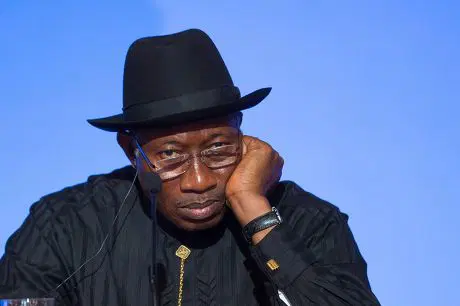
The campaign for Goodluck Jonathan’s political comeback appears to have begun without its presumed candidate. While support groups mobilise, endorsements multiply and political calculations intensify ahead of 2027, Jonathan himself has retreated into silence. The question, therefore, is whether this silence reflects the discipline of an experienced statesman carefully weighing his options or revives old concerns about political indecision at a defining moment. SAMSON ELIJAH writes.
As Nigeria gradually inches toward the 2027 general elections, one political figure continues to dominate conversations across party lines despite maintaining an unusual silence: former President Goodluck Jonathan. While support groups champion his return, endorsements gather momentum and political calculations intensify, Jonathan has chosen to stay above the fray.
His silence has fuelled speculation, sparked debate and left both supporters and critics searching for clues. The question is whether this measured restraint reflects strategic statesmanship or rekindles long-standing perceptions of political hesitation.
From political stakeholders and support groups to civil society actors and regional leaders, calls for Jonathan to return to active politics have intensified in recent months. Yet, the former president has neither accepted nor rejected the mounting appeals for him to contest the presidency in 2027.
What began as isolated calls from support groups has gradually evolved into a broader national conversation involving political actors, analysts, civil society organisations and sections of the opposition seeking an alternative political direction ahead of the next election cycle.
The uncertainty surrounding Jonathan’s intentions has, in many ways, become a political story of its own.
The PDP Nomination That Reignited Speculation
The debate gained renewed momentum following Jonathan’s adoption as presidential candidate by the Taminu Turaki-led faction of the Peoples Democratic Party (PDP).
Chairman of the faction’s Screening Committee and former Niger State Governor, Babangida Aliyu, announced on May 19 that Jonathan had effectively been cleared as the party’s presidential candidate.
“The party had already given our presidential aspirant the waiver,” Aliyu said.
“Like I said in the beginning, he was deputy governor, became governor, became vice president, became president, so we didn’t see anything that needed screening. Therefore, the party had given him a waiver. In other words, he had been declared and cleared as the candidate of the PDP for the presidential election, and that is President Jonathan.”
The nomination was later ratified on May 30, with House of Representatives member Fred Agbedi receiving the party flag on Jonathan’s behalf.
However, the development generated mixed reactions. While supporters viewed it as a strategic move to revive the opposition, critics questioned both its legitimacy and the wisdom of associating Jonathan with a deeply divided PDP.
More significantly, Jonathan himself neither endorsed nor rejected the nomination, thereby deepening speculation over whether the move was coordinated with him or merely an attempt by a faction of the opposition to leverage his popularity and national appeal.
From Defeat To Statesmanship
Jonathan’s political journey remains one of the most remarkable in Nigeria’s democratic history.
After serving as vice president between 2007 and 2010, he assumed office following the death of President Umaru Musa Yar’Adua and subsequently won the 2011 presidential election.
His administration recorded notable achievements, including the rebasing of Nigeria’s Gross Domestic Product (GDP), expansion of telecommunications, reforms in banking and agricultural financing, and Nigeria’s brief emergence as Africa’s largest economy.
Yet his presidency was equally defined by major challenges, particularly the Boko Haram insurgency, corruption allegations, and the abduction of the Chibok schoolgirls in 2014.
His eventual defeat by Muhammadu Buhari in 2015 marked a historic democratic transition, but it was Jonathan’s peaceful concession that elevated his reputation both within Nigeria and internationally.
That concession remains one of the defining moments of Nigeria’s democratic evolution and is frequently cited as evidence of his commitment to democratic stability.
Since leaving office, he has transformed from partisan politician to international statesman, participating in election observation missions and conflict mediation efforts across Africa through the Goodluck Jonathan Foundation and international organisations.
Many analysts argue that his post-presidential profile is arguably stronger today than it was during his final years in office.
Why Jonathan Is Attracting Renewed Interest
Several factors explain the resurgence of interest in Jonathan’s political future.
Supporters describe him as a bridge-builder capable of attracting support across regional, religious and political divides.
Others point to widespread dissatisfaction with economic conditions, insecurity and governance challenges, which has prompted some Nigerians to reassess his years in office more favourably.
Within sections of the PDP, Jonathan is also viewed as one of the few political figures with sufficient national recognition to revive the party’s fortunes ahead of 2027.
There is also a strategic zoning consideration. Some stakeholders believe Jonathan could serve a single term if elected, thereby allowing power to return to Northern Nigeria in 2031 in line with the country’s informal rotational arrangement.
For some political strategists, this possibility makes Jonathan particularly attractive because he could potentially satisfy both southern aspirations and northern expectations within the broader power-sharing framework.
The Constitutional Debate
Beyond politics lies a significant legal question.
Critics argue that Section 137(3) of the Constitution, introduced through the Fourth Alteration in 2018, bars Jonathan from seeking another term because he was sworn in twice as president.
Supporters disagree, maintaining that the constitutional amendment cannot apply retroactively since it became law after Jonathan left office.
The courts have largely sided with that position.
Both the Federal High Court in Yenagoa and the Federal High Court in Abuja have ruled that Jonathan remains eligible to contest future presidential elections.
While the legal issue appears substantially settled, it remains part of the broader public debate surrounding his potential candidacy.
Jonathan would only be able to serve one additional term, having already completed a full constitutional tenure. Such a scenario would effectively return power to Northern Nigeria in 2031, fulfilling the unwritten power-rotation arrangement often referenced by Nigeria’s political elite.
PDP Crisis And The Jonathan Gamble
Jonathan’s adoption appears to be a significant political gamble by the PDP faction.
Mr Turaki served as Minister of Special Duties and Inter-Governmental Affairs during Jonathan’s administration. Both men reportedly held several private meetings in recent months, which insiders say centred on the 2027 election and the future of the PDP.
The PDP has been struggling with internal crises since the 2023 general elections, leading to deep divisions as rival power blocs battle for control of the party’s structure and direction.
Aside from the Turaki-led faction, the other bloc is aligned with the Minister of the Federal Capital Territory (FCT), Nyesom Wike. Officially headed by Abdulrahman Mohammed, it is the faction currently recognised by the Independent National Electoral Commission (INEC).
The Turaki-led faction’s adoption of Jonathan also reflects the deepening fragmentation within the PDP. Since losing power in 2015, the opposition party has struggled with internal leadership disputes, defections and disagreements over zoning arrangements.
By projecting Jonathan as a consensus candidate, the faction may be attempting to reposition itself as the legitimate political centre within the PDP crisis.
However, Not All reactions Have Been Positive.
Some Nigerians argue that the move reflects the inability of major political parties to develop younger leadership and fresh alternatives. Others remain sceptical about another Jonathan candidacy, arguing that Nigeria needs a new generation of political leadership rather than a return to former officeholders.
The Makinde Factor And The Opposition’s Confusing Signals
The Jonathan adoption has become even more complicated because of competing developments within the opposition.
Recently, Oyo State Governor Seyi Makinde declared his intention to seek the presidency under a proposed alliance between the APM and the same faction of the PDP that adopted Jonathan.
However, the political calculations appear to have shifted following Makinde’s emergence as the presidential candidate of the APM.
Even so, there is the Nyesom Wike-backed faction to contend with. The INEC-recognised faction has picked former senator Sandy Onor as its flag bearer.
As things stand, given INEC’s recognition of the rival PDP faction, Jonathan’s nomination may ultimately amount to little more than a symbolic political statement unless broader reconciliation efforts occur within the opposition.
The situation highlights the continuing organisational challenges facing the PDP and raises questions about whether a fragmented opposition can effectively challenge the ruling APC in 2027.
Zoning Politics and Jonathan’s Possible Advantage
If the courts continue to uphold Jonathan’s eligibility, attention could increasingly shift toward zoning considerations.
Jonathan is from Bayelsa State in the South-South geopolitical zone.
Since President Bola Tinubu, also a southerner, is expected to seek a second term, many politicians believe the presidency should remain in the South until 2031 in line with Nigeria’s informal power-sharing arrangement.
Although zoning is not recognised by the Constitution, it remains one of Nigeria’s most influential political traditions.
The principle was designed to balance power between the North and South and minimise ethnic and regional tensions within the country’s complex political environment.
Within the PDP, zoning became particularly contentious after the party nominated former Vice President Atiku Abubakar, a northerner, in 2023 despite calls for power to shift southward after Muhammadu Buhari’s eight-year presidency.
That decision contributed significantly to the internal rebellion that weakened the PDP during the election.
Against this backdrop, some stakeholders view Jonathan as a potentially acceptable southern candidate capable of attracting support across regional divides.
Jonathan’s Electoral Strength
Jonathan’s actual electoral strength, more than a decade after leaving office, remains a subject of considerable debate.
Although his public image has improved since 2015, popularity alone may not translate into electoral victory in Nigeria’s increasingly competitive political environment.
One major concern is whether he still possesses the grassroots political structures required to mount a successful nationwide campaign.
Since leaving office, he has largely distanced himself from partisan politics and has not maintained the visible political machinery associated with leading presidential contenders.
Unlike in 2011 and 2015, when he controlled both the federal government and the PDP’s national structure, Jonathan currently lacks a clearly defined political base within the fragmented opposition.
Political observers also question whether he can command the same level of support in Northern Nigeria, where dissatisfaction with his administration’s handling of insecurity contributed significantly to his 2015 defeat.
Although some northern politicians may support him for strategic reasons linked to zoning and coalition-building, it remains unclear whether ordinary voters would embrace another Jonathan candidacy.
There are also concerns about generational politics.
Nigeria’s voting population has changed significantly since 2015, with younger voters becoming increasingly influential in national elections.
The 2023 election demonstrated the growing power of youth-driven political movements and digital mobilisation.
Some analysts believe Jonathan may struggle to connect with younger voters seeking political reforms, economic opportunities and a departure from traditional political structures.
Another challenge is the financial and organisational strength of the ruling APC.
Presidential elections in Nigeria require enormous resources, nationwide mobilisation and extensive political alliances across the six geopolitical zones.
Even if Jonathan secures support from sections of the PDP, building a coalition capable of confronting the APC’s national machinery would remain a formidable task.
Could Jonathan Split Opposition Votes?
Another concern surrounding Jonathan’s possible candidacy is its potential impact on opposition voting patterns, particularly in Southern Nigeria.
Should he eventually accept the nomination, he would enter a political field already populated by several southern aspirants.
Among those already projected as presidential candidates are President Bola Tinubu (APC), Peter Obi (NDC), Adewole Adebayo (SDP), Donald Duke (PRP), Dan Nwanyanwu (ZLP), Esther Okereke (NRM), Omoyele Sowore (AAC), Chibuzor Okereke (LP) and Seyi Makinde (APM).
This calculation assumes that Sandy Onor does not eventually emerge as a major contender through the rival PDP faction.
Political analysts warn that multiple southern candidates could divide opposition votes across the South-West, South-East and South-South.
Such fragmentation could weaken opposition efforts to present a united front and indirectly strengthen the prospects of a northern candidate should one emerge as the principal challenger.
Former Vice President Atiku Abubakar remains among the northern political figures whose future plans continue to attract attention amid reports of coalition talks and political realignments.
Strategic Silence or Political Hesitation?
At the centre of the debate is Jonathan’s refusal to publicly clarify his intentions.
Supporters argue that his silence reflects maturity, patience and strategic calculation.
According to this school of thought, an early declaration could expose him to unnecessary attacks, trigger political divisions and undermine his international role as a democracy advocate.
“Jonathan is playing the long game,” one supporter observed. “He understands that timing is everything in politics.”
Critics, however, interpret the situation differently.
They argue that the former president’s silence revives old criticisms that followed him throughout his presidency — allegations of indecision and delayed responses to political challenges.
For them, strategic ambiguity may simply be political hesitation.
Civil Society Organisations and Stakeholders Weigh In
CISLAC: Focus on Governance, Not Personalities
The Executive Director of CISLAC, Auwal Musa Rafsanjani, told LEADERSHIP Weekend that the conversation should shift away from personalities and focus on governance issues.
According to him, political leaders have a responsibility to provide clarity on matters capable of shaping the political landscape.
“Nigerians deserve to know where those seeking public office stand on critical national challenges, including insecurity, corruption, economic hardship, electoral reforms, and institutional strengthening,” he stated.
CISLAC maintained that while Jonathan’s silence may be interpreted differently, the priority should be issue-based politics rather than personality-driven debates.
Okeke: Silence Reflects Indecision
Similarly, political scientist and Nnamdi Azikiwe University lecturer, Dr Christian Okeke, in an exclusive interview with LEADERSHIP Weekend, offered a more critical interpretation.
“I do not see Jonathan’s strategy of silence as strength because we do not have a name for it in the political lexicon,” he said.
“It only shows indecisiveness and weakness. Otherwise, how can such a person make a good leader?”
Okeke argued that the ambiguity surrounding Jonathan’s political future creates confusion and raises questions about his leadership style.
“Everything about his ambition is, for now, a shadow of itself, but there is still time. He may summon courage in the days ahead,” he added.
Integrity Advocacy Group: Silence Is Strategic
Offering a contrasting perspective, Executive Director of the Integrity Advocacy for Development Initiative, Comrade Ofomhi Christopher, argued that Jonathan’s silence reflects deliberate political calculation rather than indecision.
“Former President Goodluck Jonathan’s silence amid growing calls for him to contest the 2027 presidential election can be viewed from two perspectives,” he said.
“On one hand, it reflects strategic statesmanship, allowing him to remain above partisan politics while carefully observing the evolving political landscape before making any decision.”
While acknowledging that prolonged silence could be interpreted as hesitation, Christopher maintained that Jonathan’s approach appears more strategic than uncertain.
Similarly, the Women’s Inclusion, Empowerment and Leadership Development Initiative (WIELD-I) described Jonathan’s silence as a blend of statesmanship and political caution.
In an exclusive interview with LEADERSHIP Weekend, the organisation’s Executive Director, Comrade Amarachi Okeke, said the former president appears to be carefully navigating a fluid political environment.
“Former President Goodluck Jonathan’s silence on the 2027 presidential calls sits at the intersection of strategic statesmanship and political caution,” she said.
“It reflects a leader attuned to the weight of timing within a fluid and highly sensitive political environment.”
According to WIELD-I, Jonathan’s restraint should be viewed as measured political discretion rather than indecision.
A Test of Relevance
Ultimately, the Jonathan movement may represent more than a potential presidential comeback.
It is increasingly becoming a test of political relevance in post-presidential life.Few former Nigerian leaders continue to attract the level of attention Jonathan commands more than a decade after leaving office.
The sustained calls for his return suggest that significant sections of the political establishment still regard him as a consequential figure capable of influencing Nigeria’s political future.
Yet until Jonathan breaks his silence, speculation will continue.
Whether his refusal to openly engage reflects strategic statesmanship, calculated ambiguity, or political hesitation remains one of the unanswered questions shaping the road to 2027.
The answer may ultimately influence not only the future of the Jonathan movement but also the broader trajectory of Nigeria’s political landscape as the next presidential election approaches.
We’ve got the edge. Get real-time reports, breaking scoops, and exclusive angles delivered straight to your phone. Don’t settle for stale news. Join LEADERSHIP NEWS on WhatsApp for 24/7 updates →
Join Our WhatsApp Channel