Nigeria Supreme Council for Islamic Affairs (NSCIA) and the Jama’atu Nasril Islam (JNI) have admonished Islamic clerics across the country to remain apolitical and verify Information before disseminating it to their followers.
They said the advice was imperative as political activities ahead of the 2027 general elections gather momentum.
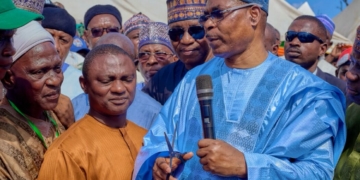
The call was made yesterday in Abuja during a capacity-building workshop for Islamic clerics and scholars from Northern Nigeria, themed “Building Resilient Communities through Fact-Checking and Media Information Literacy.”
The workshop was organised by Alkalanci and brought together religious leaders from across the region to strengthen their capacity to identify misinformation, disinformation and other forms of information manipulation.
At the event, the secretary-general of the NSCIA, Prof.Is-haq Oloyede, urged Islamic clerics to champion responsible communication and ensure that information shared with their congregations is properly verified.
Represented by the NSCIA public affairs officer, Abbas Jimoh, Oloyede warned that misinformation and disinformation have become major threats to social cohesion, often fuelling communal conflicts, religious tensions and insecurity.
“In Northern Nigeria and across the country, our communities are navigating a complex information ecosystem. Rumours spread faster than the truth. Misinformation fuels mistrust, inflames divisions and too often leads to real-world harm, from health crises to communal conflict,” he said.
According to him, the spread of false Information has contributed to misunderstandings among communities, heightened ethnic and religious tensions, undermined public trust and, in some cases, escalated violence and insecurity.
He noted that Islamic clerics occupy positions of trust and influence within society and therefore play a critical role in promoting truth and responsible communication.
Every week, millions of Nigerians receive guidance from their Imams, teachers and scholars through sermons, lectures, study circles and community engagements. As trusted voices, religious leaders are uniquely positioned to promote truth, caution, verification, critical thinking and responsible communication,” he said.
Oloyede stressed that fact-checking and information verification are principles deeply rooted in Islamic teachings, citing Surah Al-Hujurat, Verse 6 of the Holy Qur’an, which instructs believers to verify Information before acting upon it.
Religious leaders must become champions of truth, peace and informed citizenship. They must encourage communities to pause before sharing Information, verify before believing and seek evidence before making judgments. By doing so, they contribute to social harmony, national unity and sustainable development,” he added.
Also speaking, Secretary-General of JNI and Chief Imam of the National Mosque, Abuja, Professor Khalid Abubakar Aliyu, urged clerics to maintain neutrality in political matters and avoid becoming tools in the hands of politicians.
He advised religious leaders to remain focused on their spiritual responsibilities and ensure that Information shared with the public is thoroughly verified.
“They should verify Information, respect themselves and remain apolitical. They should see themselves as people who have a spiritual responsibility to guide and not mislead,” he said.
Aliyu also appealed to politicians to refrain from attempting to influence or compromise clerics for political gains.
“I ask politicians to fear God and not entice clerics or box them into difficult situations. Religious leaders should be allowed to perform their duties without political pressure,” he added.
In his welcome address, the convener of the workshop and Editor of Alkalanci, Alhassan Bala, described the training as timely and necessary, given the approaching 2027 election cycle.
He noted that studies by various research organisations have shown that incidents of misinformation and disinformation often increase significantly during election periods.
As electioneering activities ahead of the 2027 general elections approach, misinformation and disinformation by local actors are expected to rise. There is also the growing threat of foreign information manipulation and interference, as some countries have strategic interests in Nigeria’s elections,” Bala said.
He explained that the workshop was designed to equip clerics with the skills needed to identify false Information and protect their communities from falling victim to fake news and propaganda.
Bala also warned about the growing sophistication of artificial intelligence-generated content, including deepfake videos, images and audio recordings, which can be used to mislead the public.
We are living in a period when I-I-generated ppipictures, videos, anddio, comcommonly known asepfakes ar,e becoming increasingly sophisticated. This is another important reason why community leaders must acquire the knowledge and tools necessary to protect themselves and their communities from falsehood and manipulation,” he said.
Participants at the workshop were trained on fact-checking techniques, media and information literacy, digital verification tools and strategies for identifying manipulated content online.
The organisers expressed optimism that the initiative would strengthen community resilience against misinformation and promote peaceful, informed participation in the country’s democratic process ahead of the 2027 elections.
We’ve got the edge. Get real-time reports, breaking scoops, and exclusive angles delivered straight to your phone. Don’t settle for stale news. Join LEADERSHIP NEWS on WhatsApp for 24/7 updates →
Join Our WhatsApp Channel