
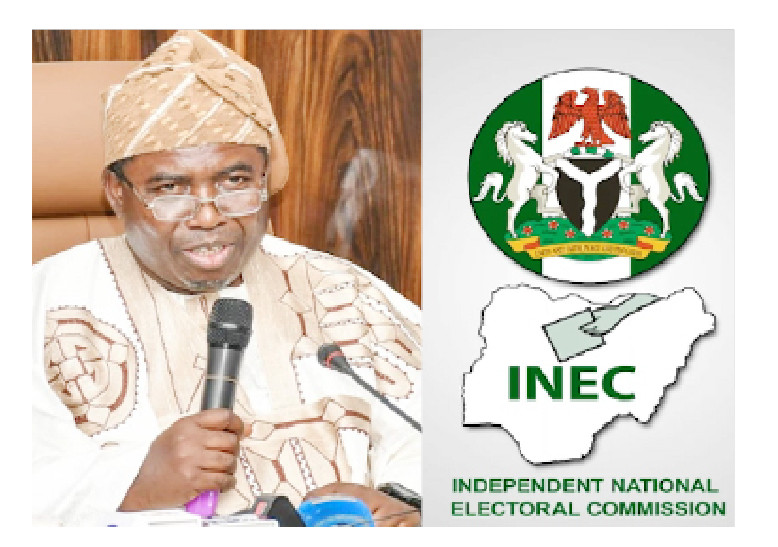
The Independent National Electoral Commission (INEC) said it will verify allegations of partisanship against university lecturers who may be engaged as electoral officials for the 2027 general elections and take appropriate decisions based on its findings.
The Commission’s Director, Voter Education and Publicity, Mrs. Victoria Ita-Messi, disclosed this in a chat with LEADERSHIP yesterday, while responding to concerns over the possible recruitment of lecturers who have openly expressed support for political candidates.
The endorsement was made at an interactive session convened by the Special Adviser to the President on Political Matters, Ibrahim Masari, in Kaduna.
The meeting, held at the Umaru Musa Yar’Adua Centre, Kaduna, brought together senior academics, government and political officials to assess the performance of the Tinubu administration and discuss the country’s political direction ahead of the 2027 elections.
However, Ita-Messi said INEC’s engagement of lecturers was a policy of the Commission, adding that reports concerning allegations against any of them would be examined.
“Engaging lecturers is a Commission policy,” she said.
She added that the Commission would review reports, confirm the veracity of the allegations and take appropriate decisions, which would be made public accordingly.
Her comment followed concerns raised by opposition leaders and platforms, including Atiku Abubakar, Peter Obi and the African Democratic Congress (ADC), over the suitability of lecturers being used as electoral officers ahead of the 2027 election in light of the partisanship debate.
While Atiku warned that partisan lecturers should not be used as electoral officers, Peter Obi, through his Media Office, said it was troubling that the same university lecturers, from whom INEC appoints Collation and Returning Officers for elections, are now openly showing partisanship.
In a statement on Tuesday, spokesman of the Peter Obi Media Reach (POMR), Idris Zekeri, said the development simply signifies an early attempt to build and legitimise a network of partisan actors ahead of the 2027 presidential election.
On its part, in a statement issued on Monday and signed by its National Publicity Secretary, Mallam Bolaji Abdullahi, the ADC raised concerns over the possible recruitment of lecturers who openly support political candidates for sensitive electoral duties.
In its statement, the party said while academics, like every other Nigerian, had a constitutional right to support political candidates, those who had openly taken partisan positions should not be entrusted with responsibilities that could affect the outcome of elections involving their preferred candidates.
The party urged INEC to establish and publish clear criteria for selecting Returning and Collation Officers, including measures to prevent persons who had publicly endorsed candidates or participated in partisan political activities from being assigned sensitive electoral duties.
The ADC also called on the Commission to publish the names of proposed Returning and Collation Officers early enough to enable political parties and members of the public to raise legitimate concerns about possible conflicts of interest.
The party said the credibility of an election depended not only on the conduct of voters and candidates but also on the neutrality of those entrusted with administering, collating and declaring the results.
The controversy has also attracted a reaction from the Academic Staff Union of Universities (ASUU), which distanced itself from the reported endorsement.
ASUU President, Prof. Chris Piwuna, said the union remained apolitical and had never endorsed any political party or candidate.
According to him, individual university lecturers were free to belong to political parties or support candidates in their personal capacities, but such activities should not be attributed to the union.
Piwuna said ASUU would not take a position in support of any candidate, stressing that the reported endorsement should not be interpreted as the position of the union.
The controversy over the lecturers’ endorsement comes as political activities intensify ahead of the 2027 general elections, with political parties and interest groups increasingly mobilising support for their preferred presidential candidates.
The ADC’s demand has therefore placed renewed attention on the process through which INEC selects academics and other professionals for sensitive election duties.
We’ve got the edge. Get real-time reports, breaking scoops, and exclusive angles delivered straight to your phone. Don’t settle for stale news. Join LEADERSHIP NEWS on WhatsApp for 24/7 updates →
Join Our WhatsApp Channel