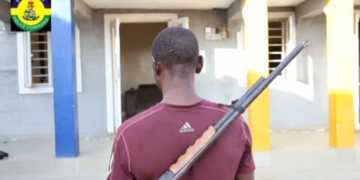
An estimated 30,000 armed Fulani militants are operating across Nigeria in cells of between 10 and 1,000 fighters, the United States Commission on International Religious Freedom (USCIRF) said in a May 2026 report, warning that the groups are among the deadliest non‑state actors driving religious freedom violations nationwide.
Titled: “Non‑state Violators of Religious Freedom in Nigeria: Fulani Militants,” the report said attacks by militants of Fulani background have intensified insecurity across the Middle Belt and southern regions, leaving thousands dead, displacing more than 1.3 million people and deepening tensions between religious communities.
While many of the groups lack centralised leadership, USCIRF said some coordinate with criminal gangs and extremist organisations. The militants frequently strike isolated rural communities at night using motorcycles, automatic weapons and machetes, the commission added, often forcing residents to flee and enabling control of contested land.
The report catalogued a string of mass-casualty incidents in 2025 and early 2026, including deadly attacks in Benue and Plateau states. It cited a June 2025 attack in Benue that killed at least 200 people, and the massacre in Yelwata, Benue, where more than 200 mostly women and children were reportedly slain and over 3,000 people displaced.
USCIRF noted that militants sometimes time assaults to coincide with Christian holidays to maximise psychological impact. It also documented kidnappings and raids against both Christian and Muslim worshippers, including the February 2026 abduction of an imam and seven worshippers in Plateau State, when kidnappers demanded N16 million, and the attack on Holy Trinity Parish in Kafanchan Diocese that left three dead and 11 abducted.
The commission said the violence caused the highest number of deaths among all religious communities in Nigeria over the past year compared with attacks by organised insurgents and criminal gangs. It added that motives are mixed — environmental and economic pressures, local disputes and religious factors often overlap — complicating efforts to define a single driver behind the violence.
USCIRF criticised federal and state responses as inadequate, saying victims report slow security responses and alleging bias in some investigations. The commission noted state-level initiatives launched in June 2025 by 11 governors to create ranch lands for herders as a measure to reduce clashes over grazing routes and farmland.
Following the US designation of Nigeria as a Country of Particular Concern in October 2025, the report said the federal government moved to list kidnappers and violent armed groups, including Fulani militants, as terrorists in December 2025. Security operations in January 2026 reportedly rescued 309 hostages in Kogi and Kwara states, with 129 suspects arrested and 55 militants killed.
USCIRF drew attention to scrutiny of the Miyetti Allah Cattle Breeders Association of Nigeria (MACBAN), which has faced allegations from some Christian leaders of complicity in militant violence — charges MACBAN denied. The USg to the ew commission also reported that the US Congress introduced the Nigeria Religious Freedom and Accountability Act in February 2026, proposing sanctions against MACBAN over alleged involvement in severe religious‑freedom violations.
Despite recent security actions and peace initiatives, USCIRF warned the crisis persists. “Central Nigeria remains entrenched in an intense, daily, and seemingly perpetual crisis of insecurity,” the report concluded, adding that resolving it will require broader measures from federal and state authorities to create conditions conducive to the safe practice of religion.
We’ve got the edge. Get real-time reports, breaking scoops, and exclusive angles delivered straight to your phone. Don’t settle for stale news. Join LEADERSHIP NEWS on WhatsApp for 24/7 updates →