
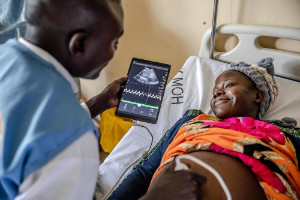
A new $25 million artificial intelligence (AI)-enabled maternal health initiative has been launched in Nigeria, with a target of reaching 500,000 women, equipping 5,000 frontline health workers and supporting 500 health facilities by 2030.
The four-year Nigeria Maternal Health Multiplier programme, launched by MTN Group Foundation and the Gates Foundation, is designed to use AI, mobile technology and improved connectivity to strengthen access to maternal healthcare, particularly in underserved communities.
The initiative comes amid continuing concerns over Nigeria’s maternal health burden, with the country accounting for nearly 30 per cent of maternal deaths globally, according to the organisations behind the programme. They also noted that only 59 per cent of women in Nigeria complete four or more antenatal care visits, potentially leaving pregnancy-related complications undetected.
The programme will deploy AI-enabled, phone-based decision-support tools for pregnant women and frontline health workers, while also providing access to affordable smartphones and mobile data.
Connected devices will enable health workers to access real-time guidance and identify warning signs associated with pregnancy and childbirth complications at an earlier stage. The initiative will also improve connectivity at participating primary healthcare facilities to ensure that access to digital health services is not determined by where a woman lives.
According to the organisations, the programme will support women throughout pregnancy, childbirth and the postnatal period, while linking mothers, frontline health workers and primary healthcare facilities through an integrated digital ecosystem.
The initiative is expected to complement the Federal Ministry of Health and Social Welfare’s Maternal and Neonatal Mortality Reduction Innovation Initiative (MAMII), rather than operate as a separate health system.
Speaking on the development, Minister of Communications, Innovation and Digital Economy, Bosun Tijani, said Nigeria’s challenge in improving public services had often been less about the absence of technology and more about the systems required to drive adoption.
“Partnerships like this reflect the kind of collaboration we want to see more of in Nigeria — one that puts the country’s digital transformation to work for the people who need it most,” Tijani said.
Similarly, the Coordinating Minister of Health and Social Welfare, Professor Muhammad Ali Pate, said strengthening primary healthcare and empowering frontline workers remained central to the government’s health sector reforms.
He said partnerships that work with existing health systems, rather than around them, were needed to reach women who remained underserved by the healthcare system.
The initiative will receive an initial investment of approximately $25 million between 2026 and 2030, comprising direct and in-kind contributions from MTN and the Gates Foundation. The organisations said the funding is also intended to attract additional investment and support potential expansion beyond Nigeria.
MTN Group president and chief executive officer, Ralph Mupita, said AI could make maternal healthcare more personalised, predictive and accessible by providing locally relevant health information to mothers and healthcare professionals in languages suited to their needs.
Gates Foundation chief executive officer, Mark Suzman, said AI would only deliver meaningful benefits if its tools reached people who needed them most, particularly those who might otherwise be excluded by cost and access barriers.
The partnership was announced at Semafor’s Next 3 Billion event in New York, on the sidelines of the 81st session of the United Nations General Assembly. The organisations said Nigeria was selected as the first market because of the scale of its maternal health challenge and the opportunity to integrate digital tools with existing healthcare programmes.
Meanwhile, the programme combines MTN’s connectivity infrastructure, device distribution and digital inclusion capabilities with the Gates Foundation’s experience in maternal and child health, digital health innovation and responsible AI. The partners said lessons from the Nigerian implementation could inform expansion into other African markets.
We’ve got the edge. Get real-time reports, breaking scoops, and exclusive angles delivered straight to your phone. Don’t settle for stale news. Join LEADERSHIP NEWS on WhatsApp for 24/7 updates →
Join Our WhatsApp Channel