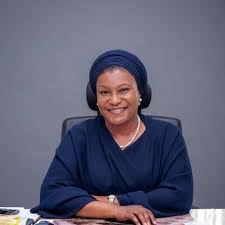
The chairperson of the senate committee on women affairs, Ireti Kingibe, has said that allocating six special seats for women in Nigeria’s legislature will not significantly improve female representation in the Nigerian Senate.
Kingibe made the remarks during an interview on ARISE News on Saturday, where she criticised the reduction of proposed special seats for women, describing it as insufficient to address the deep gender imbalance in the country’s upper legislative chamber.
According to the senator representing the Federal Capital Territory, the senate would remain overwhelmingly dominated by men even if the proposal is implemented.
“The senate will still remain overwhelmingly male-dominated. Reducing the special seats to six does not solve the problem. It does not fundamentally change representation or the balance of voices in the senate,” she said.
Kingibe noted that the proposal had originally suggested a significantly higher number of reserved seats but was drastically reduced.
“The gender equation bill has passed first bill, I’m trying to make sure that it passes. The constitution says 50 per cent, I’m asking you to enforce 45 per cent. From 37 they cut it down to six,” she explained.
She pointed out that the current number of women in the Senate is already extremely low.
“There are four female senators in the Senate now. Let’s assume they don’t return. I try to tell them six is inconsequential; it won’t change anything,” she said.
The lawmaker also highlighted the persistent marginalisation of women in key decision-making processes within the legislature.
“Sometimes they set a committee of adults and there’s no woman on it,” she added.
Kingibe further lamented the stereotypes women face when they speak up in political spaces, noting that outspoken women are often unfairly labelled.
“Outspoken men are described as outspoken, but outspoken women like me are described as troublesome,” she said.
She stressed that without deliberate and more robust measures to increase women’s participation in politics, the imbalance in representation will continue.
“Until there are deliberate measures to increase women’s representation, the situation will remain the same,” Kingibe said.
We’ve got the edge. Get real-time reports, breaking scoops, and exclusive angles delivered straight to your phone. Don’t settle for stale news. Join LEADERSHIP NEWS on WhatsApp for 24/7 updates →
Join Our WhatsApp Channel