As state governments across the country prepare to adopt and implement the provisions of the Electricity Act 2023, they have been urged to target industrial consumers in order to get value for power generated.
The Nigeria Electricity Regulatory Commission (NERC), which made this call, noted that nigeria is having very high levels of illiquidity in the Nigerian Electricity Supply Industry (NESI) because households consume about 68 per cent of electricity distributed from the national grid.
The commission explained that the implication is that there is a limit to what the household customers can spend on electricity from their budget, when there is increased supply or tariff.
This is as stakeholders have called for increased investment in renewable energy as well as energy efficiency in the country, in order to promote the development of the sector.
They made the call at the 2023 International Conference of the Renewable Energy and Energy Efficiency Associations-Alliance (REEEA-A), in Abuja.
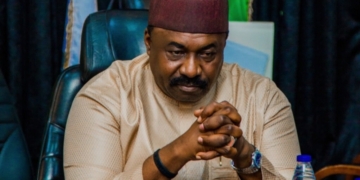
Speaking at the conference, NERC’s commissioner, Planning Research and Statistics, Dr. Yusuf Ali, who was represented by Abdulsalami Yusuf while lamenting the illiquidity in the sector, stressed that electricity supply is a factor of the fund that can pay for it.
He insisted that it is impossible to boost supply while supplying power to only households.
Yusuf said, “The challenge we have is that you have some supply only when you can provide the necessary fund that will pay for it, and that cannot happen if you have everybody still bringing to the households.”
He said, “Currently, our generation is being consumed about 68 per cent goes to the household, meaning that what is supplied today in Nigeria almost 70 per cent of it goes to the households.
“And what is the electricity level of household consumption and there is so much they can spend of their budget on electricity.
“There is a limit that when you increase tariffs or when you increase supply they can’t pay more than that.”
Yusuf, who was speaking in a panel session: “The impact of the constitutional amendment on electricity generation, transmission and distribution on the electricity value chain” however, noted that when industrial customers consume electricity, it culminates in additional production and creation of wealth that can pay for the electricity.
The commission insisted that electricity supplied to industrial customers is more viable than the one supplied to household customers.
Yusuf said, “But if you have industrial customers consuming your power, the more they consume, the more they produce, they make more money, they make more production and they can pay for it.
“That is why electricity is more viable when you have more industrial customers.”
He urged states to use the new electricity law as a game changer to create industrial clusters and feed them with power.
The REEEA-A 2023 International Conference, with the theme “Accelerating Private Sector Investment in the Renewable Energy and Energy Efficiency Sector”, had various panel discussions by experts in the field, was organised in collaboration with the Nigerian Energy Support Programme (NESP), European Union, the German Government, among other stakeholders.
Speaking earlier, Ambassador of the Federal Republic of Germany to Nigeria, Ms Annett Gunther, said that it was necessary for the government and the private sector to find the right way to implement the energy transition plan.
She said that the German government would continue to support the country as it works towards its energy transition plan.
Also speaking, chairman of the Board of Trustees of REEEA-A, Prof. Abubakar Sambo, said with appropriate political will, renewable energy would solve the electricity problems in the country.
He said that the conference would provide a platform for policymakers and regulators to engage with the private sector and identify policy barriers, potential solutions that would accelerate private sector investments.
With the massive energy deficit, the highest in the world according to statistics, the federal government said it is contemplating a Renewable Energy plan (REmap) that would generate 178,000MW in its bid to overhaul Nigeria’s energy architecture.
To achieve the ambitious energy plan, the federal government is scouting for investors to raise US$1.22 trillion to shift its energy sources to renewable, with a projected 178,000mws of electricity over the next 27 years.
Also, chairman of the Conference Planning Committee, Dr Segun Adaju, said the conference was aimed at creating awareness about the alliance and also investment opportunities that lie in the sector.
He said it was important for Nigerians to key into alternative sources of energy for mobility, cooking, power among others.
According to him, the growth of the sector is deeply rooted in the private sector, as such the government is expected to develop appropriate policies for private sector investment.
“Every year Nigeria spends between 15 billion to 20 billion dollars to buy fuel for generators, that is an investment that is waiting to catalysed for the sector already,” he said.
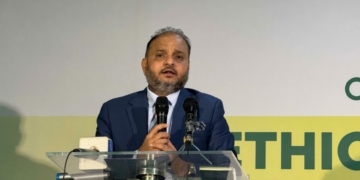
On his part, chairman, Steering Committee, REEEA-A, Dr Imamudeen Talba, said it was important to seek public-private partnership to foster collaboration in renewable energy in Nigeria.
He added that the Electricity Act recently signed by President Tinubu, had created a compelling need for restructuring of the power and energy sector in the country.
“To unleash this potential, we must create an enabling environment that encourages private sector participation, to reduce investment risk and increase sustainable business forum.
“It is an opportunity to learn from each other’s experiences and explore new avenues of cooperation to accelerate the transition to renewable energy and energy efficiency in Nigeria,” he said.
We’ve got the edge. Get real-time reports, breaking scoops, and exclusive angles delivered straight to your phone. Don’t settle for stale news. Join LEADERSHIP NEWS on WhatsApp for 24/7 updates →
Join Our WhatsApp Channel