
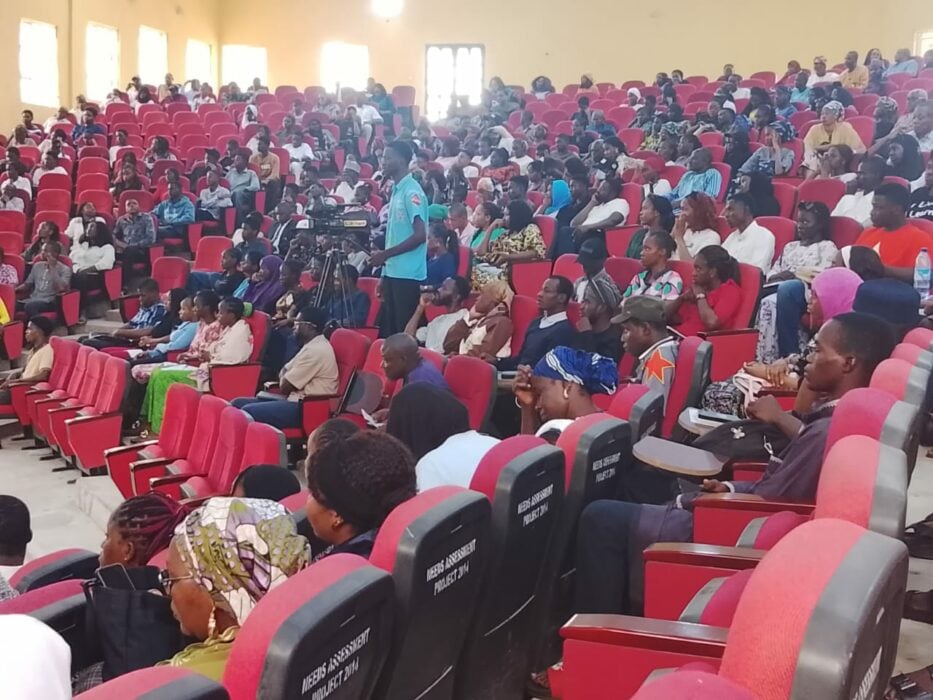
A medical and occupational health expert, Dr Taofeek Adegoke Uthman, has said more than 20 million Nigerians are currently living with mental health challenges, while over 76 per cent of university students have experienced one form of mental health difficulty during their academic years .
He made the assertion at a public lecture titled, “Mental Health Challenges in Nigerian Universities: Remedies for Improved Productivity and Healthy Living” at Federal University of Technology (FUT), Minna Main Campus Auditorium.
He expressed concern over the increasing rate of mental health challenges affecting staff and students in Nigerian universities, posing a serious threat to productivity, learning and national development.
Uthman who is currently serves in dual capacity at Baze University, Abuja as a lecturer in the Department of Community Medicine and Public Health and chief medical officer and director of Administration at the University Hospital (BUH), revealed that “more than 20 million Nigerians are currently living with mental health challenges, while over 76 per cent of university students have experienced one form of mental health difficulty during their academic year.”
He noted that stress, anxiety, depression, burnout, and emotional exhaustion have become common concerns within tertiary institutions due to academic
pressure, financial hardship, inadequate infrastructure, workplace stress, and social expectations.
According to him, the overcrowded classrooms, delayed salaries, poor welfare systems, job insecurity, excessive workloads, and prolonged industrial actions have further contributed to making Nigerian universities high risk environments for mental health disorders.
Dr. Uthman identified some key factors to include persistent fatigue, sleep disorders, irritability, social withdrawal, poor concentration and loss of motivation as some of the early warning signs of mental distress, stressing that untreated mental health challenges negatively affect academic performance, service delivery and institutional productivity.
The medical expert advocated a multi-level intervention involving individuals, university managements, government and development partners in line with the United Nations Sustainable Development Goal Three on good health and wellbeing as well as the establishment of dedicated mental health support units in universities, improved counselling services, safer workplace policies and stronger support systems for staff and students.
On overcoming the economically induced factors causing mental health challenges, he suggested that entrepreneurship and income diversification should be encouraged as practical ways of reducing financial stress among workers and students, reiterating that financial instability remained one of the major causes of stress and burnout in universities.
We’ve got the edge. Get real-time reports, breaking scoops, and exclusive angles delivered straight to your phone. Don’t settle for stale news. Join LEADERSHIP NEWS on WhatsApp for 24/7 updates →
Join Our WhatsApp Channel