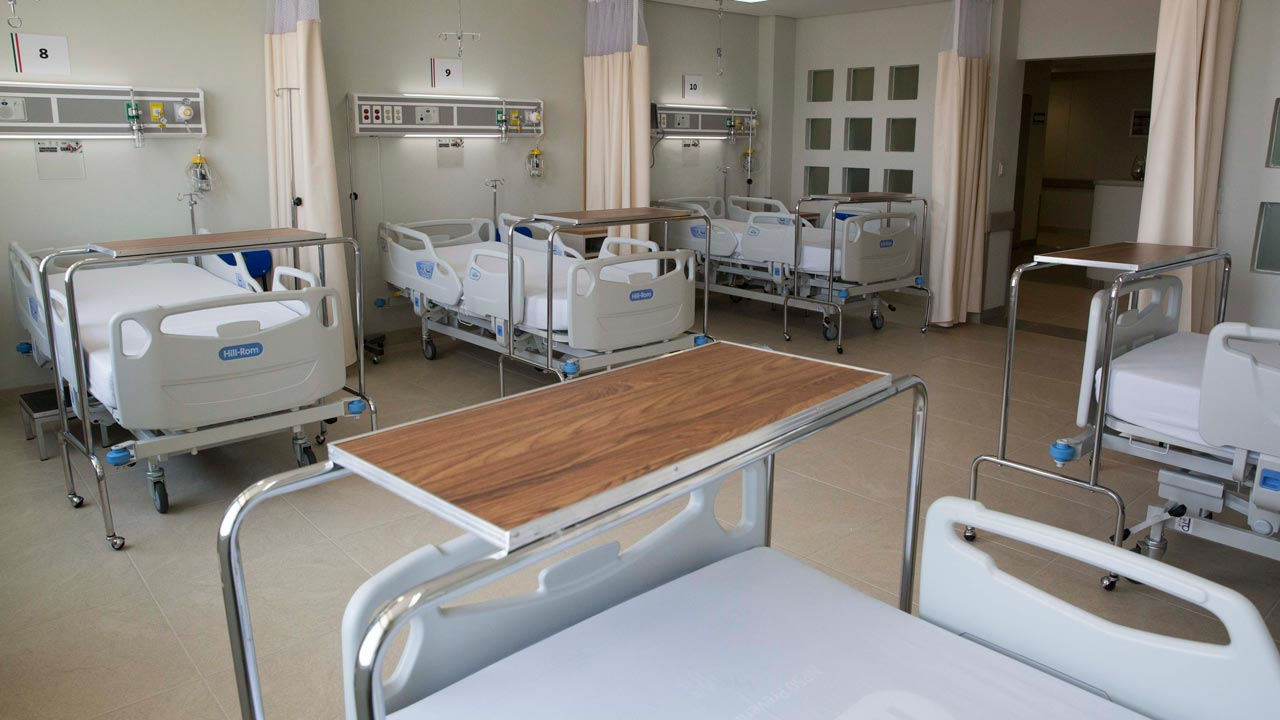
African governments have been urged to shift their healthcare priorities from constructing hospital buildings to investing in the training, retention and welfare of medical professionals, with a warning that failure to do so could leave the continent with modern facilities but too few specialists to operate them.
This warning was delivered by officials of Aga Khan University during a presentation on the future of healthcare in Africa in Lagos, where they argued that the continent’s health crisis is increasingly driven by inadequate investment in human capital, a worsening brain drain, and growing dependence on medical tourism.
According to the university, while governments have continued to channel significant resources into physical infrastructure, far less attention has been paid to developing the highly skilled workforce needed to deliver quality healthcare.
They equally bemoaned on the continuous export in knowledge in Africa medical facilities while urging the need to retain medical talents within the Africa ecosystem to strengthen healthcare delivery and reduce the outbound of medical travels”
Addressing a Media roundtable meeting in Lagos, Aga Khan University Hospital Chief Operating Officer Mr. Khurram Jamal said Africa has the expertise and opportunity to build health systems that people can trust, reducing the need for patients to seek treatment outside the continent.
He said every year, an estimated US$7 billion leaves Africa as patients travel abroad for medical care, with more than 300,000 Africans travelling to India alone for treatment.
This trend is driven by shortages of specialist services, inconsistent quality standards, fragmented medical travel pathways and the perception that better care is only available outside Africa.
“True shared prosperity means building health systems that Africans can trust, access and rely on right here at home,” said Jamal. “Every year, billions of dollars and hundreds of thousands of patients leave our continent in search of healthcare.
Our responsibility is to change that by investing in quality, people, research and partnerships that keep both patients and healthcare investment in Africa.”
Building healthcare that Africans can trust.
Jamal said restoring confidence in African healthcare begins with consistently delivering internationally benchmarked quality.
Aga Khan University Hospital has invested heavily in internationally accredited systems and advanced clinical technologies while adopting global standards that embed patient safety into every stage of care. The hospital was the first in the region to achieve Joint Commission International accreditation and has maintained this through continuous reaccreditation.
“The government is investing in structures, bricks and mortar, instead of the human capital required to run them,” the university’s speakers said.
“A building cannot heal a patient. A state-of-the-art surgical theatre is simply an expensive room without the specialists needed to operate it.”
The institution stressed that producing medical specialists requires sustained, long-term investment, noting that it takes 12-14 years to train a specialist from undergraduate medical school through residency and fellowship.
While sophisticated medical equipment can be procured within weeks, the speakers noted that the expertise required to operate such equipment takes years to develop.
“If we don’t start investing heavily in human capacity today, the next generation will inherit brand-new hospitals without the professionals required to run them,” Jamal warned.
The presentation linked Africa’s growing brain drain to poor remuneration, inadequate working conditions and limited career opportunities.
Using cardiologists in Lagos as an example, Jamal argued that healthcare professionals cannot be blamed for relocating abroad when they are offered significantly higher salaries, better equipment and safer working environments.
“If the United Kingdom offers five times the salary, better equipment and a safer environment, migration isn’t just a career move, it becomes a rational family decision,” the speaker said.
The university also highlighted disparities within African countries, saying specialists are reluctant to relocate to rural communities where healthcare facilities often lack basic infrastructure and essential services.
According to the institution, the consequences have been severe, with top specialists clustering in major cities while rural populations remain underserved.
The presentation further identified medical tourism as another major drain on Africa’s economies.
Citing available estimates, the university said nearly “$7 billion leaves Africa every year” as patients travel abroad for medical treatment, while more than “300,000 Africans journey to India annually” in search of healthcare services.
The speakers attributed the trend to inconsistent healthcare quality, limited access to specialised treatment and a widespread perception that better medical care is available outside the continent.
They also drew attention to Africa’s acute shortage of specialists.
According to figures presented, Africa has only about “2,000 registered cardiologists” serving a population exceeding”1.2 billion people”, translating to roughly “one cardiologist for every 600,000 people”.
“When patients see those odds, travelling abroad is no longer a luxury; it becomes a desperate search for survival,” the speaker noted.
The university argued that reversing the trend would require rebuilding public confidence in African healthcare through internationally recognised quality standards.
It called on hospitals across the continent to pursue independent global accreditation, describing it as more than a symbolic achievement.
“Accreditation is not simply a badge on the wall. It changes how medicine is practised every day by standardising care, strengthening patient safety and improving clinical outcomes,” the speaker said.
Beyond infrastructure and quality assurance, Aga Khan University identified education and research as the third pillar required to transform Africa’s healthcare systems.
The university cited the World Health Organisation’s recommendation that countries should have at least “4.45 healthcare workers per 1,000 people” to provide adequate healthcare services.
Africa, however, currently averages only about “1.5 healthcare workers per 1,000 people”, leaving the continent with barely one-third of the recommended workforce.
The institution further lamented that an estimated “70 per cent of African doctors who travel overseas for specialist training never return”, describing the trend as a major setback to healthcare development.
Reflecting on lessons from the COVID-19 pandemic, the speakers argued that Africa’s dependence on foreign vaccines underscored the need to strengthen local medical research, clinical trials and pharmaceutical manufacturing.
“Africa accounts for 17 per cent of the world’s population and 25 per cent of the global disease burden, yet contributes only a small proportion of global clinical research,” the university said.
To demonstrate what it described as a sustainable model, Aga Khan University outlined its own investments in specialist training and research.
The institution said it employs more than “200 full-time specialists” who simultaneously provide patient care, train future healthcare professionals and conduct medical research.
It also disclosed that it currently operates “16 fellowship programmes”, comprehensive residency training, undergraduate medical education and nursing programmes, with residency training covering “nine critical medical specialties”.
According to the university, its clinical research unit has participated in “17 clinical trials since 2020”, three of which have already received approval for use in Kenya.
The university said its hospital network has also expanded to “54 outreach medical centres across Kenya and Uganda”, while its Heart and Cancer Centre was established to address the continent’s growing burden of non-communicable diseases, including cancer, diabetes and cardiovascular illnesses.
The speakers concluded that Africa can significantly reduce medical tourism and retain more of its healthcare spending if governments, healthcare providers and academic institutions collectively prioritise specialist training, research and internationally accredited healthcare systems.
“We are not simply building hospitals,” the university said. “We are building an ecosystem of knowledge that treats patients, trains professionals and generates the research Africa needs to build a healthcare system its people can trust.”
We’ve got the edge. Get real-time reports, breaking scoops, and exclusive angles delivered straight to your phone. Don’t settle for stale news. Join LEADERSHIP NEWS on WhatsApp for 24/7 updates →
Join Our WhatsApp Channel