
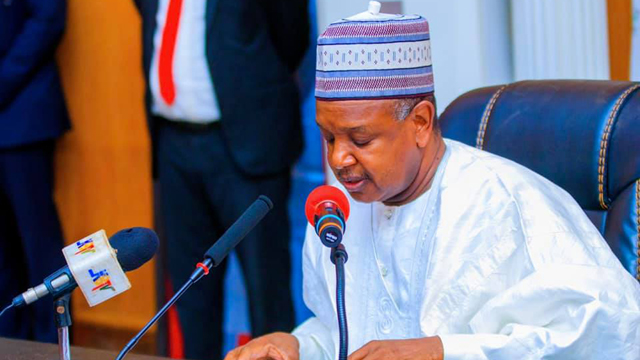
Since he was appointed Minister of Budget and Economic Planning on August 21, 2024, Senator Abubakar Bagudu has seen a smoother budgetary process, with the 2024 fiscal estimates and supplementary budgets passed with less friction. The 2024 Budget, a N28.77 trillion package, was presented on time and signed into law by January 1, 2024. This adherence to the budget cycle is a positive development, marking a shift towards greater fiscal discipline.
Critics point out that the apparent ease of budget passage might be masking deeper issues. While the budget aims to reduce the fiscal deficit and boost capital expenditure, it is still heavily reliant on borrowing. Independent economists have raised alarms about the long-term sustainability of Nigeria’s debt profile, particularly as revenue generation remains sluggish. The heavy borrowing strategy, some argue, is a temporary fix that postpones more structural reforms necessary for long-term economic stability.
Moreover, the allocation to social welfare programmes, while politically necessary, is viewed by some as insufficient to truly cushion the poorest Nigerians from the harsh realities of ongoing economic reforms, such as the removal of fuel subsidies. The short-term gains from these allocations may not address the underlying issues of poverty and inequality in the country.
Monitoring and implementation: transparency or cosmetic accountability? Bagudu’s ministry says it has placed significant emphasis on the monitoring and evaluation of government projects. The development of the Eyemark application, designed to enable citizens to track the progress of federally funded projects, has been lauded as a step toward greater transparency by supporters of the government. It boasts that the current administration’s intolerance for the lacklustre administration of public funds has entrenched accountability and value for money across MDAs.
However, not a few people, including a USA-based development expert, Sunny Ogbu have questioned the actual impact of these monitoring efforts. He opined that while the Eyemark application and other tools theoretically promote accountability, their effectiveness depends heavily on the government’s willingness and ability to act on the feedback provided. There is also scepticism about whether these initiatives are reaching a broad enough segment of the population to make a real difference in public oversight. Critics argue that without robust enforcement mechanisms, the measures may amount to little more than cosmetic changes aimed at appeasing international donors and domestic critics.
The near completion of the revision of the National Development Plan (2021-2025) to incorporate President Bola Tinubu’s priorities is another achievement touted by the ministry. Yet, some policy analysts worry that constantly revising long-term plans to align with changing political agendas could undermine the consistency needed for sustained economic growth. There are concerns that the focus on short-term political gains might dilute the strategic objectives of the original plan. “There is a need for consistency in government policies and programmes. There is no need to introduce a new national development plan for Nigeria. We have enough on the shelves. What we need is prudential implementation of those policies,” Professor of economics at the University of Benin, Hassan Oaikhenan said.
In its bid to reconfigure the nation’s economic architecture and reduce poverty, the federal government, through Bagudu’s budget and planning ministry, vowed to faithfully implement key programmes in line with its development agenda, especially the implementation of the National Poverty Reduction with Growth Strategy (NPRGS). In 2023, the ministry reported creating 67,038 jobs as part of its poverty reduction efforts, alongside the disbursement of substantial funds to states and the Federal Capital Territory.
While these figures suggest progress, independent observers remain cautious. The scale of poverty in Nigeria, they argue, is so vast that the impact of these programs, though positive, is likely to be limited. The NPRGS, while ambitious, has been criticised for not addressing the structural factors that perpetuate poverty in Nigeria. Critics from civil society organisations argue that job creation initiatives, while necessary, often do not translate into sustainable employment due to the lack of complementary policies on education, skills development, and infrastructure.
The minister recently remarked that the recommendations of the Multidimensional Poverty Index report across 36 states and FCT were implemented to address the challenges of deprivation and access to social services. “The bottom-up approach to government interventions was implemented with the National Population Commission, National Bureau of Statistics and the States from ward level to Local Government Areas,” he said at a recent function in his office.
The ministry’s role in transitioning the NG-CARES programme from COVID-19 relief to resilience-building is another area where opinions are divided. While the programme has reportedly impacted seven million poor and vulnerable households, some experts have raised concerns about its long-term sustainability.
The transition from emergency relief to resilience building requires significant investment and coordination, and there are fears that without continued external support, the program may struggle to maintain its momentum.
Bagudu’s ministry has introduced several innovations, such as the mainstreaming of geospatial analysis for public programme design and the concession of the Cassava bioethanol value chain. These initiatives are seen as forward-looking, with the potential to address food insecurity and boost job creation.
Not a few observers have cautioned that these initiatives are still in their early stages and their success is far from guaranteed. The geospatial analysis, while a promising tool, requires significant capacity building across government agencies to be effectively utilised. Without this, the initiative risks being another well-intentioned but under-implemented policy. Similarly, the Cassava bioethanol project faces challenges such as infrastructure deficits and market access that could hinder its long-term success.
The ministry’s work on the revised National Social Protection Policy, which has garnered the agreement of all 36 state governors, is another achievement. However, the effectiveness of this policy will depend on its implementation at the state level, where capacity and commitment can vary widely. Some development experts have also expressed concerns that the policy may be too focused on short-term relief rather than on building long-term resilience and social protection systems.
Senator Bagudu’s leadership of the Federal Ministry of Budget and Economic Planning has been marked by ambitious initiatives and a clear intent to stabilise Nigeria’s economy. However, the effectiveness of these efforts remains a subject of debate. While the ministry has undoubtedly made strides in areas such as budgeting, project monitoring, and policy coordination, the long-term impact of these initiatives is far from certain.
Independent analysts and critics argue that many of these policies, while well-intentioned, may not go far enough to address the deep-seated economic challenges facing Nigeria. The reliance on borrowing, the limited scale of poverty reduction efforts, and the challenges in implementing innovative policies all point to a mixed legacy for Bagudu’s tenure.
As Nigeria continues to navigate its economic recovery, the success of these initiatives will be closely watched, with their true impact likely only becoming apparent in the years to come.
We’ve got the edge. Get real-time reports, breaking scoops, and exclusive angles delivered straight to your phone. Don’t settle for stale news. Join LEADERSHIP NEWS on WhatsApp for 24/7 updates →
Join Our WhatsApp Channel