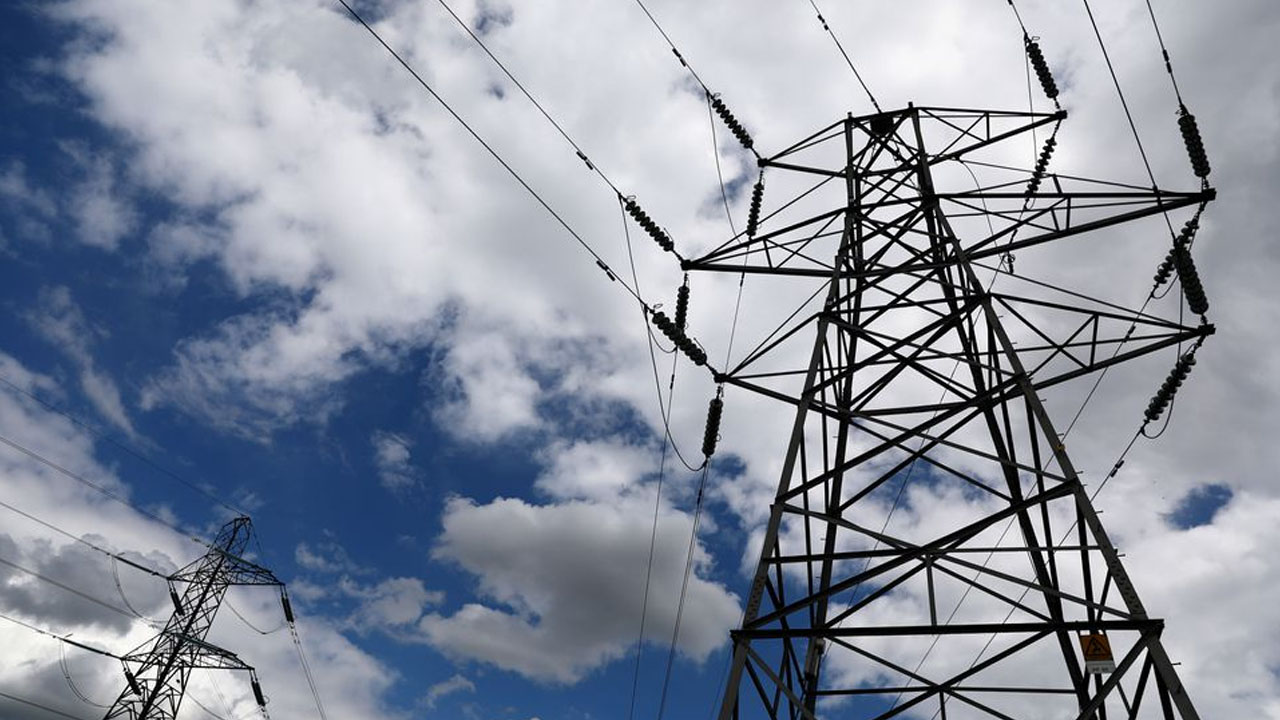
If you needed proof that Nigeria excels at breaking records, here’s one: three national grid collapses in less than a week. Not the kind of record any serious nation should be proud of, but here we are, making headlines for all the wrong reasons.
To be sure, the Transmission Company of Nigeria (TCN) has offered its usual bouquet of technical explanations – this time about a “bus section of a current transformer” that exploded at the 330kV Jebba Transmission Substation. For the average Nigerian running businesses on generating sets, these explanations are beginning to sound like a broken record.
Let’s put this in perspective: 105 grid collapses in 10 years, with eight already recorded in 2024. If this were a student’s report card, we would have long called for an emergency parent-teacher meeting.
But somehow, we’ve normalised this mediocrity in our power sector.
The minister of power, Adebayo Adelabu, with characteristic optimism, promised Nigerians 6,000 megawatts by year end. With less than 80 days to go, one wonders if this isn’t another addition to our long list of unfulfilled power promises. Personally, I was surprised his name didn’t feature in the recent cabinet reshuffle – a testament to how low our expectations have sunk.
Here’s what baffles me: We privatized our electricity sector over a decade ago with much fanfare and promises. The result? Same old story, different characters. We’re still struggling with 5,000MW – a figure we’ve been dancing around for three decades. Meanwhile, South Africa, with half our population, generates over 40,000MW. Make it make sense.
The question that keeps me awake at night is this: What’s really holding us back? We hear whispers about cabals and demigods in the power sector. Are these invisible forces more powerful than the presidency? Or have we simply resigned ourselves to mediocrity?
The distribution companies, in their defense, point fingers at lack of proper maintenance and insufficient investment. Really? Let’s fact-check this claim. Nigeria has secured about $4.36 billion in World Bank loans over the past decade specifically for the power sector. So when these DISCOs talk about lack of investment, one wonders if we’re operating in parallel universes.
Trust me, I’ve become increasingly skeptical of expert opinions since our fuel/forex subsidy removal wahala. However, some solutions being proposed deserve attention.
The call for decentralisation of the national grid makes perfect sense. President Tinubu has already signed legislation allowing states to generate their own electricity. But here’s the million-dollar question: Why are states like Lagos and Rivers, with their massive industrial bases, still tethered to this failing national grid?
Come to think of it, shouldn’t we be having a different conversation entirely? While we’re here debating grid collapses, the world is racing ahead with renewable energy solutions. States in northern Nigeria, blessed with abundant sunshine, should be leading the charge in solar energy adoption. Instead, we’re stuck in this cycle of grid collapse and excuses.
The experts tell us that while factors like vandalism and unforeseen events can affect the grid, a well-managed system should prevent frequent collapses. But how do we achieve this when we can’t even maintain basic infrastructure?
I completely agree that we need to diversify our energy sources to reduce pressure on the national grid. But implementation, as we’ve learned from countless failed projects, is where the real work lies. We can’t keep operating a 20th Century grid system in a 21st Century world.
Remember those promises by successive administrations about delivering 10,000MW before leaving office? They’ve become as predictable as the grid collapses themselves. It’s like watching a tragic comedy where we all know the ending but are forced to sit through it anyway.
Here’s the brutal truth: Until we muster the political will to confront the entrenched interests in our power sector, we’ll keep going round in circles. The solution isn’t rocket science. States need to take advantage of the new legislation and start generating their own power. Regional power generation networks need to become a reality, not just policy documents gathering dust.
Moreover, we need to start holding power sector players accountable. How is it that after privatisation, service seems to have gotten worse? Where are the investments these companies promised? Why are we still talking about basic maintenance issues a decade after privatisation?
The reality is that Nigeria’s power sector problems are both technical and political. While we focus on the technical aspects – grid infrastructure, generation capacity, and transmission networks – we often ignore the elephant in the room: the political will to effect real change.
As we approach the end of 2024, with another set of failed power promises looming, it’s clear that something has to give. We cannot continue to run a 21st Century economy on a collapsing power grid. The cost to businesses, the impact on our industrial capacity, and the strain on ordinary Nigerians have become unbearable.
Needless to say, states must break free from this dysfunctional national grid system. The federal government must summon the courage to tackle the powerful interests holding the sector hostage.
Until then, I fear we’ll keep breaking the wrong kind of records, and “national grid collapse” will remain as Nigerian as jollof rice.
We’ve got the edge. Get real-time reports, breaking scoops, and exclusive angles delivered straight to your phone. Don’t settle for stale news. Join LEADERSHIP NEWS on WhatsApp for 24/7 updates →
Join Our WhatsApp Channel