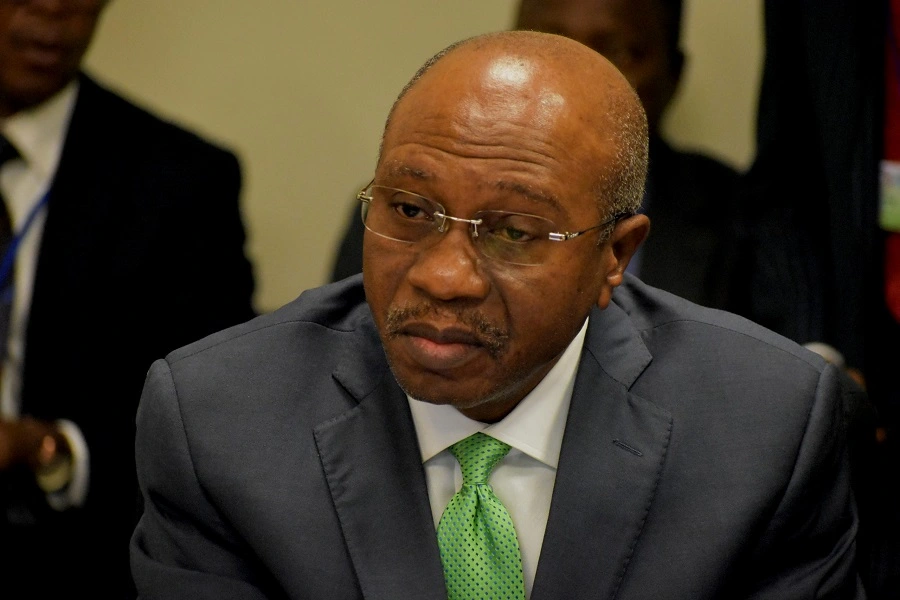
Like an avalanche in suddenness and overwhelming quantity, the announcement by the Central Bank of Nigeria (CBN) last week on redesigning some naira notes stirred panic, controversy and heated debate by Nigerians from all walks of life. The CBN Governor Godwin Emefiele made the initiative known at a press conference, stressing that the new designed naira notes will be issued effective from mid-December this year. According to him, the new notes include 200, 500 and 1000 naira.
He advised Nigerians to take old notes to banks to enable them to withdraw the new banknotes once circulation begins. The apex bank’s governor gave a number of reasons for the redesigning of the notes. One of them is the persisting concerns with the management of the current series of banknotes, and currency in circulation — particularly those outside the banking system in Nigeria.
Despite divergent views that have trailed this decision by the CBN as well as the sentiment expressed by the Minister of Finance, Budget and National Planning, Zainab Ahmed on the matter, the initiative would be positive for the economy. Despite the Finance Minister’s seemingly veiled protest, a quick perusal of the laws reveals that the Central Bank has both operational and administrative independence to carry out such an exercise. It doesn’t expressly need to notify or seek the consent of the Finance Ministry. The Bank only requires presidential approval and President Muhammadu Buhari has since cleared the air that he indeed granted consent on the matter.
That aside, the standard practice globally is for central banks to redesign, produce and circulate new local legal tender every five to eight years. In the United States, The Federal Reserve, together with the Treasury Department’s Bureau of Engraving and Printing, and the U.S. Secret Service, continuously monitor the counterfeiting threats for each denomination of U.S. currency and make redesign decisions based on these threats. The country periodically redesigns its currency to stay ahead of counterfeiting threats and keep counterfeiting levels low.
In the U.K, £20 and £50 paper notes, has seized being legal tenders since September this year. A new polymer £50 note was subsequently introduced which contains advanced security features. The note has joined the Churchill £5, the Austen £10 and the Turner £20, meaning all Bank of England banknotes are now available on polymer. The Bank of England maintains that the features of the note make it very difficult to counterfeit.
In the case of both countries, the redesigning was done within a span of 5 – 8 years. In Nigeria However, the naira has not been redesigned in the last 20 years. Recall that in February 2007, as part of economic reforms, N20 was issued for the first time in polymer substrate, while N50, N10 and N5 banknotes; as well as N1 and 50 kobo coins were reissued in new designs, and the N2 coin was introduced. Two years later in the month of September, the redesigned N50, N10 and N5 banknotes were converted to polymer substrate following the successful performance of the N20 (polymer) banknote.
Similarly, the CBN, as part of its contribution towards the celebration of the 50th anniversary of Nigeria’s Independence and 100 years of its existence as a nation, had issued the N50 Commemorative polymer banknote a year later; and the N100 Commemorative banknote in December 2014. With this apparently, the CBN had even tarried for too long considering that it had to wait 20 years to carry out a redesign compared to the standard practice worldwide.
A major challenge that this initiative will curb is the reported significant hoarding of banknotes, with statistics showing that over 80 percent of currency in circulation are outside the vaults of commercial banks. The initiative by the CBN will certainly affect those in the habit of hoarding naira notes or people with illicit monies buried under the soil. They will have no other choice than to head to the banks where their monies can be captured and monitored.
The rush will lead to large deposits in banks; thus, banks will have more money to lend, which may reduce interest rates. It will also reduce speculative attacks on the naira in the parallel market. The Financial Intelligence Unit should be on the watch-out for huge deposits as a way of monitoring illegitimate transactions. The EFCC should also monitor the process to ensure that unscrupulous players and currency speculators and their cohorts among the bureau de change operators do not undermine the exercise. Banks in addition needs to be alive to their reporting obligations and not assist unscrupulous customers in laundering suspected proceeds of crimes through their system.
Recent developments in photographic technology and advancements in printing devices have made counterfeiting relatively easier. According to reports by the CBN, the bank has been recording significantly higher rates of counterfeiting especially at the higher denominations of N500 and N1000 banknotes. The redesigning of the currency will help curb this counterfeiting as well as ransom payment to kidnappers and terrorists. In view of the prevailing level of security situation in the country, the CBN’s initiative can help minimize access to large volume of money outside the banking used as source of funds for ransom payment.
Some concerns have been raised concerning the redesigning of the naira notes that includes the fragility of the economy, the naira against other currencies, inflation and unemployment, timing among others. While these concerns are valid, the initiative by the CBN seeks to even solve some of these problems. A particular issue that has been of particular interest is the timeline for rolling out the new notes. Many say the December 15 deadline which is just weeks away is tight.
As Nigerians though, we seem to have a penchant for responding at the eleventh hour. The Bank Verification Number (BVN) registration even the recent continuous voter registration saw multitudes of people trooping out en masse to beat the last-minute deadline. It wouldn’t be a surprise if by December 14 banks across the country will witness a mad rush of people trying to change their currencies on the final day of the deadline. One’s fear however is for the well-known tricks and extortion of customers by banks who routinely disregard CBN regulations.
Nonetheless, one is quite optimistic that this measure in the short and long term will sanitize the system especially with the upcoming 2023 General Elections. For this to be a success though, the CBN needs to involve all stakeholders especially banks and bankers as well as law enforcement agencies. Failure to get their buy in might just prove fatal to this lofty initiative. Perhaps also, a slight extension of the deadline should be looked into to enable more Nigerians especially those residing in rural areas to meet up.
But as of now, Nigerians have been put on notice. So, each must take ‘note’ of the redesign of the ‘note.’
We’ve got the edge. Get real-time reports, breaking scoops, and exclusive angles delivered straight to your phone. Don’t settle for stale news. Join LEADERSHIP NEWS on WhatsApp for 24/7 updates →
Join Our WhatsApp Channel