Hair, for many Nigerians, is more than strands on the scalp, it carries history, confidence, and social identity. From Lagos to Kano, we braid it, relax it, stretch it, glue it down, line it up, and increasingly, try to regrow it. Yet beneath the beauty routine lies a quiet crisis: more people are losing their hair, often without understanding why it is happening or what it signals about their health. And while some brush it off as a normal phase, health experts are urging Nigerians to pay closer attention.
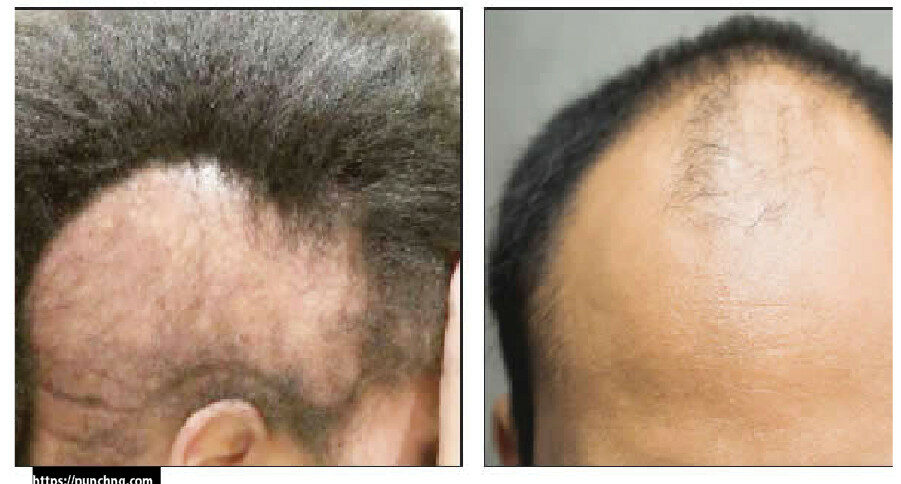
Dermatologists warn that hair loss is increasingly becoming a medical warning sign, not just a cosmetic inconvenience. The International Journal of Dermatology (2021) reports that traction alopecia, hair loss caused by tight hairstyles, affects over one-third of African women, with Nigerian styling practices such as tight braids, ponytails, glued wigs and frequent relaxers being major culprits. This means that countless women are not losing hair because of age, but because beauty demands are actively damaging their scalp and hair follicles. Doctors describe it as “beauty-induced baldness,” a harsh phrase that reflects a harsh reality.
What’s becoming more worrying is the changing pattern of hair loss in Nigeria. Specialists at the Lagos University Teaching Hospital (LUTH, 2023) note that iron deficiency and untreated scalp infections now rank among the top causes of thinning hair and receding hairlines in young women. A simple deficiency in iron, seen commonly in women due to menstruation and limited dietary intake, can weaken hair roots to the point where they give up before growing to full length. Add childbirth, stress, untreated dandruff, and chemical damage to that equation, and hair becomes one of the body’s first sacrifices when resources are scarce.
Men are not exempt. While receding hairlines have traditionally been associated with aging, dermatologists now observe more young Nigerian men reporting early-onset hair thinning and beard patchiness. According to the American Academy of Dermatology (2022), around 50% of men experience major hair loss by age 50, but when this shows up aggressively in a man’s 20s or early 30s, it may be linked to stress, hypertension, fungal infections picked up via shared clippers, or even the excessive use of bodybuilding supplements. Our barbershops, often regarded as safe spaces for relaxation and banter, can unfortunately also be hubs for infections that slowly eat away at hair roots — especially when hygiene is overlooked.
The emotional toll is a story rarely told. Hair carries deep cultural symbolism in Nigeria — for women, full edges and long braids reflect femininity; for men, a complete hairline boosts confidence. Losing hair silently chips away at self-esteem. Psychologists confirm that hair loss can trigger and worsen anxiety and depressive symptoms, creating a cycle where stress fuels even more shedding. Yet many Nigerians hide their struggles under wigs, hats, gels, and humour, pretending everything is fine while privately battling the mirror.
Beyond personal beauty concerns, hair loss can be a sign of deeper medical problems. Doctors recommend paying attention when hair falls suddenly, comes out in clumps, or when bald spots and scalp pain appear. These symptoms may be early warnings of thyroid disease, autoimmune disorders, diabetes, hormonal imbalance, vitamin deficiencies, or long-standing fungal infections. Women experiencing rapid shedding after childbirth or while dealing with irregular menstruation may actually be facing conditions like PCOS, which affects thousands of women across the country but is often undiagnosed. In all these cases, the scalp acts like a messenger, sending the first alarm before the body shows bigger symptoms.
Nutrition also plays a powerful role. Protein and iron-rich Nigerian staples such as beans, fish, leafy vegetables, eggs, and millet provide the essential building blocks for hair. When diets shift too heavily to fast foods and low-nutrient meals, hair health suffers long before hunger sets in. Doctors often say, “the body protects the heart first and the hair last,” because hair is not essential for survival, meaning it loses in any nutritional crisis.
If we want to protect our hair, we must rethink habits we normalized. Hairstyles should not hurt. Relaxers and dyes should not be constant. Dandruff should not be ignored. Hygiene should not be optional at barbershops and salons. And stress should not be allowed to silently ruin both mental and physical well-being.
Hair loss should no longer be dismissed as bad luck, aging, or “family genetics.” It is a health conversation and Nigeria must start having it. Our hair tells a story long before sickness becomes visible. It reflects how we live, what we eat, the pressure we carry, and the conditions brewing beneath the surface.
Sometimes, the most important health check doesn’t begin with a blood test or stethoscope.
It begins right on the scalp, in the places we cover up the most.
We’ve got the edge. Get real-time reports, breaking scoops, and exclusive angles delivered straight to your phone. Don’t settle for stale news. Join LEADERSHIP NEWS on WhatsApp for 24/7 updates →
Join Our WhatsApp Channel