On February 9, 2025, the Jigawa State government launched an initiative known as “Citizens Engagement” (Gwamnatin Da Jama’a). A year later, the program is off to a promising start, having unveiled numerous public concerns and bridged the gap between the electorate and their elected officials.
Traditionally, after campaign seasons and elections, voters often lose contact with their leaders until the next electoral cycle four years later. There was little to no opportunity for citizens to inquire about campaign promises, let alone channel their demands as enshrined in democratic principles.
To bridge this gap, the administration of Governor Malam Umar Namadi introduced this program to expand public participation in governance and deepen democracy by providing a platform for everyone to contribute, channel their demands, and voice their concerns.
During the flag-off of the initiative in Auyo, local government are, Governor Namadi announced that under this program, the government would visit all 27 local government areas to give an account of its stewardship and listen to the public’s demands.
The philosophy behind the initiative is to bring the government closer to the people, inform them about progress on campaign promises, and generate citizen input for designing more people-oriented budgets and policies, in line with the government’s 12-point agenda.
So far, the governor has successfully visited 25 local government areas. In these visits, all commissioners, members of the state assembly, local government chairmen, members of the House of Representatives, and senators have directly gathered with their constituents to present their scorecards.
In each local government, the governor has commissioned or flagg-off new projects, received citizens’ demands through community leaders, and reassured them of more dividends of democracy.
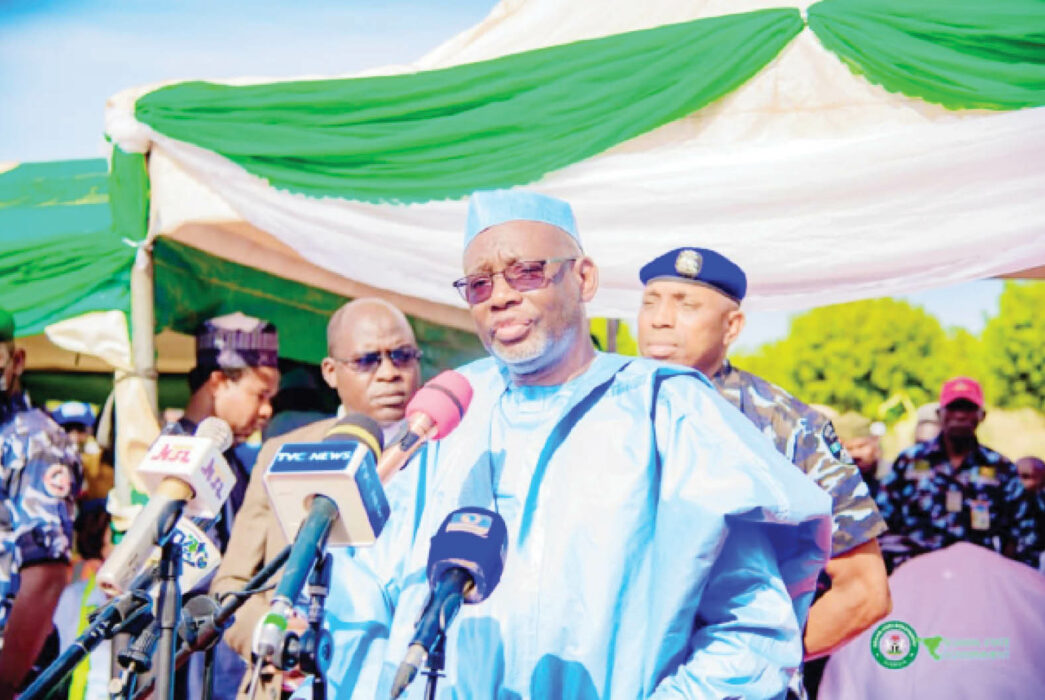
The two most recent local governments visited by the governor were Miga and Malam Madori. The programs were conducted peacefully, with attendees visibly excited about the unprecedented opportunity afforded by the “Gwamnatin Da Jama’a” initiative.
In Miga, the home local government area of the Speaker of the State House of Assembly, the governor began his visit by flagging off the construction of the 30-kilometre Tsakuwa-Koya-Kafin Hausa feeder road. The project, awarded at a cost of N7 billion, is expected to be completed within 12 months.
Under Governor Namadi’s leadership, a total of N30 billion has been approved for three different road projects across Miga Local Government, all currently at various stages of progress.
As a key agricultural zone for the state, providing accessible roads for transporting farm produce is crucial for enhancing social and economic activities and achieving sustainable growth.
The governor also commissioned an electrification project in Koya Village.
At the same event, the State Commissioner for Health, Dr. Abdullah Kainuwa, highlighted projects executed in the area over the last two years. These include the renovation of Miga General Hospital, the recruitment of health workers, and the enrolment of over 7,000 vulnerable people into the state’s Social Health Insurance Scheme.
Furthermore, the State Commissioner for Education announced that over N5 billion was spent on the renovation and construction of classrooms, as well as the provision of furniture and other learning materials in the area.
The Speaker of the State House of Assembly, Rt. Hon. Haruna Aliyu Dangyatin, enumerated various projects he facilitated for the constituency and launched an empowerment program for 100 youth, with each beneficiary receiving N100,000.
The Speaker, designated by UNICEF as a Champion for enrolling out-of-school children camping, also explained how he facilitated the enrollment of hundreds of such children in his constituency.
The Miga Local Government Chairman listed several healthcare projects, water facilities, school renovations, agricultural interventions, empowerment programs, electrification projects, and other infrastructure provided by the council to complement Governor Namadi’s efforts.
As in every local government, the community, led by the District Head of Miga and other chiefs, presented their charter of demands to the governor for consideration in the next budget.
In Malam Madori Local Government, the governor began by inspecting two ongoing projects before flagging off the Mallam Madori–Gari Uku–Kanya Babba–Malorin Kasim–Abori–Sumburtu–Diginsa Road (34.5 km).
The governor stated that the beneficiary communities have been hard to reach due to a lack of access roads. He expressed optimism that the new road would ease decades of hardship and open new opportunities for social and economic growth.
Governor Namadi challenged the public and all beneficiary communities to take ownership of the public infrastructure provided in their areas for sustainable and lasting benefit. “It is yours. Please own it,” Namadi stated.
The Senator representing Jigawa Northeast, Senator Abdul Hamid Malam Madori, also detailed projects and interventions he brought to the local government, including the donation of motor vehicles.
The scene in Malam Madori was as uplifting as in previous local governments, with the governor and his entourage welcomed by mammoth crowds in appreciation of his efforts to transform their lives.
Indeed, the programme has so far been a success, and the two remaining local governments are eagerly awaiting their turn to host their amiable and cherished governor.
We’ve got the edge. Get real-time reports, breaking scoops, and exclusive angles delivered straight to your phone. Don’t settle for stale news. Join LEADERSHIP NEWS on WhatsApp for 24/7 updates →
Join Our WhatsApp Channel