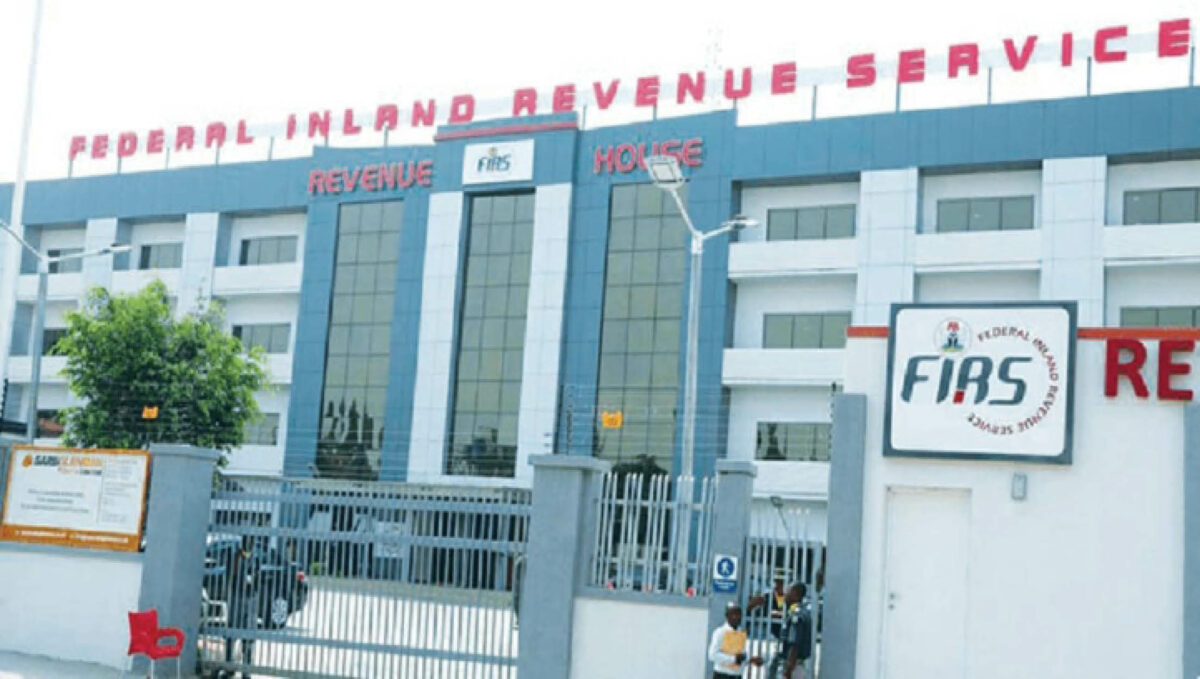
A growing controversy between former Vice President Atiku Abubakar and the Federal Inland Revenue Service (FIRS) has thrown Nigeria’s revenue-collection framework into the national spotlight, following sharp disagreements over the appointment of Xpress Payment Solutions Limited as one of the platforms used in the Treasury Single Account (TSA) system.
The dispute has not only triggered political reactions but also revived discussions about the transparency, structure and future of Nigeria’s evolving tax administration regime.
Atiku had alleged that the decision to admit Xpress Payments into the TSA payment ecosystem amounted to the creation of a revenue “cartel,” likening it to what he described as a monopolistic model used in Lagos State in previous years.
In a strongly worded statement titled “The Federal Government must come clean with Nigerians,” the former Vice President accused the administration of secretly introducing a framework that could place national revenues in the hands of private and politically connected interests. He argued that the process lacked consultation and that it risked placing public finances under the control of a select few.
However, the FIRS swiftly refuted the claims in a detailed response issued by Arabinrin Aderonke Atoyebi, Technical Assistant on Broadcast Media to the Executive Chairman of the Service.
The tax authority described Atiku’s assertions as “incorrect” and “misleading,” insisting that no private entity had been granted monopoly over government revenues. The agency said the former Vice President’s position risked politicising what it described as a purely administrative process rooted in long-standing fiscal reforms.
In its response, the FIRS explained that the TSA revenue-collection structure operates through a broad, competitive pool of Payment Solution Service Providers (PSSPs), many of which have been part of the federal payment architecture for several years.
According to the Service, Xpress Payments is only one among several platforms—including Remita, Quickteller, Flutterwave and Etranzact—used to facilitate payments into the Federation Account. The agency maintained that it does not operate any single-gateway arrangement and that expanding the number of PSSPs is consistent with efforts to improve efficiency, widen taxpayer options and reduce dependence on individual vendors.
The Service further emphasised that PSSPs do not collect, hold or access government revenue at any point. All payments, it said, flow directly into the Central Bank of Nigeria (CBN)-managed TSA, with no intermediaries or percentage-based deductions. The clarification, it noted, was necessary to counter Atiku’s claims that a private firm was being positioned to enjoy privileged control over public funds.
The former Vice President had painted a different picture. He described the admission of Xpress Payments as the “nationalisation of the Alpha Beta template,” arguing that such an arrangement risked turning Nigeria into a private holding company dominated by vested interests.
He questioned the timing of the development, particularly in a period marked by rising insecurity. In his view, the government should focus on public safety and economic stability rather than expanding what he called “private revenue pipelines.”
Atiku demanded an immediate suspension of Xpress Payments pending a public inquiry, a full disclosure of contractual details, and a legal framework to prevent the insertion of private proxies into core government revenue systems. He maintained that Nigeria needed transparent institutions rather than middlemen between citizens and their government.
The FIRS countered that these concerns were unfounded and based on an inaccurate understanding of how the TSA ecosystem functions. The agency stated that every PSSP in the platform was admitted through a transparent vetting process designed to ensure fairness and equal opportunity. It said the addition of more platforms reflects the ongoing implementation of national tax reforms, which are focused on improving efficiency and broadening the technology base for tax administration.
According to the statement, expanding the PSSP pool enhances reporting accuracy and strengthens monitoring tools that allow for real-time reconciliation of government revenue. It added that a streamlined digital process has reduced collection bottlenecks and strengthened fiscal oversight, contributing to improved national revenue performance in recent years.
Industry analysts say the dispute highlights a deeper struggle over the narrative surrounding Nigeria’s tax reforms. With the country’s tax-to-GDP ratio still among the lowest in Africa, the FIRS has spent the last two years implementing reforms aimed at modernising the tax system, improving compliance and widening the tax net. Critics of the government have often questioned the transparency of these reforms, while supporters argue that the Service has made significant progress in reducing leakages and improving technology-driven accountability.
Observers note that much of the current tension stems from the sensitivity of Nigeria’s revenue structure at a time when the government is managing inflationary pressures, security expenditures and rising public expectations. Any perceived irregularity in the revenue-collection system tends to attract heightened political attention, especially from opposition figures seeking to question the administration’s stewardship of the economy.
However, experts familiar with the TSA framework say Atiku’s fears of a monopoly may not align with the practical realities of the system, which is structured around multiple layers of oversight. They point out that the TSA is housed at the CBN, not at the FIRS or any private company, and that PSSPs function only as digital channels through which taxpayers interact with the system. Payments, according to them, do not pass through private accounts, nor do private actors determine the terms of revenue flow.
Financial technology experts also argue that the expansion of PSSPs has strengthened the competitiveness of Nigeria’s payment ecosystem. By allowing multiple platforms to operate, they say, the government has avoided the vulnerability associated with reliance on a single provider, especially in a country where internet connectivity and digital penetration vary widely.
Within the FIRS, the push for digital modernisation has been part of broader reforms inspired by the recommendations of the Presidential Fiscal Policy and Tax Reforms Committee. The agency has upgraded its internal systems, improving digital identity verification, automating compliance processes and strengthening audit trails that provide better transparency in revenue reporting.
Those reforms, officials insist, have contributed to higher revenue figures over the last two fiscal cycles, giving the government more fiscal space for budgetary priorities.
FIRS officials say politicising such technical improvements risks undermining public confidence in the tax system. Taxation depends heavily on trust, they argue, and misinformation can discourage compliance.
The tax watchdog called on political actors to avoid mischaracterising administrative processes for political gain, warning that doing so could weaken the credibility of the tax ecosystem at a time when revenue mobilisation is critical to national development.
Supporters of the FIRS’s position note that criticism of government revenue reforms often fails to acknowledge the complexity involved in updating the tax infrastructure of a country as large and diverse as Nigeria. They argue that the agency has come a long way from the bureaucratic and paper-based processes that once slowed collections and created openings for leakages. Today, taxpayers can make payments through mobile applications, banking channels and digital wallets—an expansion made possible by the participation of multiple PSSPs.
Despite the technical assurances provided by the FIRS, the political dimension of Atiku’s criticism cannot be ignored. As a former Vice President and a long-time presidential contender, his statements carry significant weight and are viewed by many through the lens of political rivalry with the current administration. His reference to the “Lagos model” and warnings of “state capture” have been interpreted by analysts as a direct critique of President Bola Tinubu’s political influence.
But for the FIRS, the central issue remains the integrity of the tax system. The agency insists that decisions around PSSP admissions are administrative, not political, and driven by the need to improve efficiency and transparency in national revenue collection. It reiterated that the TSA framework is too important to be dragged into political controversy, especially as the country continues its economic modernisation efforts.
As the debate continues, it appears the controversy has opened space for a broader national conversation on how best to strengthen public finance management in Nigeria. While Atiku’s concerns have sparked scrutiny, the FIRS response has shed light on ongoing reforms aimed at enhancing accountability and preventing the kinds of monopolistic practices the former Vice President fears.
What remains clear is that the country’s fiscal challenges require both transparency and stability, and that the credibility of Nigeria’s tax system will continue to be a defining issue in the months ahead.
We’ve got the edge. Get real-time reports, breaking scoops, and exclusive angles delivered straight to your phone. Don’t settle for stale news. Join LEADERSHIP NEWS on WhatsApp for 24/7 updates →
Join Our WhatsApp Channel