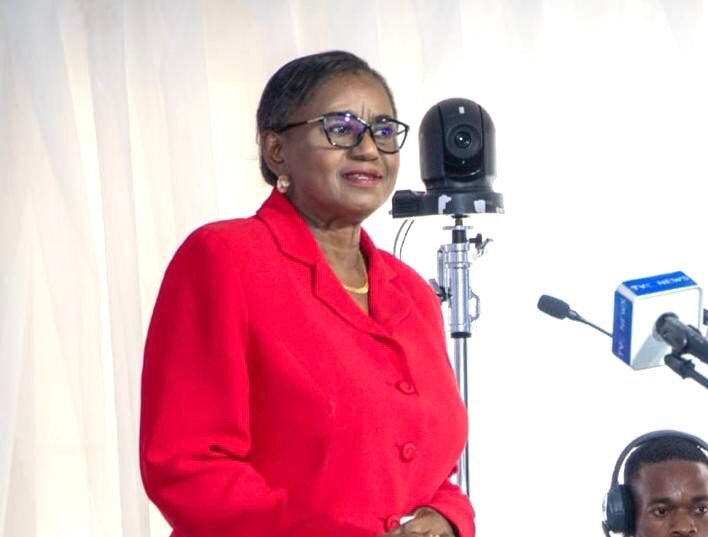
The chairman of the Senate Committee on Health (Secondary & Tertiary), Senator Dr. Ipalibo Harry Banigo, has urged a decisive transformation of Nigeria’s HIV response as the country marks World AIDS Day 2025, themed “Overcoming Disruption, Transforming the AIDS Response.”
The Harvard-trained public health physician and long-standing advocate for equitable health systems described the 2025 theme as a reminder that Nigeria must urgently strengthen HIV service delivery to guarantee uninterrupted access to testing, treatment, and prevention—particularly for vulnerable groups.
“Each year, World AIDS Day calls us to reflect, stand in solidarity, and renew our resolve to end AIDS as a public health threat by 2030,” she noted. “Though it is a day of remembrance, it is equally a day of renewed hope built on the courage of people living with HIV and the dedication of those working to ensure no life is lost to a preventable infection.”
A strong emphasis was placed on eliminating mother-to-child transmission of HIV (eMTCT), which the senator described as lying “at the intersection of maternal health, child survival, and public health equity.”
“No Nigerian child should be born with HIV in this decade,” she stated. “Our policies, programmes, and funding priorities must reflect this commitment.”
Senator Banigo highlighted Nigeria’s progress in the HIV response, noting that according to recent NACA data, over 1.6 million Nigerians are on sustained treatment and new infections have dropped by nearly 40% over the last decade.
“These gains reflect years of hard work, partnership, and political will,” she said. “But they must be consolidated, protected, and expanded if we truly intend to eliminate AIDS as a public health threat.”
Despite this progress, she warned that service disruptions, weak health systems in some regions, and lingering inequalities continue to limit national impact.
She also commended the Federal Government’s ₦4.8 billion provision for HIV treatment in the 2025 Appropriation Act, describing it as “a strong signal that Nigeria is taking greater responsibility for its HIV response.” She stressed that every allocated naira must translate into measurable outcomes, expanded coverage, improved treatment adherence, and the elimination of mother-to-child transmission.
The former Deputy Governor of Rivers State further called for HIV services to reach underserved populations—including children, adolescents, persons in correctional centres, and people who inject drugs. She referenced proactive initiatives from her previous tenure, such as the Naija Digital Adolescent HIV Programme and the Needle and Syringe Programme in Rivers State, urging their expansion nationwide.
Reaffirming that “HIV is not a death sentence,” Senator Banigo encouraged Nigerians to get tested, seek early treatment, and reject stigma and discrimination. “People living with HIV deserve dignity, respect, and equal opportunity,” she emphasised.
Calling for stronger cooperation among federal agencies, state governments, development partners, and civil society, she warned that Nigeria cannot afford a fragmented response. “Transforming our HIV response requires unity of purpose,” she said.
Senator Banigo reiterated the Senate Committee on Health’s commitment to providing legislative backing, oversight, and adequate budgeting to strengthen national health security. She encouraged all Nigerians to utilise available HIV services and adopt preventive practices that protect individual and collective well-being.
We’ve got the edge. Get real-time reports, breaking scoops, and exclusive angles delivered straight to your phone. Don’t settle for stale news. Join LEADERSHIP NEWS on WhatsApp for 24/7 updates →
Join Our WhatsApp Channel