Northern art is built on a silent storytelling tradition.
While much of Nigerian art relies on bold colours and dramatic forms, Northern art often tells its stories quietly. From the subtle lines of Zaria pottery to the calm symmetry of Hausa murals, the art form values balance, restraint, and hidden meaning. Many motifs represent proverbs or lessons passed down orally.
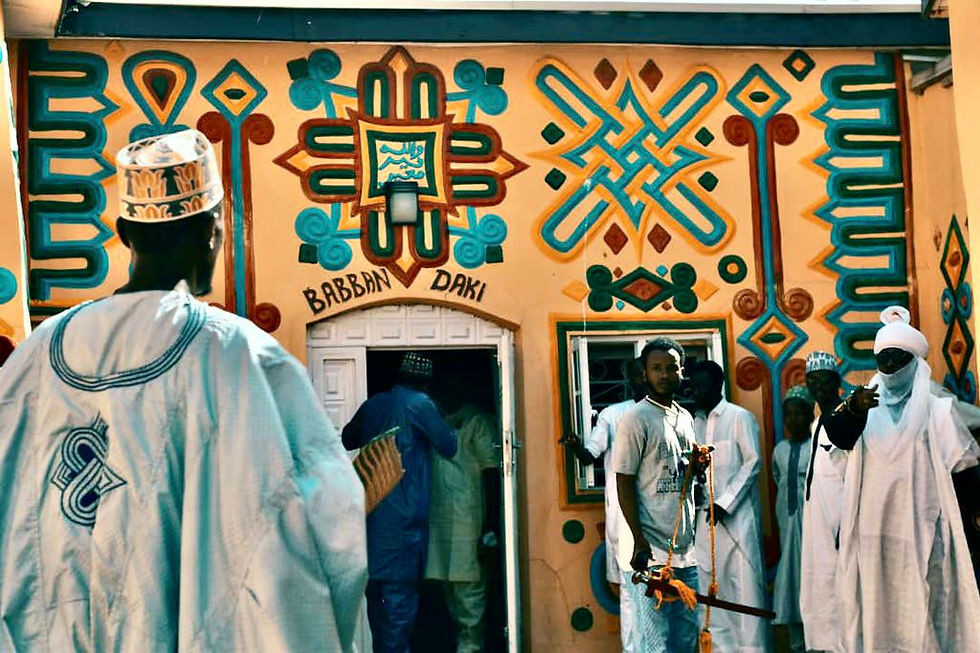
The famous Hausa wall paintings were traditionally done by women
In cities like Zaria and Kano, the beautifully patterned wall decorations—lalle, addu’a, and zane—were created almost entirely by women. These designs were not just decorative; they were a woman’s way of marking her identity and celebrating life events such as marriage or childbirth.
Northern leatherwork once powered trans-Saharan trade
Long before European contact, Northern Nigeria was known for its fine leather. Kano-produced leather, called Moroccan leather in Europe, travelled through ancient trade routes to North Africa and eventually to Spain and Italy. It was one of the region’s earliest global exports.
Architecture is one of the region’s biggest art forms
From the Emir’s palace in Kano to the mud-brick compounds of Katsina, Northern architecture is itself an art. The intricate plaster motifs, arched doorways, and carved wooden screens (tsangaya doors) combine beauty with climate-friendly engineering. Many of these designs have remained unchanged for hundreds of years.
The North has a strong bronze-casting legacy too—just less publicised
While the Benin Bronzes get all the attention, places like Igala and Nupe communities in North-central Nigeria also have rich traditions of bronze, brass, and copper casting. Their styles are simpler but equally symbolic, focusing on royal regalia, ancestral figures, and ceremonial objects.
We’ve got the edge. Get real-time reports, breaking scoops, and exclusive angles delivered straight to your phone. Don’t settle for stale news. Join LEADERSHIP NEWS on WhatsApp for 24/7 updates →
Join Our WhatsApp Channel