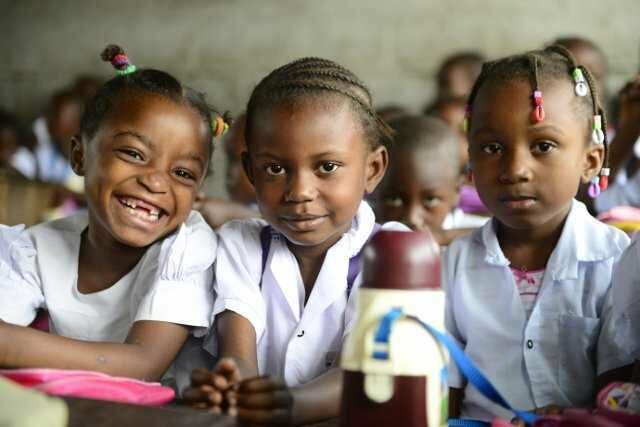
Nigeria must urgently scale up investments in adolescent girls to unlock massive economic and social returns, Dr Sopuru Chukwu Obiesie of the Accelerate Hub, from the University of Oxford, has advised.
Obiesie gave the piece of advice in Abuja yesterday at the dissemination event for the Investment Case Interventions Supporting Girls’ Education and Delaying Child Marriage in Northern Nigeria.
She lamented that millions of girls in the country continue to face disrupted education, early marriage, and limited life opportunities, challenges which collectively slow national development.
Obiesie disclosed that modelling shows a $114m investment in 1.1 million girls in Kano and Kaduna would yield 3.9 million years of schooling, prevent 327,000 child marriages, and avert 383,000 adolescent pregnancies.
According to her, these improvements would also reduce maternal deaths, lower exposure to sexual violence and curb under-five mortality and stunting.
“Prioritising girls’ education is a high-return economic investment. A $114 million investment would deliver $2.5 billion in societal returns — at least a 21 to 1 return,” she said.
The researcher identified two priority groups requiring urgent support: out-of-school unmarried girls and primary six pupils at the critical transition stage, where dropout rates are particularly high.
Obiesie stressed that interventions must be adapted to different state contexts, noting that while the model works for Kano and Kaduna, other states would require tailored approaches.
Despite progress made in recent years, she said more than 7.6 million Nigerian girls remain out of school, half of them in the North-West and North-East. Secondary school completion, she added, stands at just 34 per cent nationally.
These realities, she explained, directly shape life outcomes. Girls with no education marry at a median age of 16.6, compared to 21.7 for those who complete secondary education.
Child marriage, she warned, is linked to intimate partner violence, limited decision-making power, and early childbearing — all of which heighten health risks for adolescent girls.
A participant from the Centre for Girls’ Education echoed these concerns, saying: “Some traditions must be abolished. Girls are being pushed into marriages they don’t want. Education is what I want for girls in this community.”
The research recommends scaling evidence-based interventions that reach both out-of-school girls and those at risk of dropping out. Over four years, such programmes could support 1.1 million girls, delay pregnancy, improve safety, and boost early childhood development — gains that compound across generations.
Obiesie concluded that investing in girls is not only a moral imperative but a strategic pathway to stronger communities and a more prosperous Nigeria.
We’ve got the edge. Get real-time reports, breaking scoops, and exclusive angles delivered straight to your phone. Don’t settle for stale news. Join LEADERSHIP NEWS on WhatsApp for 24/7 updates →
Join Our WhatsApp Channel