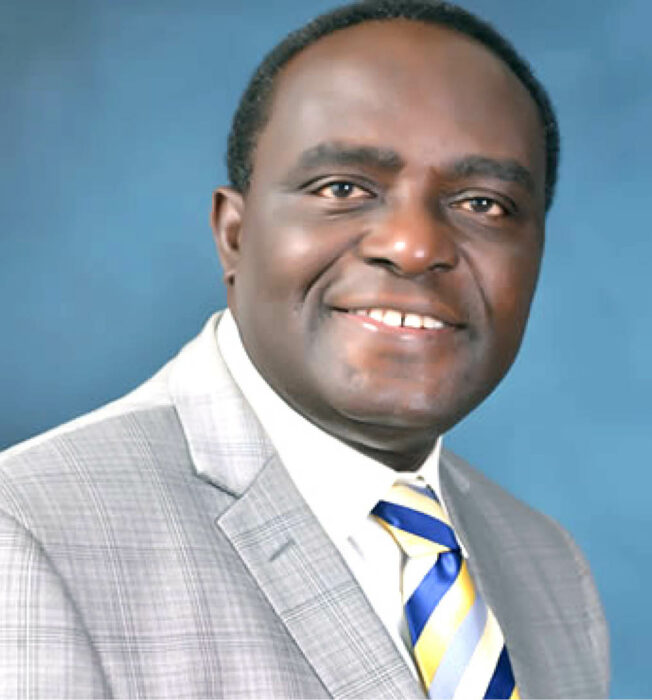
Recently, Nigeria’s Professor Peter Okebukola Okebukola unveiled the first African scholarly referencing style (ASRS), the first referencing system conceived, developed and owned by Africa. It is designed to be broadly compatible with existing global formats while introducing African-centred innovations, such as methods for citing oral knowledge, indigenous wisdom, multilingual sources, folklore, community authorship, and local research outputs.
The initiative, which has received endorsement from the Association of African Universities, United Nations Educational, Scientific and Cultural Organisation (UNESCO) officials and over 500 leading scholars worldwide, is described by Okebukola as more than a citation style, framing it as a declaration of Africa’s intellectual sovereignty and a means to strengthen the visibility of the continent’s scholarship.
“ASRS responds to a longstanding gap in global academic practice. Although Africa has produced centuries of scholarship and hosts thousands of universities, none of the 29 internationally recognised referencing styles currently in use originates from the continent,” he said.
This latest feat and the previous ones have made Okebukola stands out as a scholar whose ideas and interventions have helped reshape higher education in Africa.
Known for his deep scholarship and reform-driven leadership, Okebukola has spent decades championing quality assurance, curriculum innovation and evidence-based policy in university systems across the continent.
His work positions him as one of Africa’s most influential science education reformers, policy thinkers and academic administrators.
Okebukola’s impact spans curriculum reform, research governance, quality assurance, innovation systems and international collaboration, playing a central role in reshaping science education in Nigeria, with ripple effects across Africa.
For over four decades, his voice has remained central to debates on quality assurance, curriculum reform, and global competitiveness in Nigerian universities. He is widely regarded within academic circles as Nigeria’s “scholar-in-chief,” a custodian of educational integrity at critical moments in the nation’s history.
Okebukola’s academic journey shows a lifelong commitment to learning and excellence. Rising through the ranks at the University of Lagos, he distinguished himself early as a rigorous teacher and prolific researcher in science education.
His appointment as vice-chancellor of the university marked a defining phase, one characterised by a strong emphasis on academic discipline, research output and institutional accountability.
As an administrator, he insisted that standards must not be compromised, regardless of prevailing economic or political pressures. As he once said, “A university loses its soul the moment it lowers its standards.”
At the 18th valedictory ceremony of Albesta Academy, Ibeju-Lekki, Lagos, in 2025, he said, “Quality education is the only way the child can be properly developed and by extension the society.”
In an era when Nigerian universities were battling underfunding, staff unrest and declining morale, Okebukola maintained that intellectual quality remained non-negotiable.
However, it was his tenure as executive secretary of the National Universities Commission (NUC) between 1995 and 1999 that cemented his national legacy.
At the time, Nigeria’s university system faced growing concerns about declining academic quality, unregulated programme expansion and loss of international credibility. Okebukola’s response was both bold and systematic.
He introduced far-reaching accreditation reforms that transformed the NUC from a primarily administrative body into a credible quality assurance regulatory.
Programme accreditation under his leadership became evidence-driven, transparent and rigorous, focusing on staffing, facilities, curriculum relevance and research culture.
Though initially resisted by some institutions, the reforms ultimately restored confidence in Nigerian degrees at home and abroad. Today, many of the structures guiding university accreditation and programme evaluation remain rooted in frameworks developed during Okebukola’s stewardship.
Beyond public administration, Okebukola has built an extraordinary scholarly record. With over 200 academic publications, his work cuts across science education, higher education policy, innovation systems and curriculum development. His research is widely cited and has influenced education reforms not only in Nigeria but across Africa and other developing regions.
What sets his scholarship apart is its practical relevance. Okebukola has consistently bridged the gap between academic research and public policy, arguing that universities must move beyond theory to become engines of innovation and economic growth.
His expertise has earned him international recognition. Okebukola has served as a consultant to UNESCO, the World Bank, the African Union and other global institutions, contributing to higher education reforms in several African countries. Through these engagements, he has become one of the continent’s most respected voices on university governance and quality assurance.
He has also been a consistent advocate for innovation-driven education, interdisciplinary learning and stronger university–industry linkages.
During his keynote address at the 2017 School of Science Conference, Adeniran Ogunsanya College of Education, Ijanikin, Lagos, Okebukola emphasised that science education is foundational to national human capital and economic sectors.
“Science education leads to the production of competent human resources. Without science education, there will be no production of quality teachers to train petroleum engineers and other technical expertise,” he said.
Even after retiring from formal public office, Okebukola has remained actively engaged in shaping education policy. He continues to serve on advisory boards, accreditation panels and reform committees, contributing his experience to efforts aimed at repositioning Nigerian universities for a rapidly changing global knowledge economy.
In recent years, his advocacy has focused on aligning higher education with innovation ecosystems, digital transformation and sustainable development.
He has argued that Nigeria’s demographic advantage can only be harnessed if universities are retooled to produce problem-solvers, innovators and globally competitive graduates. “The future belongs to nations that invest wisely in knowledge,” he warns.
Professor Okebukola belongs to a generation of Nigerian scholars who viewed education not merely as a profession, but as a national mission.
His legacy is evident in the accreditation systems that safeguard academic quality, the curricula that encourage critical thinking and the countless scholars he has mentored.
Okebukola’s life and work stand as a reminder that sustainable progress begins with knowledge, carefully cultivated, rigorously defended and boldly applied.
We’ve got the edge. Get real-time reports, breaking scoops, and exclusive angles delivered straight to your phone. Don’t settle for stale news. Join LEADERSHIP NEWS on WhatsApp for 24/7 updates →
Join Our WhatsApp Channel