The World Bank has endorsed Nigeria’s Sustainable Procurement, Environmental and Social Standards Enhancement (SPESSE) project, rating its performance satisfactory and approving additional financing to sustain its momentum.
Backed by the Federal Government of Nigeria, the World Bank and the National Universities Commission (NUC), SPESSE was designed to tackle a long-standing problem of skilled professionals and the absence of structured academic pathways in procurement, environmental safeguards in both the public and private sectors.
Through coordinated training programmes anchored by six centres of excellence spread across Nigeria’s geopolitical zones, the project has steadily bridged that gap by producing a new generation of professionals equipped to meet global best practices.
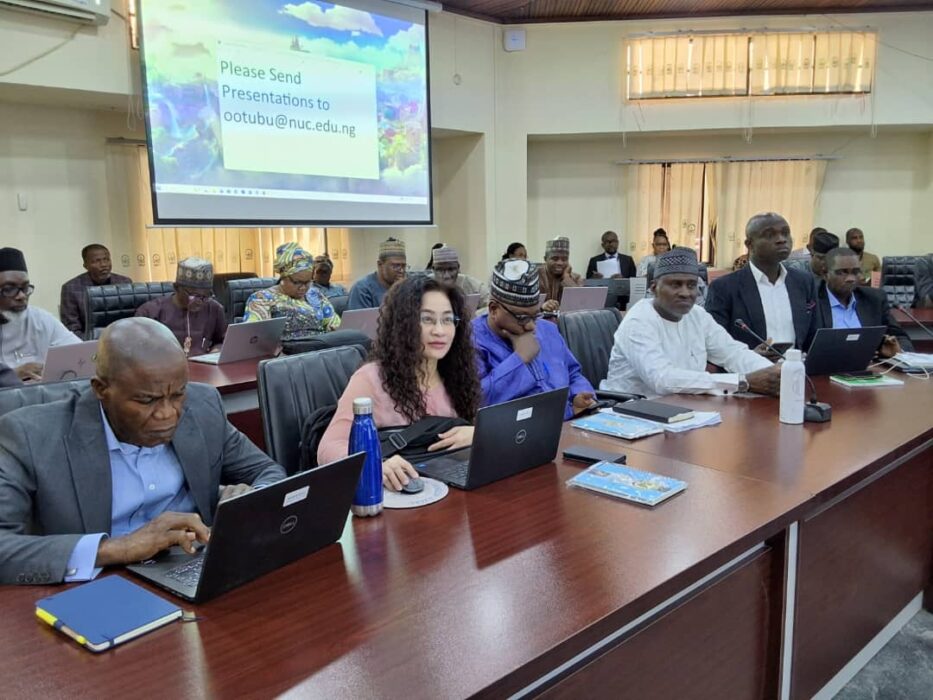
The World Bank recently reinforced its confidence in the initiative during an Implementation Support Mission (ISM) held to assess progress, review ongoing activities under the original financing, and agree on next steps under the Additional Financing (AF).
The mission was led by the World Bank Task Team Leader, Ishtiak Siddique, alongside the National Project Coordinator, Dr Joshua Atah of the NUC.
According to the mission’s Aide Memoire, SPESSE has recorded significant progress since the last review. All four Project Development Objective (PDO) indicators have been fully achieved, while the overall Project Implementation Progress (IP) has been rated satisfactory following verification for the January 1–June 30, 2025, period.
Independent verification also confirmed that 12 out of 18 Performance-Based Conditions (PBCs) have already been met or exceeded.
Five additional PBCs are scheduled for completion by June 30, 2026, with remaining targets aligned with the project’s closing timeline.
During the mission, the World Bank team engaged with key national and state-level stakeholders, including the SPESSE National Facilitation Implementation Unit (NFIU) at the NUC, the Bureau of Public Procurement (BPP), the Federal Ministry of Women Affairs, the Federal Ministry of Environment, and the Federal Ministry of Finance.
The team also reviewed activities at the six Centres of Excellence hosted by Ahmadu Bello University, Zaria; Abubakar Tafawa Balewa University, Bauchi; Federal University of Agriculture, Makurdi; Federal University of Technology, Owerri; University of Benin; and the University of Lagos.
A Director of the International Economic Relations Department at the Federal Ministry of Finance, Mr Stanley Nyeso George, confirmed that an overall satisfactory rating at this stage of implementation is rare among donor-funded programmes.
He, alongside other stakeholders, commended the NUC under both its current and former leadership, as well as Dr Atah, for driving the project’s success. Centre Leaders and their teams were also praised for their dedication and results.
In recognition of these gains, the World Bank approved additional financing to extend the project’s lifespan until June 2026. The decision, the Bank said, reflects SPESSE’s improved outcomes and alignment with its development objectives.
With renewed funding, the project is expected to deepen procurement reforms, expand online training platforms and strengthen institutional capacity, ensuring long-term benefits for Nigeria’s public sector, private businesses and local communities.
Also, in a move to institutionalise these standards, the Bureau of Public Procurement has initiated steps to make SPESSE courses mandatory for the professional certification of all procurement officers.
We’ve got the edge. Get real-time reports, breaking scoops, and exclusive angles delivered straight to your phone. Don’t settle for stale news. Join LEADERSHIP NEWS on WhatsApp for 24/7 updates →
Join Our WhatsApp Channel