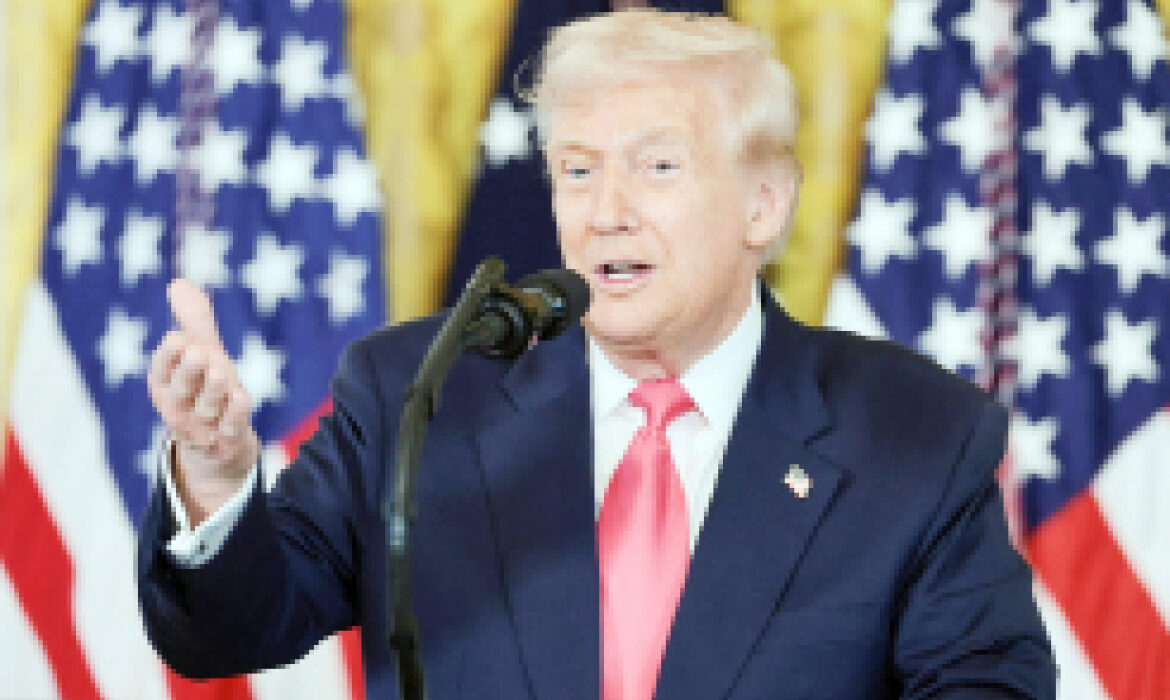
The United States has imposed fresh partial visa restrictions on Nigeria, raising concerns among Nigerians seeking to travel, study, work, or migrate to America. The policy, announced in a White House Fact Sheet and signed by President Donald Trump on December 16, 2025, is based on Section 212(f) of the U.S. Immigration and Nationality Act, which allows for entry restrictions on security grounds.
Nigeria is among 15 countries placed under “partial suspension”, not a total travel ban. According to the US government, the decision is linked to concerns over identity verification, passport integrity, and information-sharing systems.
Under the new rules, immigrant visas (Green Cards) for Nigerians are suspended, although marriage-related visas, such as CR-1, IR-1, and K-1, were not specifically listed. Several non-immigrant visas are also restricted, including B-1/B-2 (business and tourism), F and M (student and vocational), and J (exchange programmes). Eligible applicants may now face stricter screening, additional documentation, and tougher interviews.
Nigerians who already hold valid US visas are largely unaffected; however, renewals may attract increased scrutiny.
Students and skilled professionals are expected to feel the impact most. The US hosts over 17,000 Nigerian students, and prolonged restrictions could disrupt education and career plans.
Diplomatically, the move pressures Nigeria to improve security cooperation and data sharing with the US. Economically, reduced migration could, over time, affect diaspora remittances, a key source of foreign exchange.
Nigerians are advised to prepare accurate documentation, avoid fraud, monitor embassy updates, and consider alternative destinations like Canada, the UK, or Australia while the restrictions last.
We’ve got the edge. Get real-time reports, breaking scoops, and exclusive angles delivered straight to your phone. Don’t settle for stale news. Join LEADERSHIP NEWS on WhatsApp for 24/7 updates →
Join Our WhatsApp Channel