Say provisions ambitious, unrealistic, Yusuf disagrees
A labour leader and some analysts have expressed doubts over the feasibility of implementing the provisions of the N58.1 trillion 2026 national budget, which they consider to be quite ambitious.
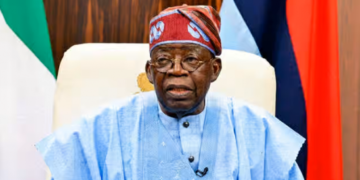
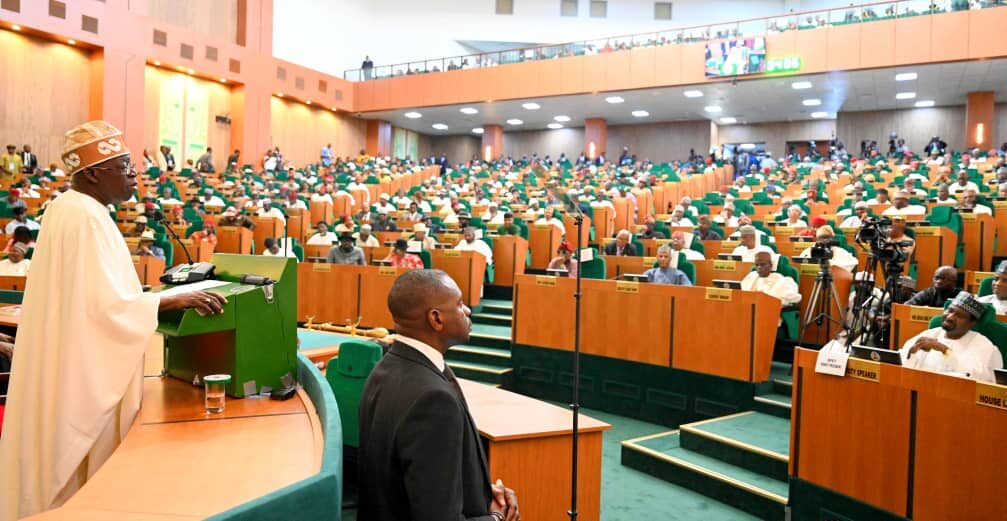
The budget was proposed by President Bola Tinubu and submitted to the National Assembly (NASS) on Friday.
Those who spoke to LEADERSHIP Sunday based their assessment on the low implementation of previous budgets, saying that since the situation has not changed significantly, the same fate is likely to befall the new budget.
A member of the Trade Union Congress (TUC), Comrade Jide Fabiyi, expressed doubt over implementation, noting that previous budgets also encountered low execution.
Fabiyi said, “It is a good proposal, as it used to be, but implementation is our problem, coupled with cabals accustomed to corruption in the system. If you recall, during the presentation, the President appealed to lawmakers to allow the 2025 budget to proceed into 2026.
“I hope 2026 will be a year of surplus for the Nigerian economy. People will want to see the impact of this budget as quickly as possible because Nigerians are going through tough times, and succour lies in the full implementation of the budget.
A renowned economist, Professor Tayo Bello, in his reaction, noted that the budget is ambitious rather than realistic.
“According to the budget presented by the President, it is described as a budget of realism, prudence, and economic growth.
They projected revenue of N43.3 trillion, expenditure of N58.18 trillion, debt servicing of N15.52 trillion, capital expenditure of N26.08 trillion, and a budget deficit of N23.85 trillion, representing 4.28 per cent of GDP.
“They also called it a budget of national priorities. They may call it any name,” he said, expressing some reservations.
“To me, when you talk of N58.18 trillion on debt servicing and a deficit of about N23.85 trillion, they are not getting it right. The amount allocated for debt servicing is about N15.52 trillion. That is another problem and shows that the budget is ambitious.”
On the exchange rate, he said, “If the government really wanted to tackle it, they would have set the rate at about N1,300 to the dollar for the overall benefit of the economy. They also set the oil benchmark at a level that may be difficult to achieve. Why not set it at $58 or even $59? They also put oil production at about 1.84 million barrels per day. It would have been better if they had set it at 1.3 or 1.4 million barrels per day.
“When they say the budget will not overlap, because overlapping budgets complicate matters and distort economic planning, have they achieved that in the past four years? It is a serious problem.”
Looking at the allocations, he said, “Defence is N5.41 trillion, infrastructure N3.56 trillion, education N3.52 trillion, and health about N2.48 trillion.
“They should allocate more to defence and security because, without security, nothing can be achieved.
“ I would have expected defence and security to be about N6.3 trillion, infrastructure about N4.5 trillion, and education not less than N5 trillion if they really want to avoid issues in that sector. Health can remain around N2.48 trillion.
“The political tone surrounding the budget—budget of hope or whatever they call it—will only matter if it achieves the anticipated objectives. Fiscal sustainability is centred on anticipated revenue, mainly from taxes. Everything is based on what they expect to collect. It is as though they have already collected the tax.”
In his opinion, the National Assembly should not rely on the ambitious production target of 1.8 million barrels per day.
“If they base everything on that and fail, there will be more problems next year than in the current fiscal year. A production target of 1.3 or 1.4 million barrels per day would be more realistic.
“They should also set the exchange rate benchmark in an equilibrium position around N1,500 and manage the naira consistently within that range. They should adjust the allocations to defence, infrastructure, education, and health. Infrastructure, to me, is too small. Infrastructure includes both hard and soft sectors, and they need to break it down. If you travel around the country, there is little to show for it. Even the coastal road project—how far have they gone with it?” he pointed out.”
Professor Bello also expressed reservations about the level of budget implementation.
“Since Nigeria has never fully implemented its budget, and the President is saying they are looking at full implementation in 2026…
“They said that 70 per cent of capital projects should be implemented early, but for the past three years, they have not been able to do that,” he noted.
On expectations of the budget, he said, “What I expected them to change are the benchmarks for price, production, and exchange rate. For now, it looks okay on paper, but implementation will determine everything.
“For example, the money allocated to various sectors this year is being carried over to next year—what relevance does it have if the projects are not completed? What is the present percentage of completion of projects this year? That has to be settled. They may end up presenting a supplementary budget, and that is how they normally do things.”
Meanwhile, the director/CEO of the Centre for the Promotion of Private Enterprise (CPPE), Dr Muda Yusuf, expressed optimism about the proposed budget for 2026, highlighting its foundation on more realistic and conservative assumptions compared with 2025.
He emphasised the potential for improvement, suggesting a further review of certain assumptions, particularly the oil price set at $64 per barrel, which he feels is somewhat optimistic. A more conservative estimate, such as $60, could enhance the budget’s overall reliability, he said.
Yusuf also noted that an oil output estimate of 1.8 million barrels per day appears optimistic based on historical performance.
He reiterated the importance of ensuring that the budget’s assumptions are as realistic as possible.
He called on the National Assembly to avoid inflating the budget, as previous years have seen budgets that lacked credibility due to arbitrary increases, particularly relating to constituency projects.
He emphasised that “a credible budget is vital for maintaining trust and effectiveness in budget implementation. The President has also indicated the need for careful consideration to avoid inflating expenditure expectations that cannot be met.”
Yusuf pointed out that “a significant area of concern is revenue shortfalls from non-tax-generating government agencies. Optimising these revenues could lead to improved fiscal consolidation.”
He pointed out that the burden of debt service, which constitutes almost 50 per cent of revenue in the current budget, underscores the urgency of reviewing the debt management strategy and moderating debt levels to free up fiscal space and enhance budget implementation.
He praised “the recent enactment of the 2025 budget, which includes the release of about N43 trillion from the consolidated revenue account, while also seeking clarity on reconciling this with the new budget approach.
“This clarity is essential to avoid confusion from multiple budget regimes,” he said.
Acknowledging past challenges in budget implementation, particularly regarding capital projects, Yusuf lamented that “only about 30 per cent of releases have been utilised effectively, leaving 70 per cent unspent, which impacts productivity and project effectiveness.
“The recent initiatives or steps taken will prevent a recurrence of such issues in the 2025 budget.”
Yusuf stressed “the need for clarity in budget discussions and the importance of recognising that addressing structural economic issues requires collaboration beyond just the federal government. Engaging with the budgets of sub-national governments is equally crucial to foster impactful projects across health, education, infrastructure, agriculture, and rural development.
“By working together, all levels of government can play vital roles in driving economic progress.”
According to the proposed budget, total revenue for 2026 is estimated at N34.33 trillion, while aggregate expenditure is pegged at N58.18 trillion. This includes N15.52 trillion earmarked for debt servicing. Recurrent (non-debt) expenditure is projected at N15.25 trillion, with capital spending set at N26.08 trillion. The resulting budget deficit of N23.85 trillion represents 4.28 per cent of the Gross Domestic Product.
Key assumptions guiding the budget include a crude oil benchmark price of $64.85 per barrel, daily production of 1.84 million barrels, and an exchange rate of N1,400 to the dollar.
“These numbers are not just accounting lines. They are a statement of national priorities,” Tinubu said, reaffirming his administration’s commitment to fiscal sustainability, transparency in debt management, and efficient use of public funds.
Sectoral allocations place security at the top with N5.41 trillion, followed by infrastructure at N3.56 trillion, education at N3.52 trillion, and health at N2.48 trillion.
We’ve got the edge. Get real-time reports, breaking scoops, and exclusive angles delivered straight to your phone. Don’t settle for stale news. Join LEADERSHIP NEWS on WhatsApp for 24/7 updates →
Join Our WhatsApp Channel