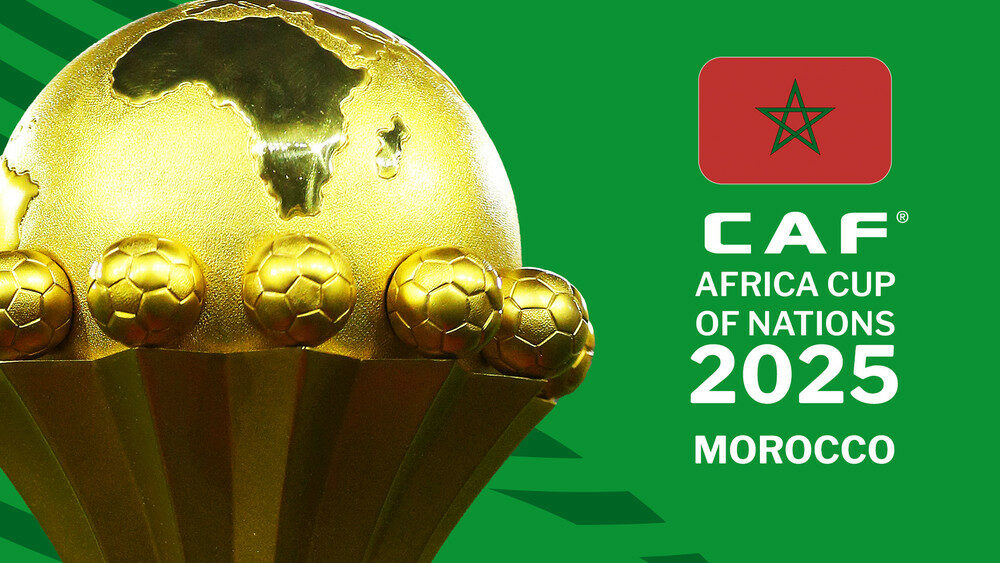
As the 2025 Africa Cup of Nations (AFCON) tournament kicks off in Morocco today, Nigerian football finds itself at a crossroads that demands nothing short of continental triumph.
The Super Eagles’ failure to qualify for the 2026 FIFA World Cup—a tournament that will be hosted by the United States of America, Canada, and Mexico—has left a gaping wound in the nation’s football psyche. The only balm that can soothe this wound is the AFCON trophy. Anything less would be an unacceptable failure.
Nigeria approaches this tournament with a pedigree that few African nations can match. Three continental titles (1980, 1994, 2013), a record-equaling 16 semi-final appearances alongside Egypt, and 20 overall tournament participations paint the picture of a football powerhouse. Yet, these statistics, impressive as they are, mean nothing if they do not translate into present-day success.
The question is not whether Nigeria has the capacity to win AFCON 2025—the question is whether the Super Eagles have the discipline, organisation, and support system to convert their undeniable talent into silverware.
The squad that coach Eric Chelle will marshal to Morocco contains some of the most electrifying talent on the continent. Victor Osimhen remains one of the deadliest strikers in world football. Ademola Lookman’s technical brilliance and eye for goal have made him a nightmare for defenders across Europe. Samuel Chukwueze brings pace, creativity, and an ability to unlock the tightest defence. On paper, this is a team built to dominate. In practice, however, Nigerian football has repeatedly shown us that talent alone guarantees nothing.
The World Cup qualifying debacle exposed fundamental weaknesses in Nigeria’s football administration and coaching setup. A nation of more than 200 million people, football-mad to its core, watched in dismay as inferior teams outmaneuvered and outfought the Super Eagles. The embarrassment was not just sporting—it was a national humiliation that raised uncomfortable questions about preparation, strategy, and commitment.
In our view, AFCON 2025 is the immediate opportunity for redemption, and there can be no repeat of the organisational chaos and tactical confusion that characterised the World Cup campaign.
Coach Eric Chelle faces what may be the most consequential assignment of his career. He inherits a team brimming with individual quality but historically prone to underperformance when collective discipline and tactical cohesion are required.
Chelle must forge this collection of stars into a unified force capable of navigating the grueling tournament format. This will require more than tactical acumen—it will demand man-management skills, cultural sensitivity, and the ability to maintain squad harmony across potentially six high-pressure matches.
One suspects that Chelle is acutely aware that his tenure hangs on the outcome of this tournament.
Yet, even as we place demands on the coaching staff and players, we must confront the perennial dysfunction that undermines Nigerian football: the Nigeria Football Federation’s (NFF’s)chronic mismanagement. The specter of unpaid allowances and bonuses has haunted Nigerian football for decades. Time and again, players have been forced to threaten boycotts or issue public complaints before receiving compensation they are contractually owed. This is unacceptable.
In the opinion of this newspaper it is difficult to demand total commitment from players when the administrators fail in their most basic obligations. They deserve to be treated with the professionalism that their sacrifices warrant. Any delay in payment of allowances and bonuses during AFCON 2025 would be a scandal that undermines team morale at the worst possible moment.
The government and sports ministry officials must ensure the NFF has the financial resources to meet its obligations promptly and in full.
The tournament format presents both opportunity and danger. Scheduled unusually for December and January to avoid conflicts with FIFA’s expanded Club World Cup, AFCON 2025 will disrupt the European club season at a critical juncture.
Morocco’s hosting of the tournament adds another dimension. The North African nation is a strong footballing country with passionate supporters and a team capable of going deep in the competition. Playing in Morocco means the Super Eagles will face hostile crowds in many matches, and the unique challenge of a tournament held over the Christmas and New Year period. Team cohesion and mental resilience will be tested as players spend the holidays away from their families in pursuit of national glory.
The Nigerian public’s expectations are not unreasonable. When you assemble a squad containing players of Osimhen, Lookman, and Chukwueze’s calibre, when you have a football tradition as rich as Nigeria’s, when you have failed at the World Cup qualifying stage—winning AFCON becomes not just an aspiration but an obligation.
The 2023 final defeat to Ivory Coast showed that Nigeria can compete at the highest level. Now they must finish the job.
This tournament is also about restoring pride to a football-loving nation that has endured too many disappointments. Nigerian fans deserve better than the cycle of promise and underachievement that has characterised recent years. They deserve a team that fights for every ball, that executes a coherent game plan, that shows the hunger and determination befitting the green and white jersey.
As the Super Eagles prepare for Morocco, the message must be crystal clear: excuses will not be tolerated. The talent is there. The motivation should be overwhelming. The support infrastructure must be put in place by the NFF. What remains is execution. Nigeria must win AFCON 2025—not because it would be a nice achievement, but because failure is simply not an option.
We’ve got the edge. Get real-time reports, breaking scoops, and exclusive angles delivered straight to your phone. Don’t settle for stale news. Join LEADERSHIP NEWS on WhatsApp for 24/7 updates →
Join Our WhatsApp Channel