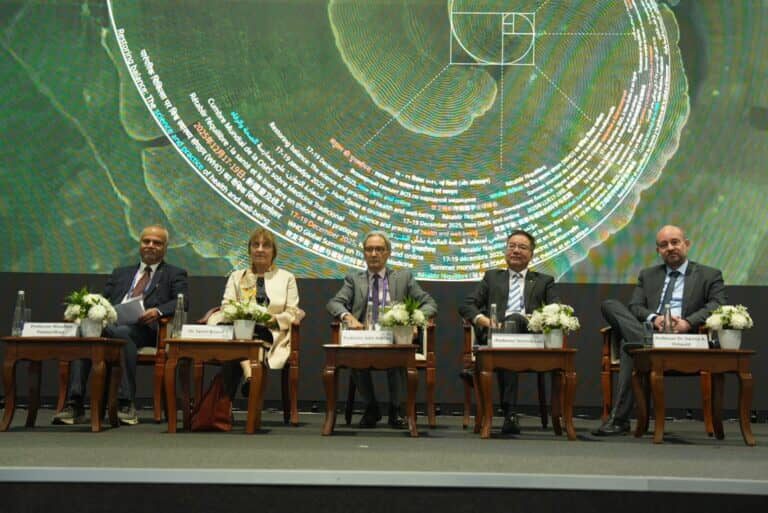
Countries and partners at the World Health Organization’s (WHO) Second Global Summit on Traditional Medicine have pledged to expand research, improve regulation, and integrate proven traditional medicine into national health systems, following the adoption of the Delhi Declaration on Traditional Medicine.
Held in New Delhi from December 17–19, the three-day summit aligned its commitments with the WHO Global Traditional Medicine Strategy 2025–2034, aiming to accelerate near-term action while laying the foundation for long-term reform.
Boosting research: Participants agreed to increase investment in traditional medicine research, noting that the sector currently receives less than 1% of global health research funding.
Countries will support ethical and scientifically robust approaches, including whole-systems research, real-world evidence, and Indigenous knowledge, while protecting biodiversity and cultural heritage.
The declaration also reinforces the WHO Global Traditional Medicine Library as a key knowledge platform.
Strengthening regulation: Governments committed to enhancing regulation of traditional medicine products, practices, and practitioners to ensure safety, quality, and effectiveness.
The declaration calls for risk-based regulation, pharmacovigilance, regional cooperation, and equitable benefit-sharing in line with Indigenous rights.
Integrating into health systems: Safe and effective traditional medicine will be incorporated into national health systems, particularly at the primary care level, to support universal health coverage.
Priority actions include professional education, clinical practice guidelines, workforce development, and evidence-based policy backed by proper financing. Data collection will be standardised using WHO tools such as the ICD-11 traditional medicine modules.
Empowering communities: Indigenous Peoples and local communities will play a central role in decision-making. Participants also agreed to strengthen cross-sector and international collaboration, including exploring the creation of a global consortium on traditional medicine.
The Delhi Declaration commits countries and partners to translate these pledges into time-bound national plans for 2025–2027, with WHO monitoring progress and conducting a mid-term review in 2030. All summit participants were screened for potential conflicts of interest according to WHO policy.
We’ve got the edge. Get real-time reports, breaking scoops, and exclusive angles delivered straight to your phone. Don’t settle for stale news. Join LEADERSHIP NEWS on WhatsApp for 24/7 updates →
Join Our WhatsApp Channel