The Edo State Government has stated that the 2026 Appropriation Bill presented to the State House of Assembly by Governor Monday Okpebholo is strategically designed to accelerate infrastructure renewal, expand employment opportunities, and enhance social services across the state.
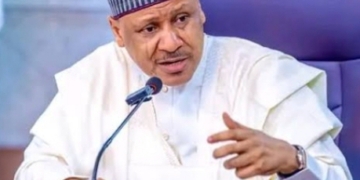
The Commissioner for Finance, Engr. Emmanuel Okoebor disclosed this while briefing journalists on the details of the bill, noting that the budget aligns with Governor Okpebholo’s SHINE Agenda, which prioritises Security, Healthcare, Infrastructure, Natural Resources and Agriculture, and Education.
According to Okoebor, “the 2026 budget represents a strategic shift from routine fiscal planning to impact-driven public finance, positioning the budget as a tool for structural correction and inclusive growth.”
He explained that the administration deliberately prioritised sectors capable of unlocking productivity, reducing inequality, and integrating underserved communities into the state’s economic framework.
“Infrastructure dominates the budget, with ₦420.62 billion allocated to the sector. Of this amount, over ₦305 billion is earmarked for road construction and rehabilitation. Governor Okpebholo firmly believes that improved road networks will ease the movement of goods and people, reduce transaction costs, and improve access to healthcare, education, and markets, particularly in rural areas,” Okoebor said.
Speaking on agriculture, which received ₦68 billion in targeted funding, the Commissioner said the allocation reflects the administration’s focus on food security, job creation, and rural stability.
He added that the provision also supports livestock development through a dedicated ministry, offering a structured and preventive response to farmer–herder conflicts while strengthening agricultural value chains.
In the social sector, Okoebor stated that the budget allocates funds for education and healthcare through the recruitment of teachers and healthcare workers, alongside continued investment in schools and healthcare facilities.
He noted that these measures are aimed at addressing manpower shortages and improving service delivery across both urban and rural communities.
He said Job creation is another prominent feature of the 2026 budget, with ₦116.46 billion set aside for employment-related programmes.
The allocation is expected to generate jobs through infrastructure development, agriculture, and expanded government activities.
He added that the budget also provides ₦8.9 billion for social welfare programmes targeting women, youths, children, and other vulnerable groups, as part of efforts to promote inclusive growth and shared prosperity.
Regarding governance and accountability, Okoebor stated that the administration has strengthened oversight mechanisms through improved procurement processes, the adoption of e-procurement systems, the regular publication of budget implementation reports, and the activation of the Project Monitoring Unit.
We’ve got the edge. Get real-time reports, breaking scoops, and exclusive angles delivered straight to your phone. Don’t settle for stale news. Join LEADERSHIP NEWS on WhatsApp for 24/7 updates →
Join Our WhatsApp Channel