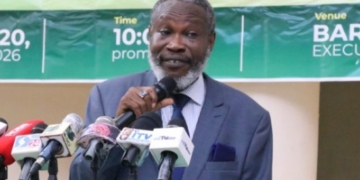
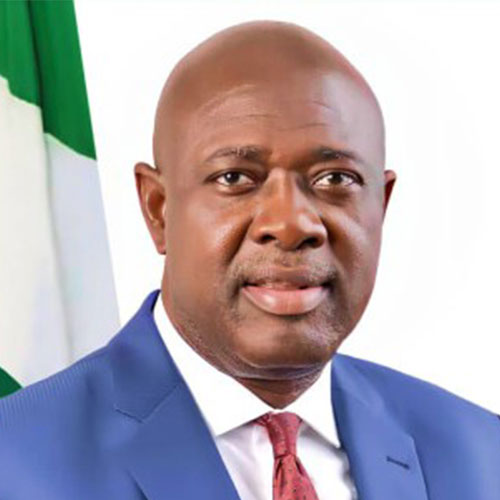
Minister of State for Petroleum Resources (Oil), Senator Heineken Lokpobiri, has urged African countries to take greater control of their energy and industrial development, saying the continent cannot sustainably tackle energy poverty by relying solely on external partners.
Lokpobiri spoke in Abuja on Monday when he received the minister of Hydrocarbons of the Republic of Congo, Stev Simplice Onanga, and other Congolese officials and industry stakeholders.
He said Nigeria was willing to share its experience in local content development with Congo, stressing that African countries must build indigenous capacity to strengthen their energy sectors and retain greater value from their natural resources.
According to him, Nigeria’s experience under the Nigerian Content Development and Monitoring Board had demonstrated the importance of deliberate policies aimed at developing local manpower, technical expertise and industrial capacity.
“Africa’s energy challenges cannot be sustainably addressed by relying solely on external partners. Africans have to take their own destiny into their hands,” he said.
The minister said Nigeria’s local content policy had significantly increased indigenous participation in the oil and gas industry, with Nigerian companies now accounting for about 60 per cent of oil and gas production.
He attributed the development to deliberate policies designed to build the capacity of Nigerian companies and professionals while reducing dependence on international oil companies.
Lokpobiri said the Nigerian oil and gas industry now had a combination of indigenous and international service companies operating side by side, with local firms increasingly taking advantage of opportunities in the land and shallow-water segments.
He, however, noted that the deep offshore sector remained largely dominated by major international service companies because of its high technical and financial requirements.
He added that the divestment of some onshore and shallow-water assets by international oil companies had created opportunities for indigenous operators to expand their technical and operational capabilities.
“Today we have 60 per cent indigenous companies accounting for the production we have,” he said.
Lokpobiri also highlighted the role of the NCDMB in developing indigenous capacity through funding sourced from the industry rather than direct government financing.
He explained that oil and gas contracts were required to contribute one per cent to the local content fund, which was subsequently deployed to support capacity development and other initiatives.
According to him, the arrangement had enabled Nigerian companies to acquire the skills, equipment and expertise required to participate more effectively across the oil and gas value chain.
On crude oil production, Lokpobiri said Nigeria had also recorded a significant increase in drilling activity, with more than 65 rigs currently operating in different fields, compared with about 10 to 14 rigs before the current administration.
“What we are producing today was from wells drilled by the IOCs. Today, we are drilling new ones and making new discoveries,” he said.
He attributed the increase to government policies and incentives introduced to attract investment and boost oil production.
The minister also linked the divestment of onshore and shallow-water assets by international oil companies to the emergence of stronger indigenous operators, saying the development had enabled Nigerian companies to acquire greater technical and operational capacity.
He cautioned, however, that increased indigenous participation did not mean Nigeria could determine international crude oil prices.
“Oil and gas is an international commodity. The price is known. The price in Nigeria is the same as the price in New York and London,” he said.
On the downstream sector, Lokpobiri defended the government’s deregulation policy, saying market forces should determine the prices of refined petroleum products.
He said the emergence of large-scale refining capacity in Nigeria was partly linked to deregulation and the investments it had attracted.
The minister recalled that he was a senator when the Nigerian Content Act was passed, describing the NCDMB as a critical institution in implementing the legislation.
“Incidentally, I was a senator when we passed the law. I was in the Senate when the law was passed, so I was one of those who actually made the law,” he said.
He said the board had, over the years, deliberately implemented policies to create the manpower, technical expertise and industrial capacity needed to increase indigenous participation in the sector.
In his remarks, Minister of Hydrocarbons of the Republic of Congo, Stev Simplice Onanga commended Nigeria for its local content development and said the Congolese delegation was in Abuja to learn from the country’s experience.
He said Congo was seeking to strengthen its own local content framework and increase the participation of indigenous companies in its oil and gas industry.
“It is really to come and see how Nigeria develops the local content policy and things like that. We try to build something in Congo. That is why we came to see what they have done,” Onanga said.
Describing Nigeria as a “big brother” in local content development, the Congolese minister said the delegation wanted to understand how Nigeria had developed and implemented its framework.
“We came here as a little brother and said, okay, let’s go to see the big brother and see how they have done the local content,” he said.
Onanga said the visit was aimed at sharing experiences and identifying approaches that could benefit both countries.
He added that Congo was determined to improve its local content framework and develop indigenous capacity in ways that would strengthen its energy industry and generate greater benefits for its people.
The Nigerian government’s emphasis on local content is also consistent with the NCDMB’s broader push for African countries to use their natural resources to build indigenous industries, skills and competitive businesses.
We’ve got the edge. Get real-time reports, breaking scoops, and exclusive angles delivered straight to your phone. Don’t settle for stale news. Join LEADERSHIP NEWS on WhatsApp for 24/7 updates →
Join Our WhatsApp Channel