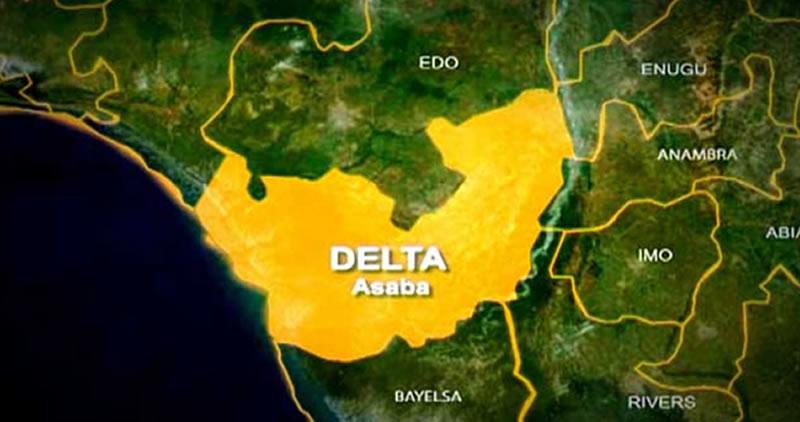
Education has long been seen as the foundation of development and a pathway to a better future, but for students of Ayakoromo Grammar School in Burutu local government area of Delta State, that promise is steadily fading due to years of neglect and decaying infrastructure.
Every school day, the students arrive with their books and hopes of building a better tomorrow. However, those hopes are constantly tested by collapsing classrooms, cracked floors and a learning environment that no longer supports effective teaching and learning.
Once regarded as a pride of the riverine Ayakoromo community, the grammar school has deteriorated into a sorry sight. Many of the classrooms now have fallen walls, leaking roofs and broken doors, making them unsafe for students and teachers alike.
The situation has forced some students to sit on bare floors during lessons, as desks and chairs have either collapsed or been destroyed by age and wood ants.
This, residents say, exposes the children to cold, insects and other health risks, while also affecting their concentration in class.
A concerned stakeholder from the community, Mr Police Patani, raised the alarm over what he described as the dangerous state of the school, calling for urgent government intervention to prevent possible loss of lives.
According to him, the cracked walls and damaged roofs pose serious risks, especially during the rainy season, warning that any further delay in repairs could lead to tragic consequences.
Beyond the classrooms, Patani noted that the school environment has been overtaken by weeds, creating bushy areas that now harbour rodents and reptiles.
He added that the toilets are in poor condition, forcing students to use unhygienic facilities that threaten their health and dignity.
He also lamented what he described as declining commitment among some teachers, accusing them of abandoning their duty posts for months due to weak supervision by education authorities.
Patani said the frequent absence of teachers has left students unattended and untaught, contributing to poor academic performance over the years.
“The college, hitherto known for turning out students with good results in the West African Examination Council (WAEC), has become a shadow of itself due to decaying infrastructure and the nonchalant attitude of some teachers who travel without approval and fail to teach the students,” he said.
A public affairs analyst from the community, Mr Austin Ebipade, confirmed the situation, describing the school as unsafe for learning. He pointed to broken roofs, damaged desks and chairs, and unsanitary toilets as major challenges confronting students daily.
Ebipade said many students are forced to sit on the floor during lessons, an experience he noted weakens their confidence and makes learning uncomfortable.
Also speaking, Mrs Florence Amaebi, a parent and trader in the community, said the poor condition of the school and frequent absence of teachers have discouraged students, stressing that education remains the only hope for many children in Ayakoromo.
A retired teacher, Mr Ikpaipa Tamarakuro, described the decay as a serious threat to the future of children in the community, noting that education and development are closely linked.
He warned that continued neglect of schools would create deeper social and economic problems in the future, urging governments at all levels to prioritise the rehabilitation of public schools.
Several attempts were made to reach the head of the Ministry of Basic and Secondary Education, Mrs Rose Ezewu, for comments but it proved abortive at the time of filing this report.
We’ve got the edge. Get real-time reports, breaking scoops, and exclusive angles delivered straight to your phone. Don’t settle for stale news. Join LEADERSHIP NEWS on WhatsApp for 24/7 updates →
Join Our WhatsApp Channel