
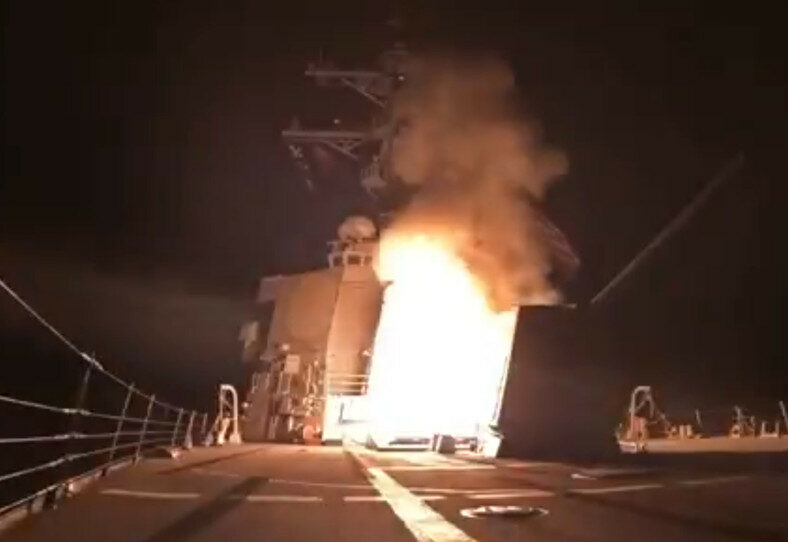
The Arewa Research and Development Project (ARDP) has said the United States airstrikes Sokoto on Thursday exposed not only the severity of Nigeria’s contemporary security challenges but also the fragility of the governance frameworks that must regulate the use of force in a constitutional republic.
ARDP in a policy paper released over the weekend also said the airstrikes revealed structural weaknesses in constitutional oversight, strategic coordination,
civilian protection and narrative control.
The group said if left unaddressed, these weaknesses risked hardening into precedents that undermine democratic legitimacy and long-term security effectiveness
It noted that Nigeria’s security environment had, over the past decades, been shaped by a complex and evolving mix of insurgency, banditry, communal violence and transnational criminal networks.
“These threats have imposed severe human, economic and institutional costs, particularly in the country’s northern region, and have stretched the capacities of domestic security agencies. In response, successive governments have pursued a combination of internal military operations, intelligence reforms, and international cooperation aimed at degrading violent non-state actors and restoring state authority.
“Within this context, reports of United States airstrikes against terrorist targets in North-western Nigeria represent a qualitatively significant development. Unlike advisory support, training missions or intelligence cooperation, foreign-executed kinetic action carries heightened legal, political and strategic implications.
“Such actions intersect directly with constitutional governance, civil-military relations and Nigeria’s long-standing sensitivities around sovereignty and external intervention,” the paper stated.
It argued that the core challenge confronting the country is not the existence of security cooperation with international partners but the absence of a coherent, institutionalised framework governing such cooperation. ARDP in the paper called for immediate corrective actions; medium-term institutional reforms and long-term strategic reorientation.
It harped on formal constitutional clarification of foreign kinetic operations, urging the Presidency in coordination with the Office of the Attorney-General of the Federation to issue a formal legal clarification outlining the constitutional basis, limits and oversight arrangements governing any foreign kinetic military activity on Nigerian territory.
The report said this responds directly to the constitutional ambiguity identified in Section I of the Constitution and is essential to prevent the normalisation of executive- only security authorisations.
ARDP added that any foreign-supported kinetic operation should trigger a mandatory, time-bound briefing to designated National Assembly committees on defense and national security, saying it is not a concession but a constitutional necessity, restoring the legislature’s role as an oversight institution rather than a passive observer, as highlighted in Sections I and V of the Constitution.
We’ve got the edge. Get real-time reports, breaking scoops, and exclusive angles delivered straight to your phone. Don’t settle for stale news. Join LEADERSHIP NEWS on WhatsApp for 24/7 updates →
Join Our WhatsApp Channel