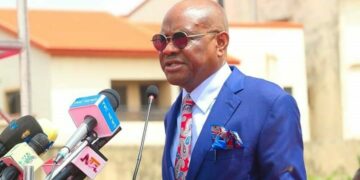
The managing director of the National Hydroelectric Power Producing Areas Development Commission (N-HYPPADEC), Alhaji Sadiq Abubakar Yelwa, has called for stronger collaboration between member states to address environmental and socio-economic challenges facing the host communities.
Alhaji Yelwa made the call during a visit to Taraba State as part of his familiarisation tour of N-HYPPADEC member states to Jalingo, the Taraba State capital.
During the visit, the commission’s MD paid courtesy calls on Governor Agbu Kefas and the Chairman of the Taraba State Traditional Council of Chiefs, the Aku Uka of Wukari, where he reiterated the Commission’s commitment to the sustainable development of its member states.
He urged state governments to fully leverage the opportunities provided by the Commission to alleviate the plight of communities impacted by hydroelectric power projects.
According to him, Kaduna, Nasarawa, Gombe and Taraba states were added as member states of the Commission in June 2023 by President Bola Ahmed Tinubu, joining Kebbi, Niger, Kogi, Kwara, Benue and Plateau states.
Alhaji Yelwa explained that expanding the Commission from six to 10 states was aimed at addressing the long-standing environmental and social burdens borne by communities hosting hydroelectric facilities.
He noted that effective delivery of the Commission’s mandate depends largely on sustained collaboration with state governments.
He further stated that N-HYPPADEC was established to tackle ecological degradation, flooding, erosion, displacement and livelihood disruptions associated with hydroelectric dam operations, while promoting sustainable development in affected areas.
Describing Taraba as strategically important to Nigeria’s energy future, Alhaji Yelwa said the state hosts the Kashimbila Hydropower Plant and lies within the Mambilla Plateau hydropower corridor, which is crucial to the country’s future energy security.
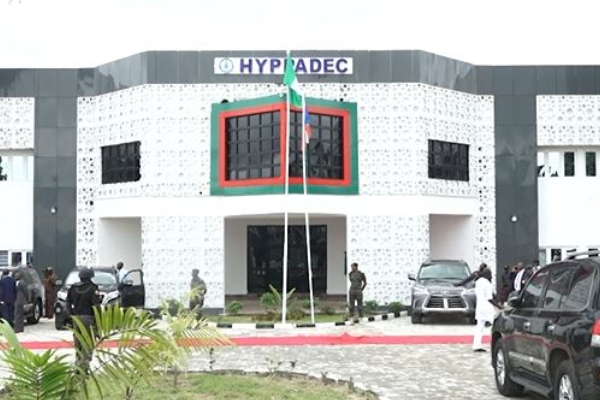
He listed projects executed in Taraba State since 2024 to include the establishment of a state office in Jalingo, installation of 34 solar-powered streetlights in riverine communities and the state capital, and the construction of 15 solar-powered boreholes to improve access to clean water.
We’ve got the edge. Get real-time reports, breaking scoops, and exclusive angles delivered straight to your phone. Don’t settle for stale news. Join LEADERSHIP NEWS on WhatsApp for 24/7 updates →
Join Our WhatsApp Channel