The protracted disagreement between Akwa Ibom and Cross River states over the ownership of 76 oil wells may be nearing resolution, following the commencement of a federal government-led exercise to verify and plot the coordinates of disputed and newly drilled oil wells nationwide.
The exercise, which began on Monday, is aimed at conclusively determining ownership of oil and gas assets in line with constitutional provisions on derivation revenue, particularly in areas where overlapping claims by states have persisted for years.
The Akwa Ibom–Cross River dispute dates back to the federal government’s abrogation of the offshore–onshore dichotomy in the allocation of oil derivation revenue to littoral states. Since then, Cross River has consistently claimed ownership of 76 offshore oil wells, a position firmly contested by Akwa Ibom, which maintains that the wells fall within its territorial boundaries.
In a bid to assert its claim, the Cross River state government approached the Supreme Court, seeking judicial clarification on the ownership of the oil wells located within the 200-metre isobath, which Akwa Ibom argues is contiguous to its maritime boundary.
However, in a landmark judgment delivered in July 2012, the apex court ruled that Cross River, being a non-littoral state, could not lay claim to offshore oil wells, as it lacked a maritime boundary.
Despite the ruling, Cross River continued to assert ownership of the wells, prompting further intervention by the Federal Government through the Revenue Mobilisation Allocation and Fiscal Commission (RMAFC).
As part of broader efforts to address similar disputes across oil-producing states, the Nigerian Upstream Petroleum Regulatory Commission (NUPRC) formally requested RMAFC to undertake the verification and plotting of coordinates for all existing and newly drilled oil wells.
In response, RMAFC disclosed that it established an Inter-Agency Technical Committee (IATC) in September 2025, tasked with verifying and plotting the coordinates of disputed and newly discovered oil and gas wells across affected states.
The committee, coordinated by RMAFC, includes representatives of the National Boundary Commission (NBC), the Office of the Surveyor-General of the Federation (OSGoF), and the Nigerian Upstream Petroleum Regulatory Commission (NUPRC).
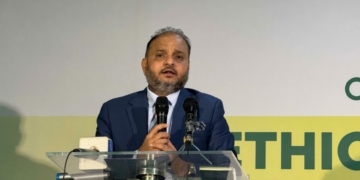
Speaking on the exercise, the Chairman of RMAFC, Dr Mohammed Bello Shehu, said the committee, working alongside Surveyors-General from the affected states, carried out extensive fieldwork to gather facts between September 2025 and January 2026. According to him, the field operations covered Akwa Ibom, Cross River, Bayelsa, Delta, Rivers, Edo, Ondo, and offshore locations.
Dr Shehu explained that the verification exercise was essential to ensuring that oil-producing states receive their correct derivation entitlements as stipulated by the Constitution.
“The Constitution provides that 13 per cent of revenue from minerals, especially crude oil and gas, should be paid to the states where they are produced. This is why the verification and plotting of coordinates of the new and disputed oil and gas wells is not optional, but a constitutional obligation,” he said.
He noted that disputes often arise when new oil fields are developed, as more than one state may claim them. According to him, only verifiable data and on-the-ground facts can determine actual ownership or whether resources should be jointly shared.
To ensure transparency, equity and credibility, the RMAFC Chairman said the committee physically visited creeks, offshore terrains and high seas alongside representatives of the affected states.
“We went to the field ourselves, and where we could not physically access, we deployed drones to take the coordinates,” he said, adding that all data collection activities were carried out in the presence of state representatives.
Dr Shehu assured stakeholders that RMAFC would remain neutral and impartial throughout the process, deploying modern technology to guarantee fairness and justice for all parties. He added that the outcome of the exercise would significantly reduce inter-state disputes and strengthen confidence in the derivation revenue payment process.
Earlier, the commission’s secretary, Joseph Okechukwu Nwaze, described the exercise as a demonstration of institutional commitment and effective inter-agency collaboration. He expressed optimism that its successful completion would further reinforce public confidence in RMAFC as a neutral arbiter in revenue administration and fiscal federalism.
In her remarks, the director of the Crude Oil Department at RMAFC, Dr Khadija Kumo, said the exercise was both timely and critical to Nigeria’s evolving energy governance framework. She stressed the need for greater emphasis on efficiency and the role of oil and gas resources in supporting broader economic growth.
Dr Kumo commended the technical team and participating states for their cooperation and called for sustained engagement to promote data-driven decision-making in the sector.
Also speaking, the coordinator of the Inter-Agency Technical Committee, Prince Folorunsho Aderinwala, praised the RMAFC Chairman for providing the necessary support that enabled the committee to carry out its assignment effectively.
At the committee’s inauguration in October 2025, Dr. Shehu had disclosed that the exercise was prompted by petitions from the governors of Anambra, Delta, Imo, Edo, Ondo and Rivers states, who sought clarification on the ownership and boundaries of certain oil and gas resources within their territories.
We’ve got the edge. Get real-time reports, breaking scoops, and exclusive angles delivered straight to your phone. Don’t settle for stale news. Join LEADERSHIP NEWS on WhatsApp for 24/7 updates →
Join Our WhatsApp Channel