
The federal government and religious leaders have called for urgent, scaled-up action to tackle climate change, declaring it a lived reality devastating communities in Nigeria.
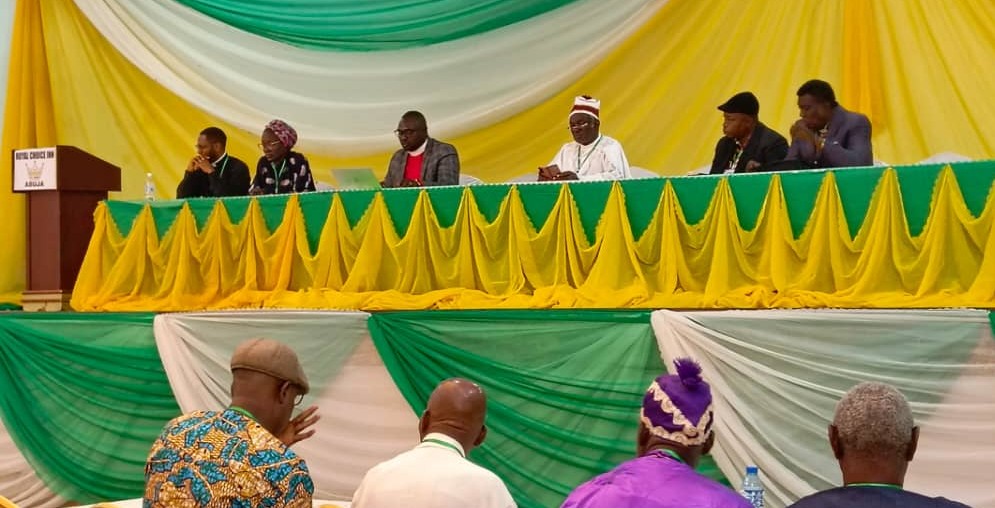
The call was made at a Climate Change Adaptation Programme Consultative Meeting convened by the Organisation of African Instituted Churches (OAIC), Nigeria Region.
The Baba Aladura and president of OAIC Nigeria Region, Elder Israel Akinadewo, described the challenge in stark, theological terms.
“Climate change is no longer a distant scientific concept or a future risk. It is a lived reality confronting our congregations, our rural communities, our farmers, our women, our youth, and our coastal populations every day,” he said.
Akinadewo positioned faith institutions as critical frontline actors in the climate fight. “Our churches are not only places of worship but centres of learning, mobilisation, compassion, and community resilience,” he said.
He detailed successful grassroots adaptation programmes implemented since 2023 in the coastal states of Akwa Ibom and Delta, focusing on community sensitization, environmental stewardship, and gathering vital data from smallholder farmers.
“We visited some of these areas to understand their concerns, revealing the many losses encountered by these farmers, resulting in dwindling revenue,” he said.
He emphasised that empowering religious bodies makes climate efforts more trusted, more inclusive, and more sustainable.
However, he stressed that local efforts are insufficient without global solidarity. “The scale of the climate challenge far exceeds the capacity of any single organisation.
“For African communities to adapt effectively, international solidarity and collaboration are not optional. They are essential,” he said.
He directly appealed to international partners for strengthened technical support, sustainable financing, capacity building, and knowledge exchange, highlighting OAIC’s vast grassroots network and cultural understanding as ideal vehicles for scaled-up action.
“The outcomes have shown us clearly that when religious institutions are empowered and properly engaged, climate adaptation efforts become more trusted, more inclusive, and more sustainable,” Akinadewo said.
The minister of Water Resources and Sanitation, Prof. Joseph Utsev, commended OAIC’s leadership and underscored the severe national impacts of climate change on water, food security, and public health.
“The Federal Ministry of Water Resources and Sanitation recognises the immense value of faith-based partnerships in strengthening climate resilience,” the ministry’s statement read.
Utsev, who was represented by Mrs. Ogungboye Adefolarin, deputy director of Hydrology in the ministry, hailed churches as trusted voices crucial for raising awareness, mobilising communities, and fostering environmental stewardship.
The federal government reaffirmed its commitment to inclusive governance and collaboration with all stakeholders, including international partners providing critical support through technical assistance, capacity building, and climate finance.
The ministry pledged to align its work with national and global climate commitments, prioritising vulnerable groups.
The consultative meeting, described by both leaders as a call to action, established a clear consensus that effective climate adaptation requires a fusion of grassroots faith-based mobilisation, robust government policy, and sustained international investment.
We’ve got the edge. Get real-time reports, breaking scoops, and exclusive angles delivered straight to your phone. Don’t settle for stale news. Join LEADERSHIP NEWS on WhatsApp for 24/7 updates →
Join Our WhatsApp Channel