
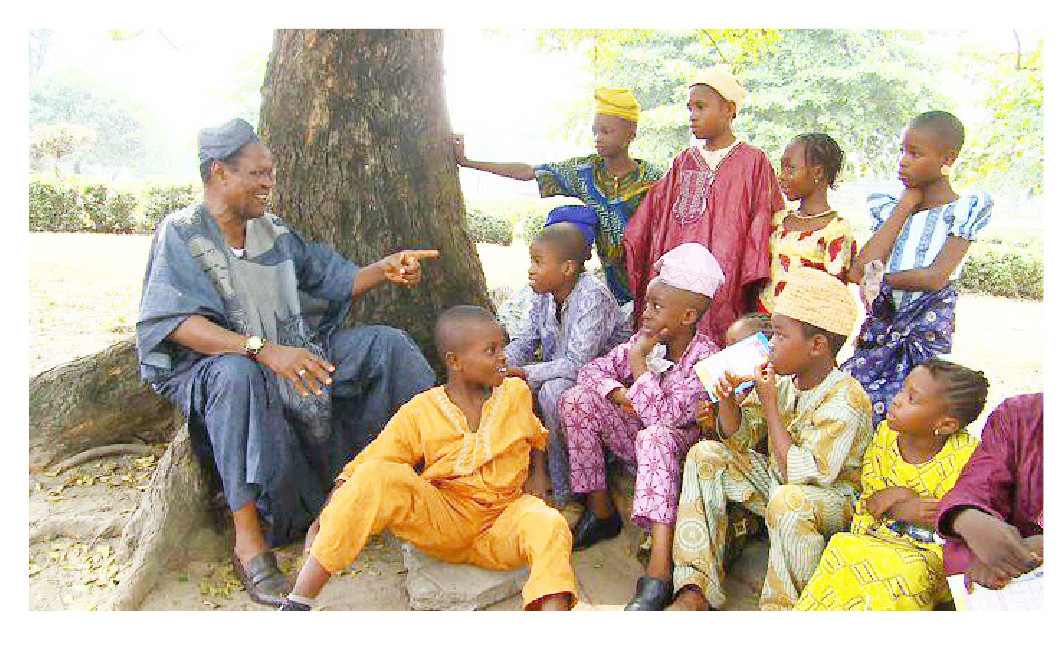
Once upon a time, when nightfall did not mean screens. It meant stories. When electricity was uncertain, and bedtime came early, children gathered under the open sky or around the television to listen to elders, to narrators, to the familiar opening words: “Tales by moonlight…” It was more than entertainment. It was a classroom without walls, where wisdom travelled through folklore and morals were taught without punishment.
In Nigeria and across much of Africa, storytelling has long been a central tool of education. Records of anthropological and cultural history show that oral tradition was the primary means of preserving knowledge, values, and social rules before formal schooling systems emerged. Folktales taught bravery, patience, honesty, and the consequences of greed. They explained the world in ways children could understand, using animals, spirits, and everyday struggles.
The television series “Tales by Moonlight,” which aired widely in the late 1980s and 1990s, carried this tradition into the modern home. It drew heavily from African folklore, especially the famous stories of the tortoise, hare, and rabbit, a clever, greedy creature often punished by his own tricks. Through those tales, children learned that intelligence without integrity leads to downfall, that pride invites disgrace, and that wisdom is more than cleverness.
Educational scholars have long recognised the power of storytelling in child development. UNESCO’s cultural education studies note that folktales play a crucial role in transmitting moral values, cultural identity, and social norms across generations. Long before formal civic education, stories were how societies shaped character.
Those lessons stayed with us. We did not just hear the stories; we carried them. They guided how we shared, how we trusted, how we feared consequences, even when no adult was watching. The moonlight stories were grafted into our hearts, quietly shaping our daily living.
Today, the world has changed. Children grow up on cartoons, streaming platforms, and fast-moving images from distant cultures. Stories still exist, but their roots are different. One cannot help but ask: what stories are children told these days? What morals do they carry into adulthood? And in the rush toward global culture, have we begun to forget our own African descent?
Remembering Tales by Moonlight is remembering a time when culture was not imported, but inherited; when wisdom came slowly, in parables; and when the night itself became a teacher. It is a gentle reminder that people who forget their stories risk forgetting themselves.
We’ve got the edge. Get real-time reports, breaking scoops, and exclusive angles delivered straight to your phone. Don’t settle for stale news. Join LEADERSHIP NEWS on WhatsApp for 24/7 updates →
Join Our WhatsApp Channel