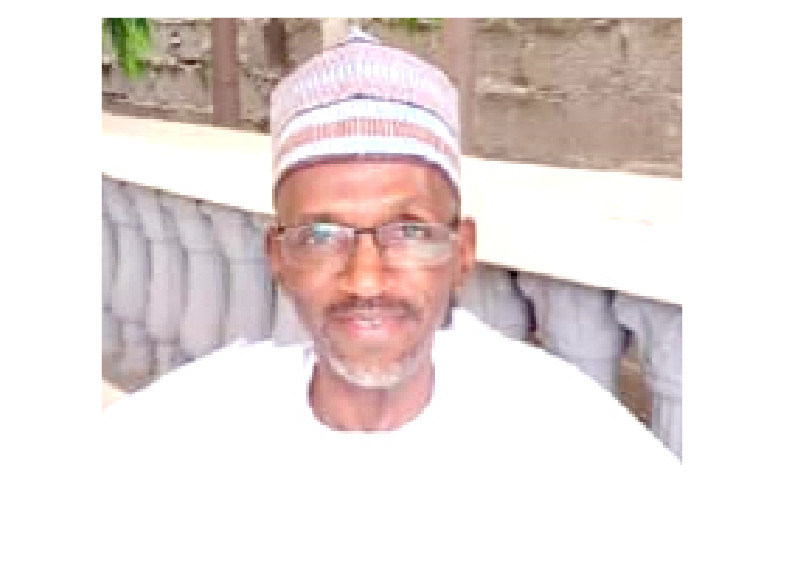
In this interview with LONGTONG YAKUBU, Dr. Sai’idu Ahmad Dukawa of Bayero University, Kano analyses the evolving political dynamics ahead of the 2027 elections in Kano State.
Kano is witnessing shifting alliances and major political realignments following the defection of Governor Abba Yusuf to the ruling All Progressives Congress, APC. How do you interpret these developments ahead of the 2027 elections?
The recent developments in Kano politics suggest one of two broad possibilities. At the end of the day, Senator Rabiu Musa Kwankwaso may decide to join the All Progressives Congress (APC). If that happens, likely, opposition politics in Kano will likely weaken significantly because Kwankwaso remains one of the most influential political actors in the state.
If, however, he does not join the APC, then he is most likely going to constitute a strong opposition force. In that situation, much will depend on where he eventually aligns. If he remains within the New Nigeria Peoples Party (NNPP), then it is likely that the NNPP and the APC will engage in intense political battles in Kano. These confrontations could weaken both parties internally and electorally.
When that happens, a third force may emerge as the beneficiary of the crisis. In my view, that third force is most likely to be the African Democratic Congress (ADC), which could capitalise on the internal contradictions and rivalries within the APC and the NNPP.
Are you implying that Kwankwaso staying out of the APC would create a significant opposition force?
Indeed, certainly. If Kwankwaso does not defect, there will be a strong opposition force. That force will confront the APC, and the APC will also fight back. In the process, both sides may weaken each other significantly. When two dominant forces engage in prolonged political battles, they often exhaust themselves.
In that scenario, a third option is likely to emerge. Based on current realities, that option is most likely to be the ADC.
What scenarios do you foresee if Kwankwaso throws his weight behind the ADC?
If Kwankwaso joins the ADC, then it is as good as saying that the APC is defeated in Kano. This is because many people in Kano are neither APC nor supporters. These floating voters are very important.
In addition, the Kwankwaso faction remains a formidable force. If that faction aligns with the ADC, the combined strength would be overwhelming. In that case, the APC’s struggle in Kano would be extremely difficult, if not impossible.
In your assessment, which political platform appears best positioned at the moment to influence the 2027 elections in Kano?
At this point, it is not easy to say definitively because political permutations are still ongoing. Negotiations, consultations, and alignments are still taking place behind the scenes.
What is clear, however, is that Kwankwaso is not completely far from joining the APC. If he eventually does, then the APC may have a very strong chance in Kano. On the other hand, if he does not join the APC and instead aligns with the ADC, then the APC will stand little or no chance in the state.
However, if Kwankwaso neither joins the APC nor the ADC, but instead remains in the NNPP or any other party, then he is likely to fight the APC vigorously. In addition to that, the APC will also be contending with pressure from the ADC. In such a scenario, it is very likely that both the APC and whichever party Kwankwaso belongs to—other than the ADC, will end up losing Kano, while the ADC emerges as the eventual winner.
Invariably, are you suggesting that the ADC could emerge as a decisive force capable of defeating both the APC and NNPP in 2027?
Yes, most likely. Both the APC and the NNPP are under serious internal pressure. These internal contradictions weaken parties over time. When parties are weakened internally, they struggle externally.
That weakness could knock both parties down, and most likely the ADC will benefit from the political fracas that may unfold.
The longstanding political contest between Ganduje and Kwankwaso continues to shape conversations about Kano’s politics. To what extent does this rivalry remain relevant, and does it still determine voter behaviour, or are we seeing the rise of a new political order?”
I would describe the situation as one of continuity and change. There is continuity in the sense that the rivalry between Kwankwaso and Ganduje still exists and still matters. However, the form and shape of that rivalry are changing.
Other political variables are now influencing outcomes more strongly than before. In the end, it is very likely that after the 2027 elections, both Ganduje and Kwankwaso will see their rivalry politically buried in Kano.
In fact, it may not just be their rivalry that is buried, but their political dominance itself, if the current permutations continue up to 2027.
How significantly might the NNPP administration’s performance in governance influence voter behaviour when weighed against entrenched drivers like party allegiance, ethnic identity, and political godfatherism?
I believe governance performance will only play a very limited role. If you look at the political history of Kano, you will see that electoral outcomes have rarely been determined solely by performance.
For example, when Kwankwaso lost power in 2003, it was not because he failed to perform; rather, voters were driven by a new political objective and shifting sentiments.
Similarly, in 2011, the ruling party under Shekarau lost not because Shekarau failed to perform during his eight years in office, but because Kano voters desired change.
In 2015, Kwankwaso succeeded largely because of the APC merger, not necessarily because of performance. The merger created national momentum, and people were yearning for change. Kwankwaso was fortunate to have defected and joined the merger. Had he remained in the PDP, he would likely have been defeated, regardless of his performance.
This does not mean performance does not count at all, some voters do consider it. However, overall, other factors such as party loyalty, prevailing political sentiments, and broader national dynamics tend to play a more decisive role.
Would you say the same thing happened in the 2023 elections?
In the 2023 elections, particularly in northern Nigeria, including Kano, the Muslim–Muslim ticket was a major determining factor. Regardless of the performance of any party in power, that political configuration carried enormous weight.
So, 2027 will come with its own unique variables. Those variables, rather than performance alone, will determine the political forces that shape voting behaviour.”
In what ways could the growing wave of political discussions and back-channel negotiations transform party dynamics and affect voter trust?”
This is not a new phenomenon in Kano politics. During the Second Republic, there were defections, yet voter behaviour remained largely consistent with the political aspirations of the people.
The same happened in the aborted Third Republic. Even when Kano had its own candidate, the people voted differently based on their political convictions, and a candidate from the South-West, Chief M.K.O. Abiola, won the election.
From the Second Republic to the Fourth Republic, defections have occurred repeatedly. Each time, the dominant political force of the period determined voter behaviour, not merely elite movements.
What socioeconomic pressures, beyond elite politics, are likely to drive voter sentiment, youth unemployment, insecurity, and living costs among them?
All these variables have played, and will continue to play, significant roles. Political symbolism; party identifiers such as red caps; social media influence; and youth mobilisation have all shaped voting behaviour. The youth, in particular, have become increasingly important in political mobilisation, and their influence will continue to grow as we approach 2027.”
Kwankwaso recently suggested that Governor Abba Yusuf could not win on the APC platform, especially if aligned with Ganduje, while Ganduje has expressed openness to reconciliation. Do you think reconciliation is possible?
Absolutely. Nothing is impossible in politics. If you examine their statements closely, both have left windows open for reconciliation.
Kwankwaso never categorically ruled out joining the APC, and Ganduje has openly expressed willingness to reconcile. Politics is fundamentally about bargaining, negotiation, and compromise.
Ultimately, politicians prioritize personal interest and political survival. Once personal stakes are secured, other considerations become secondary.
Do you think having no strong opposition is good for the political system?
No. A lack of opposition is not healthy for democracy. Opposition is essential because it checks excesses and prevents governance from drifting toward autocracy.
However, even if defections occur, the APC still faces serious challenges. Issues such as subsidy removal, power supply problems, and insecurity remain unresolved. Many of those defecting are seeking votes, not necessarily bringing voters with them.
If these issues persist between now and 2027, elite defections alone will not guarantee electoral success.
We’ve got the edge. Get real-time reports, breaking scoops, and exclusive angles delivered straight to your phone. Don’t settle for stale news. Join LEADERSHIP NEWS on WhatsApp for 24/7 updates →
Join Our WhatsApp Channel