
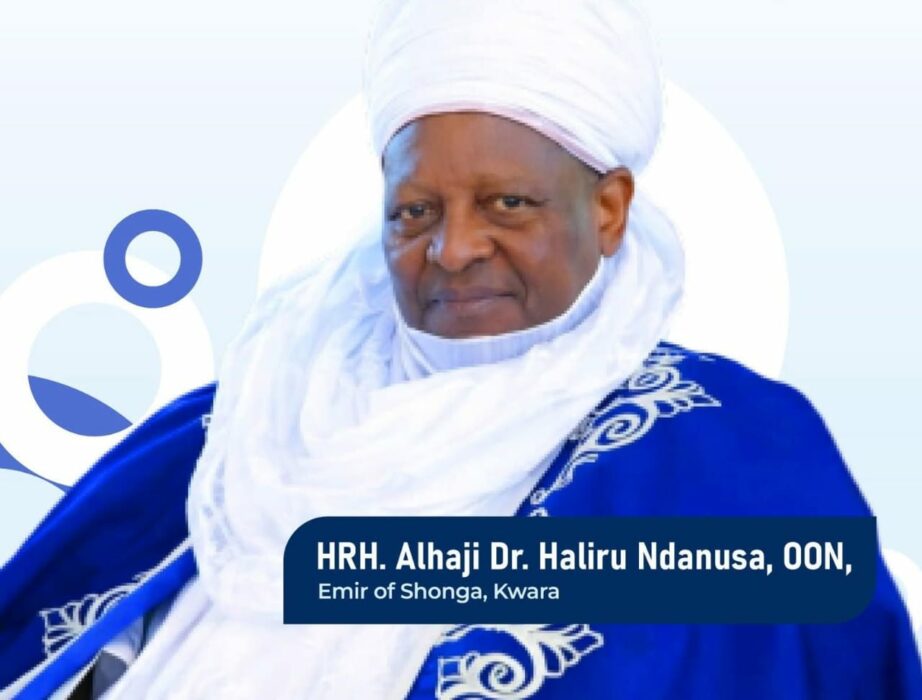
The Emir of Shonga, His Royal Highness Dr. Halliru Yahaya Ndanusa, has revealed how traditional institutions played a critical role in eliminating a harmful post-child delivery cultural practice in Northern Nigeria that led to the death of women, describing it as proof that culture can be reshaped to protect lives.
Dr. Ndanusa disclosed this on Wednesday during an interview on Channels Television’s breakfast show, ‘The Morning Brief’, where he appeared alongside the 16th Emir of Kano, His Highness Muhammadu Sanusi II, and the Obi of Onitsha, His Majesty Igwe Nnaemeka Alfred Achebe, while discussing the role of traditional rulers in national development and tackling gender-based violence.
According to the Emir, women in parts of Northern Nigeria were previously compelled to drink hot salty water immediately after childbirth, a practice believed to aid healing but which often resulted in severe complications.
“There was a time women were made to take hot salty water after childbirth, leading to heart failure and death,” he said.
He explained that the practice persisted for years because it was deeply rooted in cultural belief systems and treated as a non-negotiable tradition.
“They believed that if you didn’t do it, the womb would not heal and the woman would not have more children. Culture was taken almost like religion,” the Emir noted.
Dr. Ndanusa said the turning point came when medical evidence was systematically introduced and traditional rulers took ownership of community education.
“We went through systematic studies, then started a campaign. We educated the people, explained the dangers, and today that practice is being wiped out in the northern part of the country,” he said.
He described the success as a clear demonstration of the influence traditional institutions wield at the grassroots level.
“We are at what in medicine is called the final common pathway. Development comes through us. People may hear things from outside, but before they act, they come back to us,” he explained.
The Emir stressed that traditional rulers are uniquely positioned to confront harmful cultural practices because of their constant presence and trusted relationships with their communities.
“We are always there with the people. Governments come and go, but we remain. So they listen to us,” he said.
He added that the same approach can be applied to other harmful practices affecting women and girls, including early marriage.
“Anything that does more harm than good cannot be supported by culture, faith or religion. Early marriage, for instance, is very devastating. It is a baby carrying a baby,” he stated.
Dr. Ndanusa advocated for education as a powerful tool in delaying early marriage and protecting the girl child.
“When you force them to school, you do many things. You get them to marry later, and you protect them,” he said.
The Emir also revealed that traditional councils can develop local bylaws to curb harmful practices.
“Once the council decides that something should not be done, anyone who violates it knows they are running afoul of the system,” he said.
He concluded by calling for increased enlightenment among traditional rulers, noting that informed leadership is essential for separating harmless traditions from those that endanger lives.
“The more enlightened we are, the better we can identify dangerous practices and get real change to happen,” the Shonga Emir said.
We’ve got the edge. Get real-time reports, breaking scoops, and exclusive angles delivered straight to your phone. Don’t settle for stale news. Join LEADERSHIP NEWS on WhatsApp for 24/7 updates →
Join Our WhatsApp Channel