
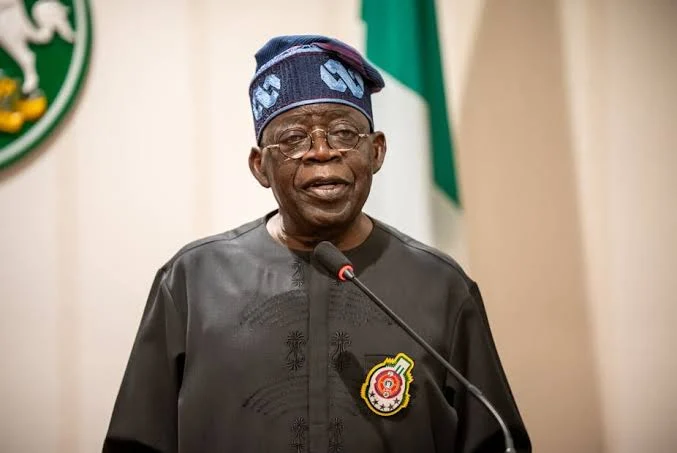
President Bola Ahmed Tinubu has directed the Federal Roads Maintenance Agency (FERMA) to develop a sustainable road maintenance framework that is preventive, planned and driven by evidence rather than assumptions.
He also ordered FERMA to develop a comprehensive, geo-referenced national database of failed and failing federal roads, stating causes of failure, whether due to design limitations, construction quality, axle overloading, drainage challenges, climate impacts, or maintenance lapse.
He said a credible road asset database will enhance budgeting accuracy, prioritisation of interventions, contractor accountability, and research collaboration with institutions such as the Nigerian Building and Road Research Institute (NBRRI).
Tinubu represented by the secretary to the government of the federation (SGF), Senator George Akume, spoke at the 2026 Roads Summit with the theme “Sustainable Road Infrastructure for National Growth ” on Tuesday in Abuja.
He said the summit comes at a critical moment, because Nigeria’s road network has been under siege through intense pressure from rapid population growth, urbanisation, increasing traffic volumes, axle overloading, climate-induced stresses, and persistent funding constraints.
“These pressures affect not only the physical condition of our roads, but also safety, security, environmental sustainability, social inclusion, and economic competitiveness. The consequences of these range from increased travel time and vehicle operating costs, to road accidents and loss of productivity—are too significant for us to ignore” he said.
He said it was in recognition of these realities that the Renewed Hope Agenda of this administration placed infrastructure development at the heart of national renewal.
According to him, roads are not viewed merely as construction projects, but as strategic national assets that must support inclusive growth, national cohesion, and long-term development.
He said Nigeria under President Bola Ahmed Tinubu’s leadership, is witnessing unprecedented inclusive investments in road infrastructure, driven by a commitment to quality, durability, and value for money.
He however, said ” building new roads is only half the responsibility of governance. The other half which is equally critical, is maintaining and preserving what we have built. Sustainable road maintenance is not an option, it is a compelling necessity. Without it, today’s investments become tomorrow’s liabilities,”.
He stressed that “a sustainable road maintenance framework must be preventive rather than reactive, planned rather than ad-hoc, and driven by evidence rather than assumptions”.
He emphasised the strategic importance of systematic road audits and robust data management.
He said “Sustainable infrastructure management begins with knowing the true condition of our assets.”
Speaking further, he called on FERMA to strengthen routine road condition audits, safety audits, and post-failure assessments across the federal road network.
“More importantly, the development of a comprehensive, geo-referenced national database of failed and failing federal roads is imperative. Such a database should clearly document the causes of failure, whether due to design limitations, construction quality, axle overloading, drainage challenges, climate impacts, or maintenance lapses.
“With accurate and up-to-date data, Nigeria can move decisively from emergency repairs to predictive and preventive maintenance planning,” he said.
He clarified that the Federal Ministry of Works remains the lead institution for policy formulation, standards, design, construction, and major rehabilitation of federal roads, while FERMA’s statutory responsibility is the maintenance, preservation, and protection of completed federal road assets. These mandates are complementary, not competitive.
He therefore, urged both to avoid overlaps and duplication for efficiency, accountability, and value for money.
He said, “Sustainable road infrastructure also demands predictable and adequate funding, enforcement of axle-load regulations, adoption of durable and climate-resilient materials, and innovation through public-private partnerships and infrastructure tax credit schemes. It requires political will, professional integrity, and stakeholder alignment across government, industry, and road users. This administration has demonstrated immense political will to achieve the desired objectives”
In his remarks, the Minister of State for Works Hon. Bello Goronyo lamented that road abuse has remained a critical challenge.
He identified practices such as overloading, reckless driving, and unauthorized road use as being responsible for shortening the lifespan of road investments.
He said, “The consequence is a heavy drain on lean government resources, forcing repeated repairs instead of allowing us to expand and modernize our network.
“Tackling road abuse is therefore essential to protecting public funds and ensuring lasting value for the Nigerian people,”.
He said the current administration has made bold choices despite fiscal constraints by accelerating legacy projects, focusing on vital corridors, and moving beyond annual budgets toward Public Private Partnerships, life cycle costing, and innovative resource management.
He said through the Renewed Hope Infrastructure Development Fund, the government is closing funding gaps with zero tolerance for waste.
He stressed the need to improve funding predictability, strengthen coordination between agencies and the private sector, and embrace road maintenance as a strategic investment in our national survival.
He said Nigeria roads represent a social contract with the Nigerian people. “When we build sustainably, we lower food prices, improve healthcare delivery, enhance competitiveness, and unite our nation. The quality of our work determines the quality of life for over 200 million Nigerians,” he said.
Earlier in his welcome remarks, the MD/CEO FERMA, Dr. Emeka Agbasi reiterated that road transport remains the dominant mode of mobility in Nigeria, accounting for the vast majority of passenger and freight movement ranging from farm produce moving to urban markets, to industrial goods connecting to ports, to citizens accessing education, healthcare, and employment-roads shape daily life and economic outcomes across our nation.
He said despite their importance, “We are all aware of the persistent challenges facing our road sector: deteriorating assets, maintenance backlogs, climate-induced damage, funding constraints, and road safety concerns. These challenges impose significant economic costs, higher vehicle operating expenses, longer travel times, reduce competitiveness (due to higher transport cost), and, most importantly, risks to human lives.”
Agbasi said a sustainable road infrastructure must extend beyond building roads to building better roads and managing them better.
We’ve got the edge. Get real-time reports, breaking scoops, and exclusive angles delivered straight to your phone. Don’t settle for stale news. Join LEADERSHIP NEWS on WhatsApp for 24/7 updates →
Join Our WhatsApp Channel