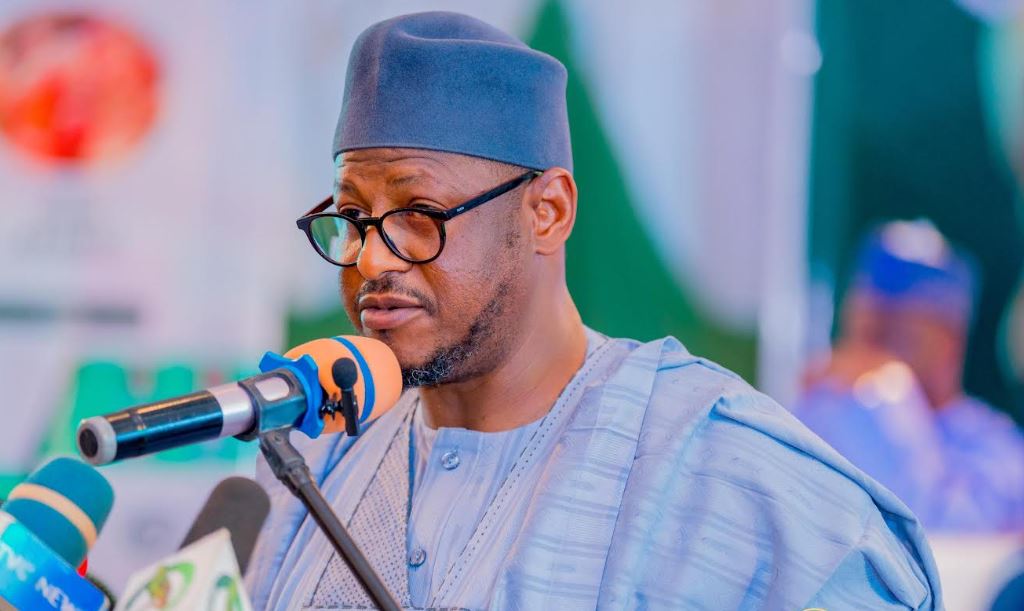
Katsina State governor, Dikko Radda, has called for coordinated and market-driven investments across the Northwest to tackle insecurity, revive agriculture and secure the future of internally displaced persons across the country.
He spoke in Lagos at the closing of a two-day conference themed “Securing Futures: Market-Based Solutions for Internal Displacement.”
The event was organised by the Office of the Vice President in partnership with the United Nations, the UK Foreign, Commonwealth and Development Office and Tropical General Investments Group, drawing policymakers, investors and development partners to examine private-sector solutions to displacement and economic fragility.
Radda said the Northwest governors resolved to act collectively because the region’s challenges were too complex to be solved at the individual state level.
“We organised ourselves, put together a formidable team and focused on coordinated activities because only a regional political approach can work,” he said.
He disclosed that a regional secretariat now concentrates on security, the economy and agriculture, while insecurity had previously scared away investment, worsened poverty and deepened malnutrition, prompting the governors to adopt a unified, community-based security framework.
According to him, the region embraced a local intelligence model that complements formal security agencies, engages traditional and community leaders, and leverages knowledge of local terrain.
“Ninety per cent of our insecurity is local, so the best way to address it is locally,” he added.
The governor said the approach has reduced crime across several states, creating space for investment, and paving the way for a regional security outfit to work with federal agencies, while the Northwest Development Forum plans an investment opportunity framework to attract capital.
While stressing that the agricultural sector remains the backbone of the regional economy, but suffers from poor seeds, weak markets and land fragmentation, explaining: “Where a farmer produces one tonne, with improved seed, he can produce four to five tonnes.”
He said restoring marketing boards, strengthening value chains and promoting commercial farming would reposition agriculture as a business, urging value addition through processing plants, livestock feed mills and meat processing facilities instead of transporting live animals to urban centres.
“The local market alone cannot meet 50 per cent of meat demand here, even before thinking of export, such investments would create jobs, improve incomes and stabilise communities affected by displacement” he said.
Radda warned against negative narratives that discourage investors, insisting that Nigeria is not alone in facing insecurity, and called for balanced reporting while applauding the Northwest governors for building a very formidable region through community solutions.
He noted that Katsina has adopted community-based development, where residents decide priority projects and beneficiaries, alongside agri-value chain partnerships and skills empowerment for displaced persons to enable reintegration and sustainable livelihoods.
Also, the special adviser to the president on innovation, Nasir Yammama, said Nigeria’s ambition of becoming a trillion-dollar economy by 2030 depends on market-driven reforms in agriculture, education, manufacturing, digital and creative industries. He added that formal connections to formal markets and deliberate investment in STEM education are essential for long-term growth.
We’ve got the edge. Get real-time reports, breaking scoops, and exclusive angles delivered straight to your phone. Don’t settle for stale news. Join LEADERSHIP NEWS on WhatsApp for 24/7 updates →
Join Our WhatsApp Channel