The Commission said the worsening climate crisis is no longer merely an environmental concern but one that directly affects the rights to life, food, shelter, health, education and human dignity.
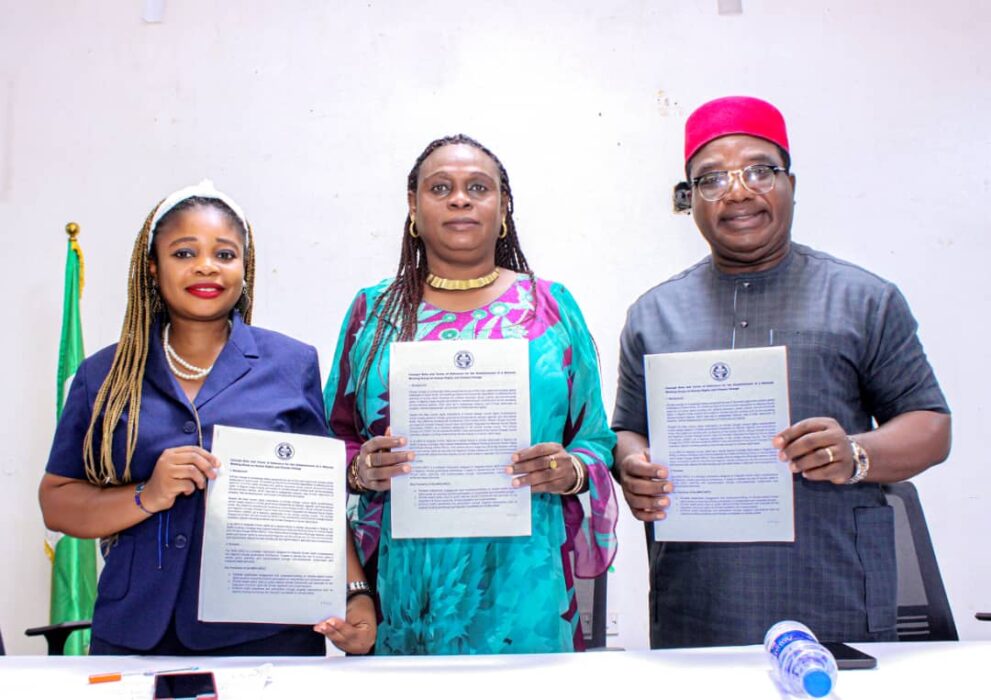
Speaking on Tuesday, at the inauguration of the National Working Group on Human Rights and Climate Change in Abuja, the Executive Secretary of the NHRC, Chief Tony Ojukwu, OFR, SAN, said every climate policy must place people and not just the environment at its centre.
According to him, the devastating impact of climate change is being felt daily by ordinary Nigerians whose homes have been submerged by floods, whose farmlands have been destroyed by drought and whose communities have been uprooted by climate-induced conflicts.
“Climate change is not just about rising temperatures. It is about people. It is about families losing their homes, farmers losing their livelihoods, communities being displaced and vulnerable populations sinking deeper into poverty,” Ojukwu said.
He stressed that the Commission’s approach is anchored on a fundamental question: How does climate change affect people?
The NHRC boss explained that the newly inaugurated Working Group, established in partnership with the Federal Ministry of Environment and the National Council on Climate Change, will ensure that Nigeria’s climate response is firmly rooted in human rights principles.
He said the body would bring together government agencies, civil society organisations, academics and development partners to develop policies that protect the country’s most vulnerable populations from the devastating consequences of climate change.
Representing the Minister of Environment, Dr. Iniobong Abiola Awe, reaffirmed the Federal Government’s commitment to implementing climate policies that are inclusive and protect vulnerable communities from environmental shocks.
Also speaking, the Director-General of the National Council on Climate Change, Dr. Omotenioye Majekodunmi, said climate-induced flooding, migration, rising temperatures and farmer-herder conflicts have become everyday realities affecting millions of Nigerians.
She noted that the effects of climate change have gone beyond environmental degradation to become major threats to livelihoods, peace, security and human dignity across the country.
The Founder of the Women Environmental Programme, Dr. Priscilla Achakpa, pledged continued collaboration with the NHRC to advance climate justice, particularly for women, youths and other vulnerable groups who bear the greatest burden of environmental disasters.
Similarly, the Federal Commissioner for Refugees, Migrants and Internally Displaced Persons, Aliyu Tijani Ahmed, represented by former NHRC Director Dahiru Bobbo, reiterated the Commission’s commitment to supporting victims displaced by climate-related disasters.
The Presidency also threw its weight behind the initiative, with the Special Assistant to President Bola Ahmed Tinubu on Climate Change, Comrade Yussuf Olatunji Kelani, pledging support for the activities of the Working Group.
Beyond the inauguration ceremony, stakeholders agreed that the human face of climate change can no longer be ignored.
From children whose classrooms have been washed away by floods to farmers whose harvests have failed because of prolonged drought, and communities forced to flee their ancestral homes due to environmental degradation, speakers maintained that climate change has become one of the greatest threats to human rights in Nigeria.
The NHRC said the establishment of the National Working Group signals a new direction in Nigeria’s climate response—one that seeks to ensure that protecting the environment goes hand in hand with protecting the rights, dignity and future of every Nigerian.
We’ve got the edge. Get real-time reports, breaking scoops, and exclusive angles delivered straight to your phone. Don’t settle for stale news. Join LEADERSHIP NEWS on WhatsApp for 24/7 updates →
Join Our WhatsApp Channel