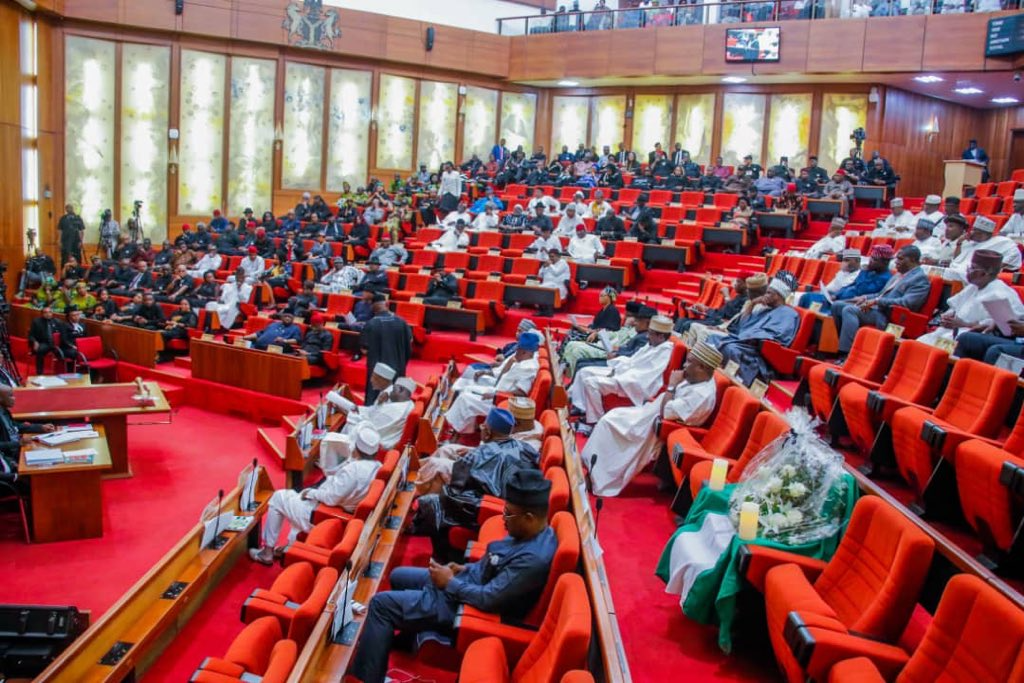
The Senate’s endorsement of real-time electronic transmission of election results is a welcome development in Nigeria’s long and often troubled democratic journey. It signals responsiveness to public concern and acknowledges that electoral credibility remains fragile. Yet, while this reform deserves commendation, it must not be mistaken for a cure-all. Technology can enhance transparency, but it cannot substitute for institutional integrity – an area in which Nigeria’s electoral administration has struggled since independence in 1960. If Nigeria is serious about restoring trust in its elections, particularly ahead of the 2027 general elections, it must move beyond digital fixes and confront the deeper structural weaknesses that continue to undermine public confidence in electoral outcomes.
Nigeria’s electoral crisis is not merely technological; it is fundamentally institutional. Citizens do not distrust innovation – they distrust systems. The real questions are not whether results are uploaded in real time, but whether those results accurately reflect votes cast at polling units. Are presiding officers shielded from interference? Are collation processes insulated from manipulation? Do security agencies act with neutrality? Are judicial interventions timely and principled? Without credible answers to these questions, electronic transmission risks becoming a cosmetic reform layered over structural decay.
One of the most corrosive elements of Nigeria’s electoral process is the recruitment of electoral officers – both permanent and ad hoc staff, alongside the culture of impunity that surrounds the system. From the nomination of Resident Electoral Commissioners (RECs) to the engagement of presiding officers, the process is often compromised. RECs are nominated by political actors and, in some cases, may feel greater loyalty to their political benefactors than to the integrity of the office. During the recruitment of ad hoc staff, governors and other political figures frequently leverage relationships with RECs to secure placement slots. The selection of presiding officers is often left to state administrative secretaries or Local Government Electoral Officers, who themselves may be vulnerable to political pressure. These structural vulnerabilities weaken the entire chain of electoral administration.
Institutional independence must therefore be examined more seriously. The credibility of the Independent National Electoral Commission (INEC) depends not only on its technical competence but also on both the perception and the reality of autonomy. Appointment processes must inspire confidence across political divides. Budgetary allocations should not become instruments of leverage, and operational decisions must be shielded from partisan influence. Public trust rises or falls on the belief that the referee is impartial. Without structural guarantees of independence, even well-intentioned reforms will be viewed through lenses of suspicion.
Although ad hoc staff are formally employed and paid by INEC, it is widely acknowledged that some receive additional inducements from the politicians who facilitated their recruitment. This concern extends from presiding officers at polling units to collation and returning officers at ward, local government, and state levels. When a critical mass of electoral officials becomes beholden to political interests, manipulation becomes easier – whether through strategic cancellations, questionable declarations of “inconclusive” elections, or alterations at collation centres. The Electoral Act should have addressed more explicitly the recruitment and oversight of ad hoc staff, particularly presiding and returning officers who supervise elections and declare winners.
Globally, countries that have achieved credible elections have done so not just through technological upgrades, but through consistent accountability. Technology improves efficiency and security; accountability sustains integrity. Introducing new tools without enforcing consequences simply creates new frontiers for electoral malpractice. Electoral offences in Nigeria are frequent, yet accountability remains rare. A pattern evident in elections from 1999 to 2023. Vote-buying occurs openly in many constituencies. Ballot snatching and intimidation persist in evolving forms. Political actors calculate risks based on precedent, and precedent suggests minimal consequences. Until electoral offenders are prosecuted consistently and transparently, technological reforms will have limited impact. Surveillance without enforcement is ineffective.
This reality underscores the urgency of establishing an independent Electoral Offences Commission. The relevant bill, reportedly pending in the National Assembly since 2024, must return to the centre of reform discussions. The current framework where prosecution is largely handled by the same institutions responsible for conducting elections is structurally weak. A democracy that fails to punish those who undermine its processes inadvertently encourages repetition. The Senate’s endorsement of electronic transmission is meaningful, but it must be matched by legislative courage to strengthen enforcement mechanisms.
It is the opinion of this newspaper that any serious conversation about electoral integrity must also confront the pervasive problem of vote-buying. In many communities, election day has become transactional. Poverty is weaponised, and desperation is exploited. Cash inducements distort voter choice and reduce citizenship to commerce. Real-time transmission does little to prevent this. Indeed, it risks conferring procedural legitimacy on outcomes already shaped by economic coercion. Electoral reform must therefore intersect with broader governance reforms, addressing poverty, strengthening civic education, and enforcing laws against inducement.
Politically, this moment is significant. The Senate’s reported reversal, influenced by public pressure, demonstrates that civic engagement still matters. When citizens organise, articulate clear demands, and insist on accountability, institutions can respond. That lesson should not be underestimated. Yet the episode also reveals institutional fragility: why did transparency require such sustained advocacy in the first place? Democratic maturity would suggest that openness should be instinctive, not extracted.
Looking ahead to 2027, Nigeria stands at a critical inflection point. The next general election will not merely determine political leadership; it will test whether the country has learned from past credibility crises. Confidence in electoral outcomes shapes political stability, investor sentiment, social cohesion, and national morale. Elections widely perceived as flawed deepen cynicism and alienation. Conversely, credible processes strengthen legitimacy and reduce post-election tensions. Real-time transmission is a step forward. But without structural reform, institutional independence, and consistent accountability, it will remain a procedural improvement layered over foundational weaknesses.
We’ve got the edge. Get real-time reports, breaking scoops, and exclusive angles delivered straight to your phone. Don’t settle for stale news. Join LEADERSHIP NEWS on WhatsApp for 24/7 updates →
Join Our WhatsApp Channel