By Senator Saidu Dansadau
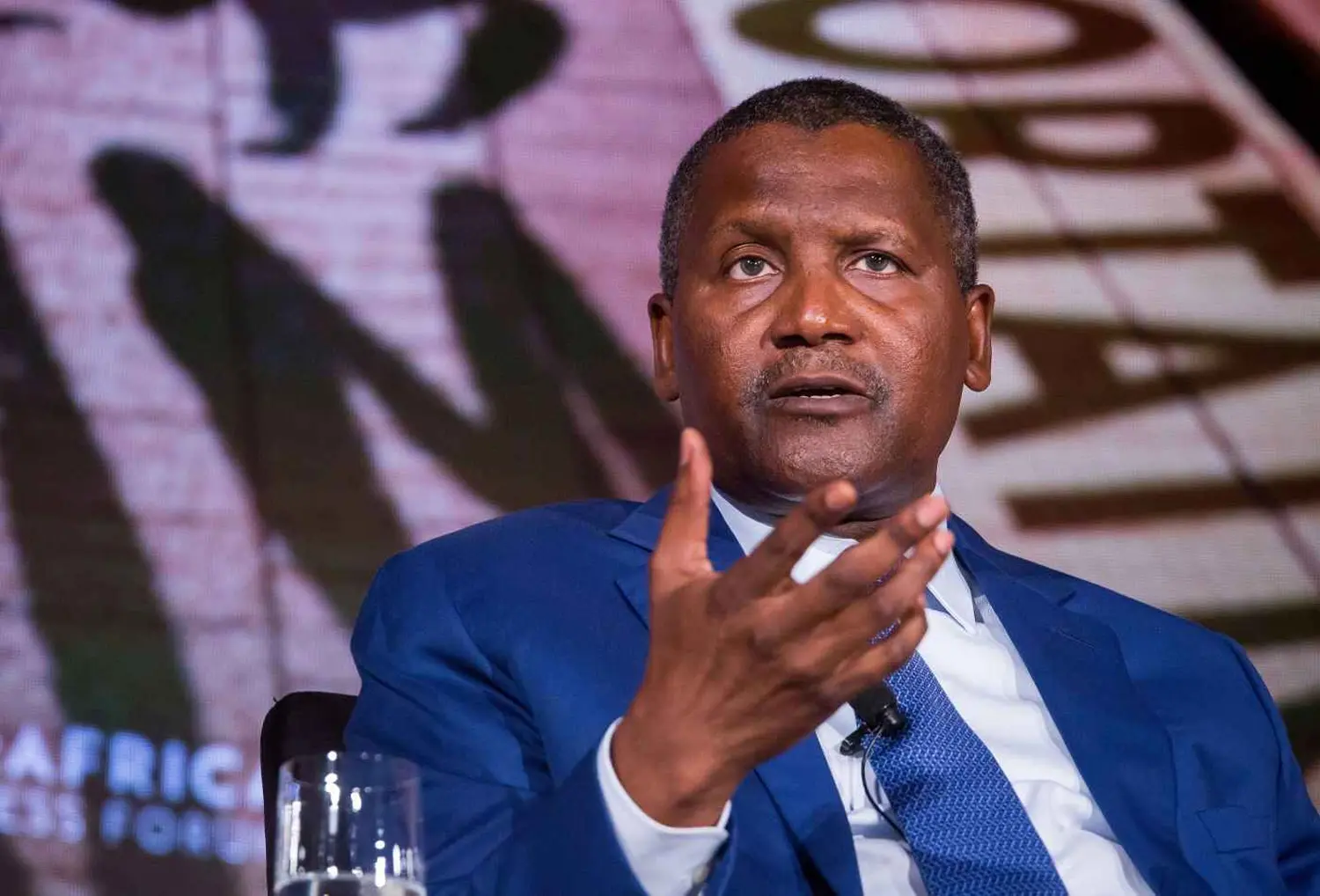
Aliko Dangote stands today as Africa’s most prominent industrialist. Yet his rise to continental and global business prominence was neither sudden nor accidental. It was shaped by a formative early life in Northern Nigeria, modest entrepreneurial beginnings in Kano, and a strategic migration to Lagos in search of a more enabling commercial environment. Beyond scale and capital, his career offers an important lesson for plural societies: that sustained business success in multi-religious contexts depends on disciplined neutrality, institutional meritocracy, and restraint in the use of power.
Early Life, Family Influence, and Commercial Formation
Dangote was born in 1957 in Kano, one of West Africa’s oldest and most enduring commercial centres. For centuries, Kano had functioned as a hub of trans-Saharan trade, linking local markets to North Africa and the Middle East. Commerce in such an environment was not merely an occupation but a social culture, sustained by trust, reputation, and cross-cultural exchange.
He was raised within a family deeply embedded in this tradition. His maternal grandfather, Alhassan Dantata, was among the most prominent indigenous merchants of pre-independence Nigeria. From an early age, Dangote absorbed practical lessons about trade across ethnic and religious boundaries—lessons that emphasised reliability over identity and reputation over rhetoric. These early influences instilled habits of discipline, prudence, and reinvestment that would later define his entrepreneurial style.
His education combined formal schooling with informal commercial apprenticeship. Even as a student, he demonstrated an unusual fascination with buying and selling, engaging in small trading activities that sharpened his understanding of risk, negotiation, and profit. Business, for Dangote, was learned not as theory but as practice.
Entrepreneurial Beginnings in Kano
Dangote formally entered business in the late 1970s, trading in essential commodities such as sugar, rice, and cement—products with steady demand in Nigeria’s growing population. Kano was a natural starting point. Its large markets and long-established merchant networks provided both access and legitimacy.
Operating initially as a trader rather than a manufacturer, Dangote focused on bulk purchasing, efficient distribution, and rapid turnover. He learned to manage narrow margins through scale and consistency, building trust with suppliers and customers alike. Kano’s commercial culture rewarded reliability rather than spectacle, and his reputation as a dependable trader grew accordingly.
However, as his ambitions expanded beyond regional trade toward national dominance, structural constraints became increasingly evident. Distance from seaports, infrastructure deficits, and policy bottlenecks limited the prospects for large-scale industrial expansion.
Migration to Lagos and Industrial Transformation
In response, Dangote made a decisive strategic move in the 1980s, relocating the centre of his business operations to Lagos. The move was not merely geographic but transformational. Lagos, as Nigeria’s principal port city and commercial capital, offered access to international markets, financial institutions, regulatory authorities, and global supply chains.
This relocation marked Dangote’s transition from trader to industrialist. In Lagos, he diversified operations, scaled production, and gradually shifted from commerce rooted in tradition to industrial capitalism driven by infrastructure, long-term planning, and vertical integration. Over time, this strategy culminated in major investments in cement manufacturing, sugar refining, flour milling, fertiliser production, and, more recently, oil refining and petrochemicals.
The Kano–Lagos trajectory thus encapsulates a broader Nigerian economic pattern: movement from traditional trading centres to modern industrial hubs in pursuit of scale and competitiveness.
Interfaith Neutrality as Corporate Governance
In multi-religious and multi-ethnic societies, large-scale enterprise depends not only on capital and technology but on governance frameworks capable of transcending identity divisions. In Africa, where religious affiliation remains socially salient, corporate leadership that avoids sectarian preference while affirming human dignity becomes a practical model of interfaith coexistence.
Within this context, Dangote Industries Limited presents a distinctive case. Across more than two decades of expansion, the Dangote Group has employed tens of thousands of workers across West, Central, East, and Southern Africa. Its workforce spans multiple religions, ethnicities, and nationalities, yet faith has not functioned as a criterion for recruitment, promotion, or access to authority. Corporate governance is grounded in performance, discipline, and scale rather than identity.
The most transparent illustration of this model is Dangote Cement Plc, whose audited financial statements identify subsidiaries and operations in over twenty African countries. Other group companies—Dangote Sugar Refinery Plc and NASCON Allied Industries Plc—likewise operate with publicly disclosed non-discrimination policies. Across these entities, there is no evidence of faith-based exclusion or sectarian structuring of corporate power.
Three features of Dangote’s management approach are particularly significant for interfaith relations:
First, faith-neutral recruitment and promotion. Corporate disclosures consistently emphasise non-discrimination irrespective of religion, ethnicity, or nationality.
Second, a multinational and multi-religious workforce. Operating across diverse African regions requires a corporate culture that prioritises competence and discipline over identity.
Third, the separation of private piety from public obligation. Although Dangote is personally known as a practicing Muslim, this faith identity has not translated into sectarian corporate behaviour. This distinction mirrors a shared ethical principle in both Islamic and Christian traditions: personal belief does not justify public exclusion.
Conclusion
In contrast to politicised and sectarian uses of religion in both state and market institutions, Aliko Dangote’s business legacy demonstrates how large-scale African enterprise can function as a site of practical interfaith coexistence. The evidence lies not in declarations or symbolism, but in structures—workforce composition, governance norms, and the sustained absence of faith-based exclusion across multiple jurisdictions.
For this reason, Dangote’s corporate model offers more than an economic success story. It provides a compelling case study of interfaith relations in action, with lessons for business leaders, policymakers, and scholars concerned with peace, pluralism, and development in religiously diverse societies.
We’ve got the edge. Get real-time reports, breaking scoops, and exclusive angles delivered straight to your phone. Don’t settle for stale news. Join LEADERSHIP NEWS on WhatsApp for 24/7 updates →
Join Our WhatsApp Channel