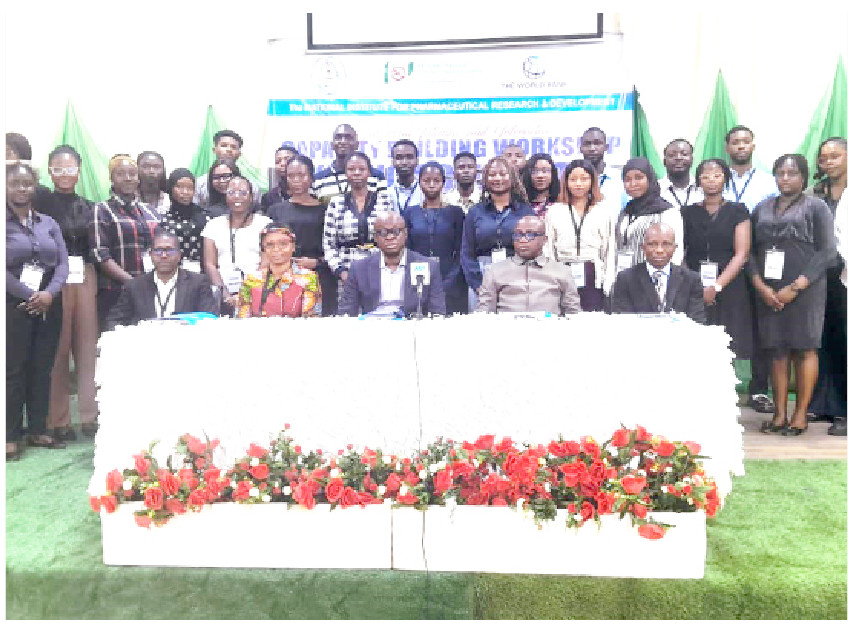
National Institute for Pharmaceutical Research and Development (NIPRD) has launched a nationwide training aimed at equipping early-career scientists with the skills and knowledge to ensure medicine security, strengthen healthcare systems, and combat the proliferation of fake and substandard drugs in the country.
At the event, the director-general of NIPRD, Dr Obi Adigwe, emphasised that the training goes beyond malaria, highlighting lessons learned from the COVID-19 pandemic.
“During COVID, nations had to close their borders, and it became clear that we must develop local solutions for our healthcare systems. Medicine security is essential so that in times of crisis, we can provide for ourselves and not scramble for solutions,” he said.
Represented by a director, Mr. Mboma Ifeanyi, he noted that exposure and knowledge are critical tools in preventing the circulation of counterfeit medicines. “Some people engage in fake drugs out of ignorance, focusing only on monetary gains. Through training and awareness, we aim to make it more difficult for such practices to thrive,” he said.
“The COVID-19 pandemic showed us the importance of self-sufficiency in healthcare. Through this initiative, we are building a generation of scientists capable of securing Nigeria’s medicines, protecting public health, and contributing to Africa’s broader health security agenda,” Mr. Ifeanyi said.
The training, part of the World Bank–funded IMPACT Project, targets approximately 50 young scientists from across Nigerian universities.
Technical Assistant, Pharma and Industry to NIPRD DG and lead for the IMPACT Project, Dr. Mary Aboh, explained that the programme will equip participants with the skills needed to maintain quality and safe medicines, supporting Nigeria’s goal of meeting WHO pre-qualification standards.
“This program is designed to impact early-career scientists in pharmacy and related health fields. They are the drivers of change who will ensure that medicine is secure, available, and safe not just in Nigeria, but across Africa,” Dr. Aboh said.
NIPRD highlighted that medicine security encompasses not only the production of high-quality drugs but also their proper storage, distribution, and handling, particularly in challenging climates and during power outages.
The training also emphasises local production capacity to reduce reliance on imports during crises, ensuring a steady supply of essential medicines.
We’ve got the edge. Get real-time reports, breaking scoops, and exclusive angles delivered straight to your phone. Don’t settle for stale news. Join LEADERSHIP NEWS on WhatsApp for 24/7 updates →
Join Our WhatsApp Channel