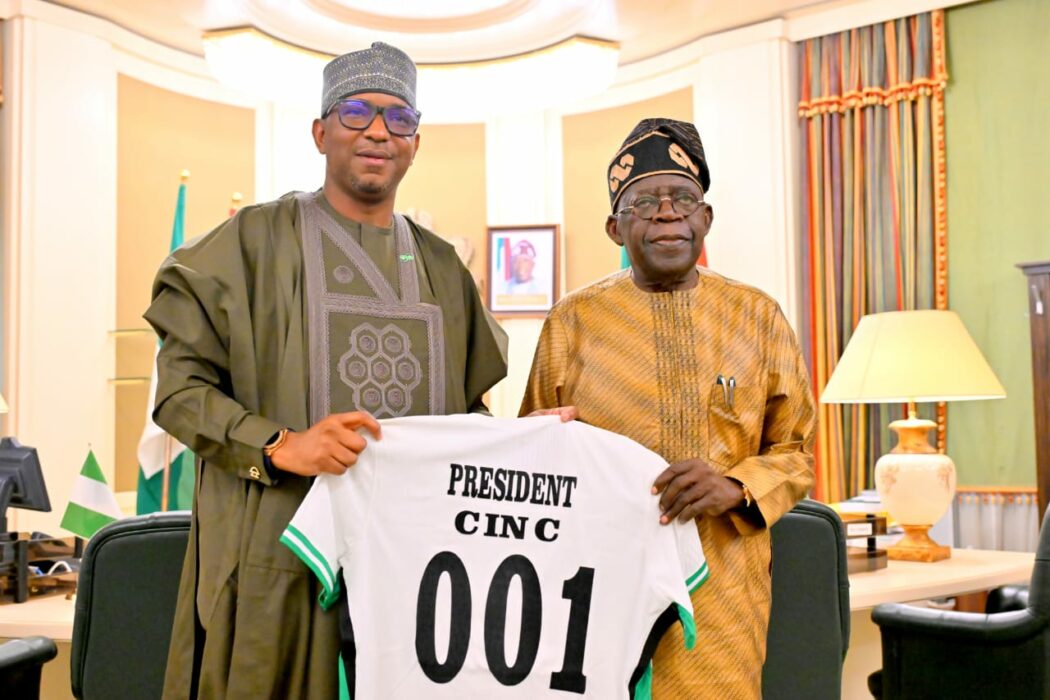
President Bola Tinubu has approved the constitution of the board of the Nigerian Anti-Doping Agency, marking a major compliance breakthrough for the country’s sports sector as the National Sports Commission (NSC) disclosed that Nigeria won nearly 375 medals in 2025.
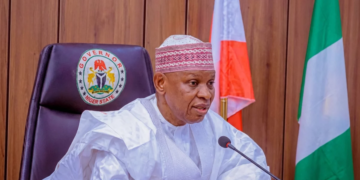
Chairman of the NSC, Shehu Dikko, revealed this on Thursday while briefing State House correspondents after meeting with the President Tinubu at the Presidential Villa, Abuja.
Dikko described the approval as a critical step in consolidating Nigeria’s standing as a clean sporting nation and meeting key global regulatory requirements.
According to him, the Anti-Doping Bill had lingered for about 20 years before being signed into law by the President last year. He added that the approval of the board’s constitution satisfies one of the major conditions set by the World Anti-Doping Agency.
“WADA has been on our case. Mr President signed the bill last year after almost 20 years in hiatus, and now he has approved the constitution of the board. Already, Nigeria has been cleared and declared a clean country in sports. We are on the right track,” Dikko said.
He explained that the visit formed part of the Commission’s statutory reporting obligations, during which the NSC submitted its 2025 annual report and briefed the President on implementation milestones and projections for 2026.
“It’s just a normal visit. The National Sports Commission reports to Mr President. We came to brief him on what we have done last year and the plans for 2026. So far, Mr President is very happy and excited with the progress,” he said.
Dikko disclosed that Nigeria won nearly 375 medals across various competitions in 2025, describing the year as a watershed in the implementation of the NSC’s Renewed Hope Initiative for Nigeria Sports Economy.
He said the sports sector also recorded measurable economic impact.
“In the third quarter of 2025 alone, sports contributed about 1.2 per cent to GDP. We attracted about N50 billion in private sector funding and induced almost 140,000 jobs — direct, indirect and induced — across the ecosystem,” he said.
Dikko noted that under the current administration, performance metrics for sports have expanded beyond podium finishes.
“Sports is no longer just about medals; it is about GDP contribution, jobs created and economic value,” he added.
He also disclosed that sports infrastructure development featured in discussions with the President, with memos under review to accelerate projects nationwide.
“We need infrastructure to work, both elite and grassroots. That is part of what Mr President is looking at,” he said.
On Nigeria’s petition before FIFA concerning alleged breaches by the Democratic Republic of Congo during the 2026 World Cup qualification playoffs, Dikko said the country remained confident of a favourable ruling.
Nigeria had lost the decisive playoff ticket on penalties on November 16, 2025, but subsequently filed a formal complaint alleging that the DRC fielded unqualified players in breach of dual citizenship regulations.
“We documented what we felt were breaches and submitted to FIFA together with the NFF. It is not about being sore losers; it is about the rules. If there are breaches, you document them,” he said.
He clarified that the matter is currently before FIFA’s independent disciplinary and ethics committees.
“Even FIFA is not the one deciding. There are independent bodies who look at the rules and take decisions. When they finish, they will tell the world. But we are confident we have a good case,” Dikko added.
Despite the pending case, he stressed that the World Cup was no longer central to Nigeria’s sports roadmap.
“We have put the World Cup behind us already. Whatever happens, it is what it is. We are focused on the next AFCON, the next WAFCON, and building for subsequent competitions,” he said.
Dikko highlighted renewed emphasis on grassroots development, including the introduction of “Invited Junior Athletes” as a symbolic 38th state at the last National Sports Festival, a move aimed at talent discovery.
He said the Commission has also introduced intermediate competitions for under-18 and under-20 athletes and is working with the Federal Ministry of Education to revive school sports such as the NUGA Games and the Principal’s Cup, with provisions already captured in the 2026 budget.
Federations, he added, have been directed to prioritise grassroots programmes as a condition for international support.
“If you are not showing us what you are doing domestically and at the grassroots, we cannot support you to go for international competitions,” he warned.
Dikko concluded by presenting a commemorative jersey to President Tinubu, citing what he described as unprecedented presidential backing for sports, including directives to ensure timely release of budgeted funds once approved.
“Sports works with time. If monies are not released according to schedule, there will be problems. Mr President has directed that once funds are due, they should be released immediately,” he said.
We’ve got the edge. Get real-time reports, breaking scoops, and exclusive angles delivered straight to your phone. Don’t settle for stale news. Join LEADERSHIP NEWS on WhatsApp for 24/7 updates →
Join Our WhatsApp Channel